


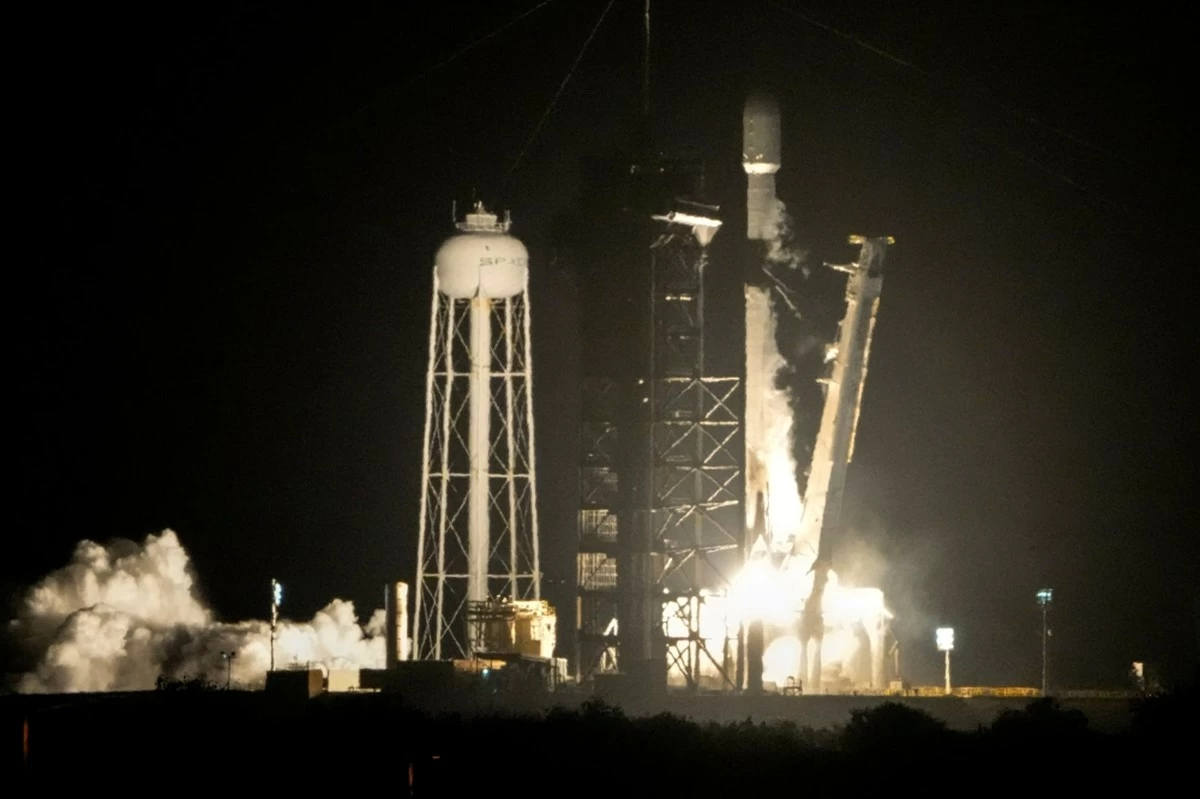
Wayward SpaceX Rocket Segment Slams Into Moon, Scientists Confirm
Translated from English, summarized and contextualized by DistantNews.
At a glance
News
From a news agency
Outcome reported
- A SpaceX Falcon 9 rocket segment has collided with the moon, scientists confirmed Wednesday after tracking its trajectory for a year.
- While the impact itself was not observed, a telescope in Chile detected a debris plume, providing evidence of the collision.
- This incident marks another piece of space debris on the moon, raising concerns as nations race to explore the lunar surface.
A segment of a SpaceX Falcon 9 rocket, which had been drifting off course for the past year, has collided with the moon, scientists confirmed Wednesday. The impact occurred after the rocket segment, launched with a pair of lunar landers, completed its unintended journey.
that errors were also made after the proposal was leaked to media.
Although the actual collision at approximately 5,400 mph (8,700 kph) was not directly observed, astronomers identified a debris plume captured by a telescope in Chile. Space tracking experts stated that the leftover rocket segment's crash into the moon was inevitable. This event adds to the growing problem of "lunar litter," a concern that is expected to escalate as the United States and China intensify their efforts to land astronauts on the moon.
This is not the first time space debris has impacted the moon. In 2022, a Chinese rocket unintentionally hit the lunar surface. Scientists believe many more stray rocket pieces have likely struck the moon over the decades without detection.
Following a meeting in Rabat, Morocco, the FIFA Secretary General and members of the FIFA Management Board in attendance reaffirmed their full support for FIFA President Gianni Infantino, as the only official elected by the 211 FIFA Member Associations.
SpaceX stated that the company is collaborating with NASA to prevent future incidents, emphasizing that this particular crash was accidental. A combination of solar activity and gravitational forces inadvertently put the rocket on a collision course with the moon, according to SpaceX. Boston University's Carl Schmidt expressed "100% certainty" that his team's observations, which detected a stream of sodium and lithium stretching for miles into space, provided evidence of the lunar crash. Retired astrophysicist Jonathan McDowell added that observations of the defunct upper stage showed it heading directly for the moon, concluding that the rocket "is now in teeny, little pieces scattered over the moon near Einstein Crater."
no longer tolerate any attacks on its integrity, good governance and due process
DistantNews Editorial
Originally published by Arab Times in English. Translated, summarized, and contextualized by our editorial team with added local perspective. Read our editorial standards.
More Stories



From Our Blog

What Gets Lost (and Found) When News Is Translated

The Critical Role of Diaspora Media in Global News

What Travellers Should Know About Countries with Restricted Press

A Digital Nomad's Guide to Following Local News

How the Same Story Looks Different in Different Countries
