


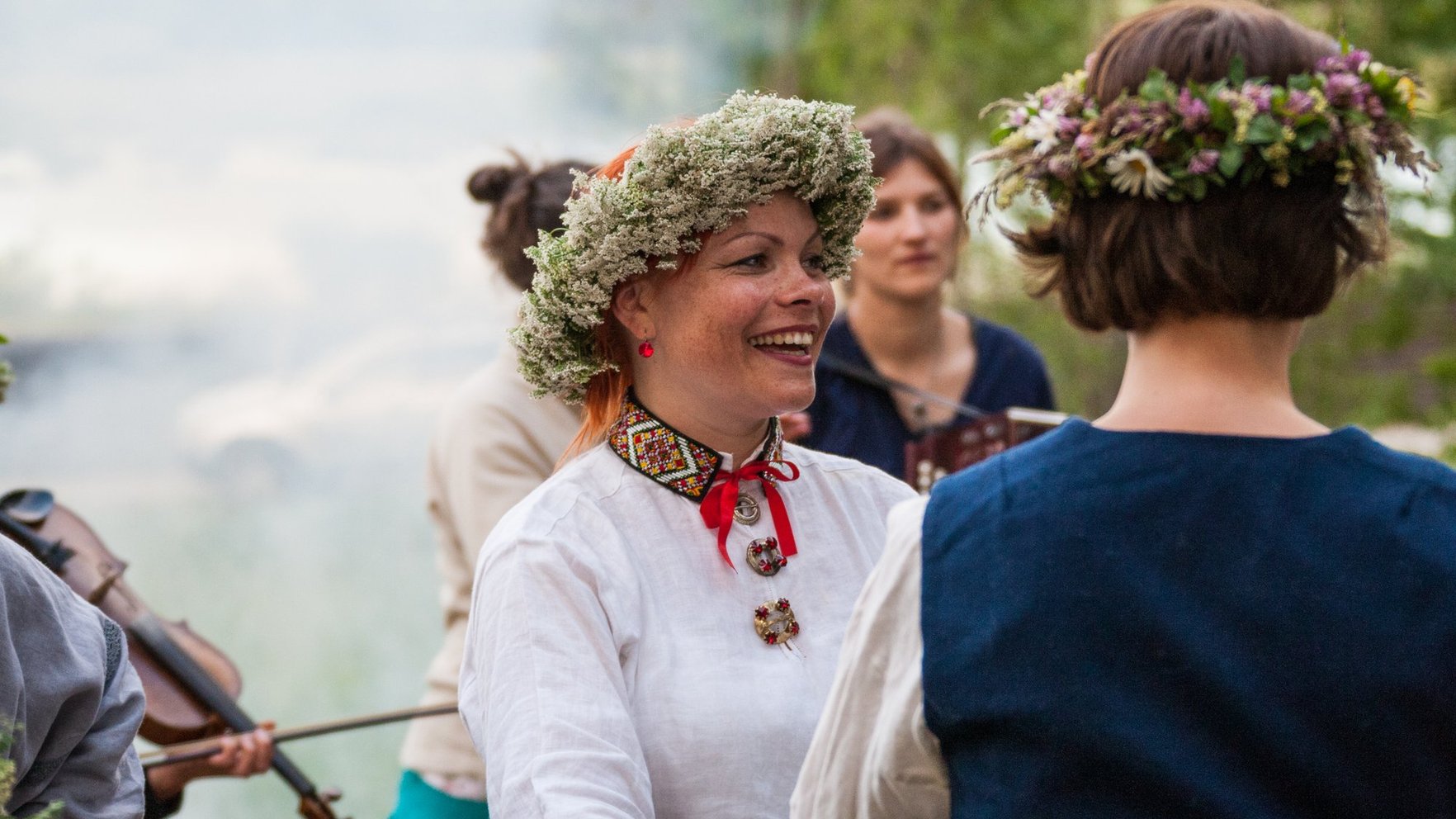
"We speak in a dialect of spells." Folklorist Beatrise Kapuste on the commercialization of Jāņi and the "witch gene"
Translated from Latvian, summarized and contextualized by DistantNews.
At a glance
News
Sources not specified
Context piece
- Jāņi, a cornerstone of Latvian identity, sees a significant commercialization and transformation of traditions each year.
- Debates arise over correct celebration dates and the purchase of plastic wreaths, while some attempt to monopolize traditions with patents.
- Folklorist Beatrise Kapuste discusses the commercialization of Jāņi and the "witch gene" in Latvian culture.
As summer solstice approaches, Latvian cities empty as streams of cars head towards the countryside, seeking nature, meadows, and bonfires. Jāņi, or Midsummer, is a cornerstone of Latvian identity, but in recent years, the celebration has become entangled in a complex mix of marketing, new terminology, and evolving traditions.
While some argue about the "correct" dates for celebration and purchase plastic wreaths from supermarkets, others are attempting to monopolize the traditions with patents. This commercialization and transformation of deeply rooted customs are raising questions about authenticity and cultural preservation.
Folklorist Beatrise Kapuste observes this phenomenon, noting the shift in how Jāņi is celebrated and perceived. She touches upon the commercial aspects and the emergence of new interpretations, even referencing a "witch gene" in the context of Latvian cultural identity and its connection to ancient traditions. The discussion highlights the tension between preserving the essence of Jāņi and adapting it to modern commercial pressures.
DistantNews Editorial
Originally published by Delfi Latvia in Latvian. Translated, summarized, and contextualized by our editorial team with added local perspective. Read our editorial standards.
More Stories


From Our Blog

What Gets Lost (and Found) When News Is Translated

The Critical Role of Diaspora Media in Global News

What Travellers Should Know About Countries with Restricted Press

A Digital Nomad's Guide to Following Local News

How the Same Story Looks Different in Different Countries
