

Weather Phenomenon: How is Hail Formed?
Translated from German, summarized and contextualized by DistantNews.
At a glance
Explainer
From a news agency
Context piece
- Hail is a meteorological phenomenon characterized by ice lumps at least five millimeters in diameter, formed in strong showers or thunderstorms.
- Hailstones develop in layers as raindrops are carried high into storm clouds, freeze, and collect more water in updrafts and downdrafts.
- The risk of hail is highest from May to August, particularly near the Alps and in specific regions of Germany, with hailstones potentially reaching over ten centimeters in diameter.
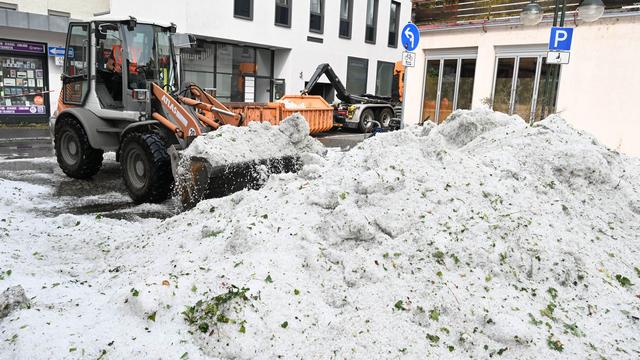
Hail, a striking weather phenomenon, occurs when ice lumps measure at least five millimeters in diameter; smaller particles are classified as graupel. Meteorologists explain that the formation of hail requires powerful showers or thunderstorms.
The characteristic layered structure of a hailstone, visible when cut in half, results from a dynamic process within storm clouds. Raindrops are propelled upwards by strong updrafts, freezing in the frigid upper regions of the cloud. As these ice particles are repeatedly swept up and down by winds, they accumulate more water, which freezes onto them, building layer upon layer.
Eventually, the hailstone becomes too heavy to remain suspended and falls to the ground. While hail events are typically localized, the risk is most pronounced between May and August, coinciding with the season for strong thunderstorms. Certain regions, including areas near the Alps and specific German locales like Stuttgart and Munich, experience a higher frequency of hailstorms. In extreme cases, particularly within "supercell" thunderstorms, hailstones can grow to over ten centimeters in diameter and fall at speeds exceeding 150 kilometers per hour.
DistantNews Editorial
Originally published by Die Zeit in German. Translated, summarized, and contextualized by our editorial team with added local perspective. Read our editorial standards.
More Stories
From Our Blog

What Gets Lost (and Found) When News Is Translated

How the Same Story Looks Different in Different Countries

The Critical Role of Diaspora Media in Global News

What Travellers Should Know About Countries with Restricted Press

A Digital Nomad's Guide to Following Local News
