


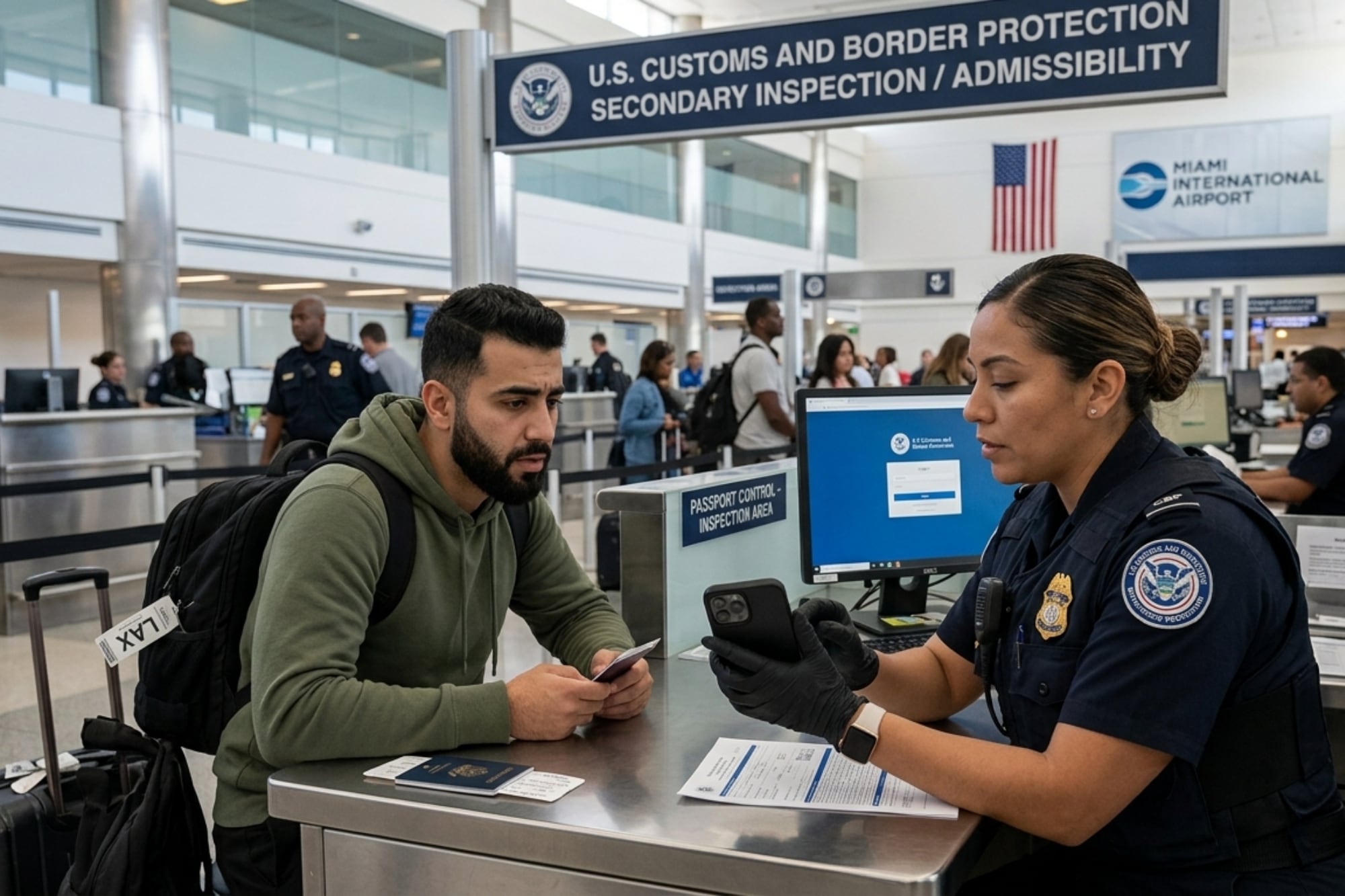
What CBP Can Check on Your Cell Phone When Entering the US: Official Rule Updated for 2026
Translated from Spanish, summarized and contextualized by DistantNews.
At a glance
News
Sources not specified
Context piece
- U.S. Customs and Border Protection (CBP) can inspect cell phones and other electronic devices of travelers entering the United States.
- Agents must disconnect devices from networks and only access locally stored information, with data deleted when no longer needed or retained for up to 15 years if relevant to an investigation.
- While such inspections are rare, occurring in less than 0.01% of international travelers in fiscal year 2025, refusal to comply can result in device confiscation and denial of entry.
U.S. Customs and Border Protection (CBP) has the authority to inspect travelers' cell phones and electronic devices upon entry into the United States, a measure deemed essential for national security. While agents can examine phones, computers, and cameras, there are limitations on the data accessed. Devices must be disconnected from networks, ensuring only locally stored information is visible. The CBP states that data collected is deleted when no longer necessary, but can be retained for up to 15 years if relevant to an investigation.
the possibility of reviewing their cell phone.
Agents can conduct two types of searches, and the process applies to travelers referred for secondary inspection. The agency emphasizes that these reviews are infrequent, with less than 0.01% of international travelers facing digital scrutiny in fiscal year 2025. The purpose of these inspections is to detect violations of laws, such as digital contraband, child sexual abuse material, illicit transfer of restricted data, or information questioning a foreign national's admissibility.
the possibility that agents inspect the electronic devices of those arriving in U.S. territory is fundamental to maintaining security.
Travelers are obligated to provide their devices and necessary access, like passwords, if a CBP agent suspects a violation. Refusal to cooperate can lead to the device being confiscated. For non-U.S. citizens, non-compliance may result in denial of entry. The CBP asserts that these electronic device searches are authorized by customs laws.
when the collected data is no longer necessary, it is deleted in accordance with privacy laws.
DistantNews Editorial
Originally published by La Nación in Spanish. Translated, summarized, and contextualized by our editorial team with added local perspective. Read our editorial standards.
More Stories


From Our Blog

What Gets Lost (and Found) When News Is Translated

The Critical Role of Diaspora Media in Global News

What Travellers Should Know About Countries with Restricted Press

A Digital Nomad's Guide to Following Local News

How the Same Story Looks Different in Different Countries
