


What Children Lose by Spending Too Much Time on Screens: Why Psychologists Say Boredom is Essential
Translated from Romanian, summarized and contextualized by DistantNews.
At a glance
In-depth
Named sources
Context piece
- Psychologists warn that children who spend too much time on screens are losing out on a crucial emotional state called
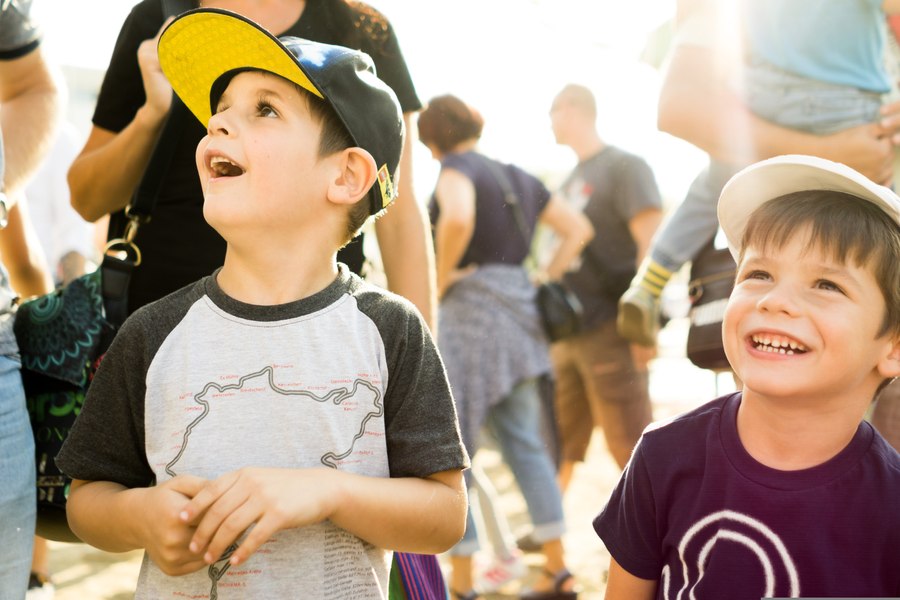
Children who spend excessive time in front of screens are missing out on a vital emotional state that is essential for their development: awe. Psychologists explain that this state underpins curiosity, creativity, and the motivation to learn.
Awe is like the tip of an iceberg. Psychologically, it is a complex emotion, situated at the intersection of surprise, curiosity, and mild disorientation, but a good one. That moment when the mind realizes that the world is bigger and more interesting than we thought.
According to clinical psychologist and psychotherapist Mihaela Hofman, awe is a complex emotion at the intersection of surprise, curiosity, and mild disorientation. It signals to a child that the world is larger and more interesting than they might have thought. Researchers have shown that awe activates brain areas linked to empathy, deep information processing, and the desire to explore. Unlike fleeting joy, awe leaves a lasting impression, telling the child that the world is worth investigating.
Researchers call it awe. They have shown that it activates brain areas related to empathy, deep information processing, and the desire to explore. Unlike immediate joy, which is quickly consumed, awe leaves a mark. It tells the child something simple and huge at the same time: the world is worth investigating.
Hofman emphasizes that awe doesn't only arise from spectacular experiences or exotic travel. It can be found in simple things adults often overlook, like observing a snail, a falling leaf, or the movement of leaves in a tree. She sees it in the shared joy of discovery between a parent and child, and in the space left for a child to experience wonder independently.
I see it best in that 'wow!' that we put into the relationship with the child when we tell them about the world. The shared joy when we discover something. When he does something. But also the space we leave free, for awe to emerge on its own. A snail. A flower. A falling leaf. The movement of leaves in the tree.
The relationship with awe begins in infancy, with babies teaching adults to slow down and rediscover the world through their eyes. This stage involves showing a child something, then allowing space for their reaction, observing their gaze and expressions, and putting the world into words while infusing it with emotion. Hofman notes that awe fuels curiosity: a child who wonders asks questions, seeks answers, learns to tolerate uncertainty, persevere, and ultimately think independently. This process forms the basis of adaptable intelligence.
In the first months of life, the baby is our teacher. He teaches us to slow down, to rediscover the world through his eyes. It is a stage in which we show him something and then make room for his reaction. We follow his gaze, his facial expressions, his body movements. We put curiosity into the relationship and leave room for awe as well. Then we put the world into words for him and sprinkle emotions over them.
DistantNews Editorial
Originally published by Adevărul in Romanian. Translated, summarized, and contextualized by our editorial team with added local perspective. Read our editorial standards.
More Stories


From Our Blog

What Gets Lost (and Found) When News Is Translated

The Critical Role of Diaspora Media in Global News

What Travellers Should Know About Countries with Restricted Press

A Digital Nomad's Guide to Following Local News

How the Same Story Looks Different in Different Countries
