


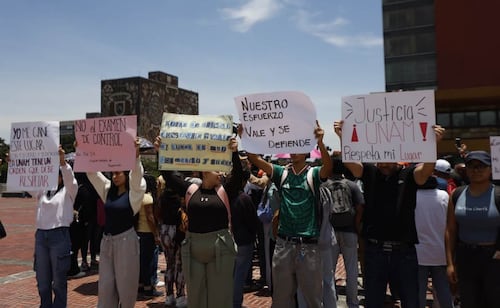
What Do UNAM Accepted Students Who Reject the Control Exam Demand?; Here Is Their Petition
Translated from Spanish, summarized and contextualized by DistantNews.
At a glance
News
Sources not specified
Context piece
- Students accepted into UNAM who are rejecting the entrance exam have presented a list of demands.
- The students are protesting the exam's validity and demanding a review of the admission process.
- Their demands highlight ongoing tensions between student aspirations and university admission policies.
A group of students accepted into Mexico's National Autonomous University (UNAM) are refusing to take the institution's control exam, instead presenting a list of demands. This action signals a significant challenge to the university's established admission procedures and raises questions about the fairness and transparency of the selection process.
The students, who have already been accepted based on their academic records or other criteria, argue that the control exam is unnecessary and potentially flawed. Their "pliego petitorio," or list of demands, outlines their grievances and calls for a reassessment of how new students are admitted. The specifics of their demands are not fully detailed in the provided information, but the core issue revolves around their rejection of the control exam as a valid measure of their capabilities or suitability for UNAM.
This protest underscores a recurring tension between students and large public universities regarding admission policies. While universities often rely on standardized tests to manage large applicant pools and ensure a baseline level of academic readiness, students may perceive these exams as barriers or as failing to capture their full potential. The UNAM case highlights a desire among some students to have their acceptance recognized without further hurdles, potentially advocating for a more holistic review process.
The students' stance suggests a broader critique of the current system, implying that their acceptance should be final once granted. Their refusal to take the exam and their organized presentation of demands indicate a coordinated effort to influence university policy. The outcome of this situation could set a precedent for future admission cycles and student activism at UNAM.
DistantNews Editorial
Originally published by El Universal in Spanish. Translated, summarized, and contextualized by our editorial team with added local perspective. Read our editorial standards.
More Stories



From Our Blog

What Press Freedom Means for the News You Read

What Gets Lost (and Found) When News Is Translated

The Critical Role of Diaspora Media in Global News

What Travellers Should Know About Countries with Restricted Press

A Digital Nomad's Guide to Following Local News
