


What hinders investment in Poland – Is the money there, or is something else missing?
Translated from Polish, summarized and contextualized by DistantNews.
At a glance
News
Sources not specified
Context piece
- Polish companies are facing an investment slowdown, with the investment-to-GDP ratio hovering around 17%, far below the planned 25%.
- Large corporations can navigate the investment landscape, but small and medium-sized enterprises (SMEs) are in an "investment marasmus."
- Experts cite a potential generational shift and the need for better utilization of diverse financing options, including equity, as key challenges.
Poland's investment landscape is showing a concerning trend, with the investment-to-GDP ratio currently around 17%, significantly short of the 25% target. This slowdown is particularly acute for small and medium-sized enterprises (SMEs), which are described as being in an "investment marasmus."
We are dealing with a certain duality. Large or very large companies can cope and take advantage of opportunities. They have enough resources, strength, and skills for strategic, long-term thinking.
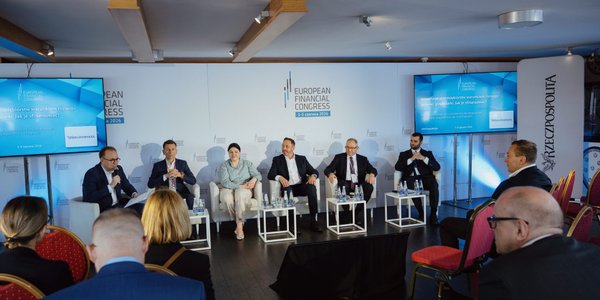
During a panel discussion on financing business investments, experts highlighted a growing divide. Marcin Kościński, vice-president of ING Bank Śląski, noted that large companies possess the resources and strategic foresight to seize investment opportunities. However, SMEs struggle, leading to questions about whether this is a generational issue. Kościński suggested that the generation that drove Poland's economic growth in the 1990s is passing the torch to a new generation that appears less enthusiastic about entrepreneurship.
Sebastian Perczak of Citi Handlowy acknowledged that complex regulatory environments can be a hindrance but cautioned against overemphasizing this factor, especially for globally operating firms. He pointed to the fragmentation of the SME sector as a more significant impediment.
However, we have trouble with small and medium-sized companies, because they are clearly in an investment marasmus.
Anna Wnuk from the Polish Private Equity Association shifted the focus to financial literacy, arguing that simply encouraging investment is insufficient if businesses don't know how to leverage available capital. She stressed the importance of demonstrating how the financial market offers both debt and equity, with equity being better suited to absorb higher investment risks. This complementary approach, rather than a competitive one, between different financing sources was a recurring theme.
If we have a company that invests globally, the complex regulatory and legal environment de facto becomes everyday life. I would not want to see this as one of the main problems.
Michał Tomczyk, a financial auditor, observed that many startups and young tech firms have innovative ideas that don't always fit traditional banking models. He noted that Poland's private equity and venture capital markets are still underdeveloped and should better support the role of banks. Bank representatives clarified their position, with Kościński explaining that banks operate on thin margins and cannot typically finance highly speculative ventures, as only a small fraction of such ideas prove successful.
We won't get far by urging entrepreneurs to invest if we argue whether credit is competitive for equity.
DistantNews Editorial
Originally published by Rzeczpospolita in Polish. Translated, summarized, and contextualized by our editorial team with added local perspective. Read our editorial standards.
More Stories


From Our Blog

What Gets Lost (and Found) When News Is Translated

The Critical Role of Diaspora Media in Global News

What Travellers Should Know About Countries with Restricted Press

A Digital Nomad's Guide to Following Local News

How the Same Story Looks Different in Different Countries
