


When Disaster Becomes Everyday Life
Translated from Korean and summarized by DistantNews. Read the original for the full story.
At a glance
In-depth
Named sources
Context piece
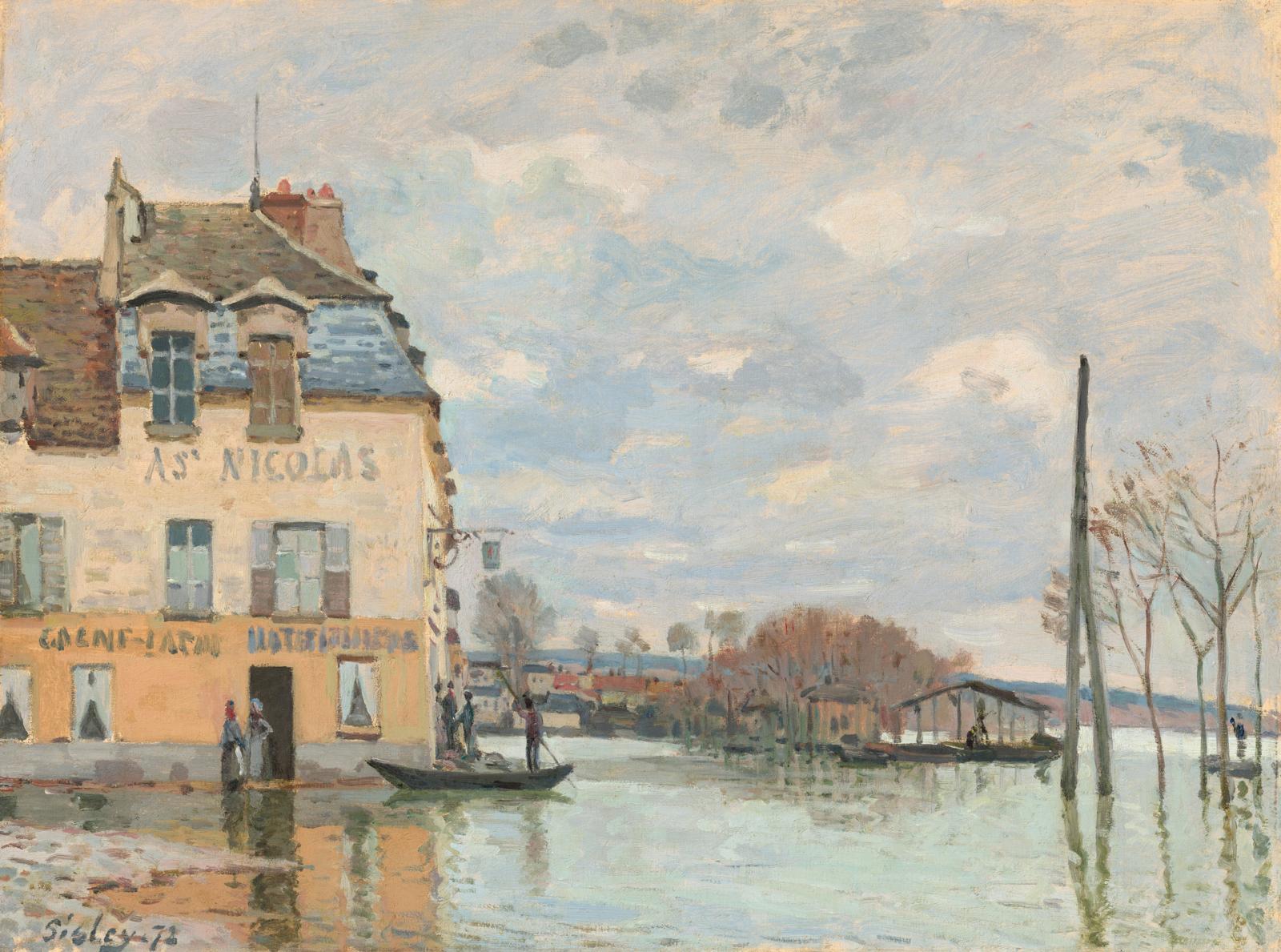
- Alfred Sisley painted The Flood at Port-Marly after the Seine flooded the village west of Paris in December 1872.
- The work shows residents, a wine shop and boats in a flooded landscape, without biblical or heroic imagery.
- The painting’s depiction of people continuing daily life amid disaster is presented as relevant to repeated urban flooding linked to climate change.
The gray sky is calm, the water barely moving. Two women talk outside a building, while a small boat passes nearby. At first glance, Alfred Sisley’s scene looks like a peaceful riverside view. Then the strange details emerge: the road has disappeared, trees rise from the water and boats move through what was once a street.
Sisley painted The Flood at Port-Marly in 1872, after the Seine overflowed in December and submerged the village west of Paris. Living nearby, the French Impressionist went to observe the transformed landscape. He produced a series of four paintings, including this one. The building at the center is a wine shop, with residents affected by the flooding standing outside.
There is no Noah from the Bible and no hero rescuing the population. There is only a flooded village, a shop, residents and boats. That focus marked a departure from earlier disaster paintings, which often portrayed floods through the biblical Great Flood, as symbols of divine judgment or human helplessness before nature.
Sisley instead brought an actual event into painting with a restrained gaze. No one screams or gets swept away. Residents talk, travel by boat and continue their routines in an environment that has suddenly changed. A disaster once depicted as a vast catastrophe becomes a landscape that ordinary people must endure and live through.
More than 150 years later, the scene remains familiar. Extreme rainfall is becoming more dangerous as the climate changes, while urban flooding recurs. Roads, shops and homes used every day can suddenly become disaster zones. Sisley’s painting points to the fragile foundation beneath ordinary calm, and to the possibility that anyone can become directly affected by disaster.
About this summary
Originally published by Dong-A Ilbo in Korean. Translated, summarized, and contextualized automatically by DistantNews, with a note on how the source frames the story. Not individually reviewed before publishing. How this works.
More Stories



From Our Blog

What Gets Lost (and Found) When News Is Translated

The Critical Role of Diaspora Media in Global News

What Travellers Should Know About Countries with Restricted Press

A Digital Nomad's Guide to Following Local News

How the Same Story Looks Different in Different Countries
