


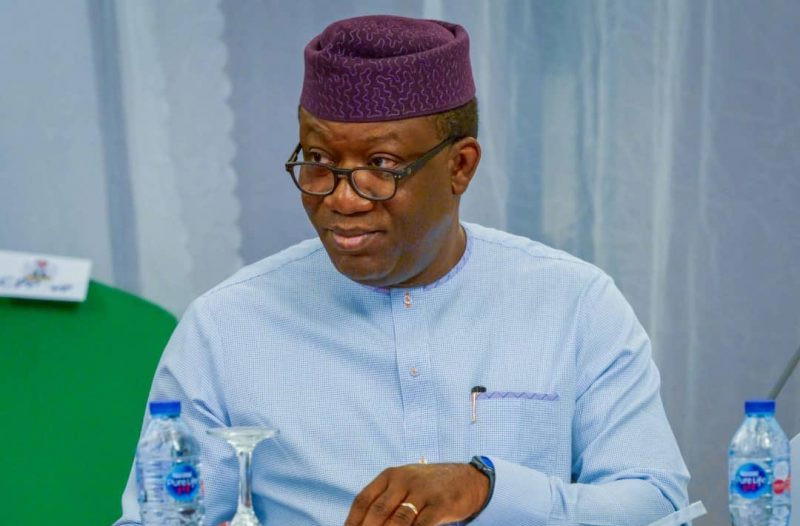

When Politicians Cannot Take a Tough Question
Translated from English and summarized by DistantNews. Read the original for the full story.
At a glance
Opinion
Named sources
Context piece
- The article criticizes a pattern in which Nigerian politicians or their spokespeople attack television journalists instead of answering difficult questions.
- It focuses on an interview in which FCT Minister Nyesom Wike’s spokesman, Lere Olayinka, refused to answer ARISE News anchor Rufai Oseni.
- The incident raises questions about whether political actors can distinguish between an uncomfortable question and an unacceptable interviewer.
A difficult question about President Bola Tinubu’s 2027 campaign council ended with a Nigerian television interview being cut short, after a political spokesman refused to engage the journalist asking it.
On ARISE News’ The Morning Show, anchor Rufai Oseni asked Lere Olayinka, spokesman for FCT Minister Nyesom Wike, why former Humanitarian Affairs Minister Betta Edu had been included in Tinubu’s 2027 campaign council despite the corruption allegations that had surrounded her. Olayinka declined to answer.
“I don’t want to answer any question from you. I want this discussion to be among reasonable human being (sic), people who will not describe others as gbewudani,” Olayinka said. Co-anchor Ayo Mairo-Ese objected to his language and reminded him that he had come to the programme to meet all three anchors and answer their questions. Olayinka maintained his position, and Mairo-Ese ended the interview.
The article argues that the dispute cannot be understood without separating two incidents. Oseni had used the term “Gbewudani” a day earlier while discussing Wike’s decision to support Tinubu in the 2027 presidential election rather than the PDP’s candidate, Senator Sandy Onor. Oseni was questioning how Wike could control the PDP and its choice of presidential candidate while publicly backing another party’s candidate, a position that would leave the PDP candidate weakened.
The author says that whatever one thinks of Oseni’s earlier wording, it was separate from the question put to Olayinka. Oseni did not insult or provoke him during the interview, but asked a political question in a calm and civil manner. The article presents the episode as part of a broader concern: some political actors appear unwilling to distinguish between an uncomfortable question and an unacceptable interviewer. It describes Oseni as a journalist who challenges claims and contradictions, arguing that such questioning is part of journalism’s public role.
I don’t want to answer any question from you. I want this discussion to be among reasonable human being (sic), people who will not describe others as gbewudani.
About this summary
Originally published by The Punch in English. Translated, summarized, and contextualized automatically by DistantNews, with a note on how the source frames the story. Not individually reviewed before publishing. How this works.
More Stories

From Our Blog

The Same Story, Different Countries: How Coverage Changes at the Border

News in Translation: What Gets Lost, and How We Keep the Framing

Diaspora Media: How Communities Follow News From Home

Traveling Where the Press Is Not Free: How to Read the News There

The Digital Nomad's Guide to Local News
