

When the World Cup was enjoyed on small screens
Translated from Spanish, summarized and contextualized by DistantNews.
At a glance
In-depth
Documents & data
Context piece
- The 2026 World Cup is nearing its end, prompting reflection on how football matches were viewed in the past.
- In the 20th century, watching World Cup games often meant relying on small, black-and-white televisions with poor reception or portable radios.
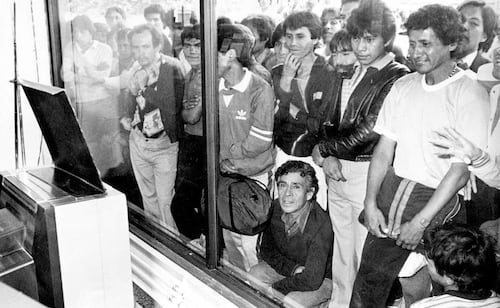
- Mexico 1986, known as "the television party," saw fans gather in public spaces to watch games on small screens, a precursor to today's large public viewings.
As the 2026 World Cup approaches its conclusion, it prompts a look back at how football fans experienced the tournament in bygone eras. Today's viewers enjoy the luxury of giant screens in public squares, cinemas, restaurants, large home televisions, and even on their mobile phones. However, in the last century, watching a World Cup match was a vastly different experience, often limited to small, black-and-white television sets with unreliable reception or the crackle of portable radios.
The Mexico 1986 World Cup, famously dubbed "the television party," serves as a prime example of this shift. While television had become dominant, fans still gathered in streets and cafes to watch games on modest screens. Portable radios were a common sight, with fans glued to the commentary, especially during matches involving the Mexican national team. Images from the time show vendors and employees listening intently to matches like Mexico vs. Belgium on handheld radios, a stark contrast to the immersive viewing experiences of today.
The relationship between the World Cup and television dates back to 1954, when the tournament was first broadcast. The inaugural televised match, Yugoslavia vs. France, reached an estimated 90 million black-and-white television sets across Europe via EUROVISION. Reports from the era describe hundreds of thousands, even millions, of people gathering in public squares and cafes with televisions, creating a communal viewing experience that foreshadowed modern public screenings.
Mexico also played a significant role in the early history of World Cup broadcasting. The 1970 FIFA World Cup, hosted by Mexico, was the first to be broadcast in color worldwide. However, color television sets were still a rarity at the time, making the technological advancement less accessible to the average viewer. Despite the limitations, these early broadcasts laid the groundwork for the global media spectacle that the World Cup has become.
Hundreds of thousands of people, millions more rather, followed the matches in public squares or in cafes [in Europe] that had television [...] and they were the precursors of the giant screens in public spaces that we enjoy today.
DistantNews Editorial
Originally published by El Universal in Spanish. Translated, summarized, and contextualized by our editorial team with added local perspective. Read our editorial standards.
More Stories



From Our Blog

What Press Freedom Means for the News You Read

What Gets Lost (and Found) When News Is Translated

The Critical Role of Diaspora Media in Global News

What Travellers Should Know About Countries with Restricted Press

A Digital Nomad's Guide to Following Local News
