

WHO: Ebola outbreak in DRC 'far from under control' amid rising deaths
Translated from Spanish, summarized and contextualized by DistantNews.
At a glance
News
Sources not specified
Ongoing story
- The World Health Organization warns the Ebola outbreak in the Democratic Republic of Congo is far from under control.
- Nearly 5,000 infections and over 2,300 deaths make it the second-worst Ebola outbreak in history.
- Factors like population movement and armed conflict in eastern DRC are fueling the epidemic, with cases appearing outside treatment centers.
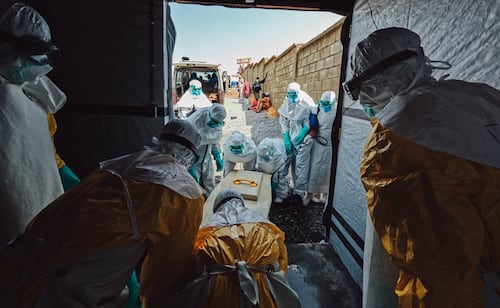
The World Health Organization (WHO) has issued a stark warning: the Ebola outbreak in the Democratic Republic of Congo (DRC) is "far from under control." WHO Director-General Tedros Adhanom Ghebreyesus described the situation as a significant challenge, noting that the epidemic has spread rapidly since it was declared an international health emergency three months ago.
It has had a great initial advantage and we are still trying to catch up.
The outbreak, now the second-worst in history with nearly 5,000 infections and over 2,300 deaths, is being fueled by intense population movement and ongoing armed conflict in eastern DRC. Tedros expressed deep concern that patients are dying in their homes and communities, outside of treatment centers and contact lists. These unregistered deaths suggest transmission chains that remain unidentified.
the risk of even greater expansion both within the country and internationally remains high
While the outbreak is currently confined to the DRC, it has spread across six provinces. Tedros cautioned that the risk extends beyond the country's borders, recalling a case where a traveler carried the virus to France last month, though transmission was halted in neighboring Uganda. The current outbreak is the worst in DRC's history and the second largest globally, surpassed only by the 2014-2016 West Africa epidemic. There is a real concern that the current pace could lead to more fatalities than the decade-old crisis.
What worries me most is where patients are dying: in their homes, in their communities, outside of treatment centers and contact lists. These deaths point to a chain of transmission that we have not yet identified.
For the first time, two vaccines specifically targeting the Bundibugyo variant, which has a 30% to 50% fatality rate, are undergoing human trials. While no specific treatments exist for this variant, researchers are investigating potential drug candidates. The WHO's Emergency Committee is meeting to assess the response and discuss the ongoing crisis.
the risk does not stop at the borders
DistantNews Editorial
Originally published by El Universal in Spanish. Translated, summarized, and contextualized by our editorial team with added local perspective. Read our editorial standards.
More Stories


From Our Blog

What Press Freedom Means for the News You Read

What Gets Lost (and Found) When News Is Translated

The Critical Role of Diaspora Media in Global News

What Travellers Should Know About Countries with Restricted Press

A Digital Nomad's Guide to Following Local News
