

Who Guards Black Sea Gas Platforms? Warning Issued After Drone Incident in Constanța Port: 'We'd Likely Have a Collective Mess'
Translated from Romanian, summarized and contextualized by DistantNews.
At a glance
News
Named sources
Context piece
- Romania's national security is questioned following a drone incident near a ship in Constanța Port.
- A lack of a single coordinating body for critical energy infrastructure protection leaves offshore gas platforms vulnerable.
- The development of the Neptun Deep project further highlights the need for enhanced security measures for Romania's strategic energy assets.
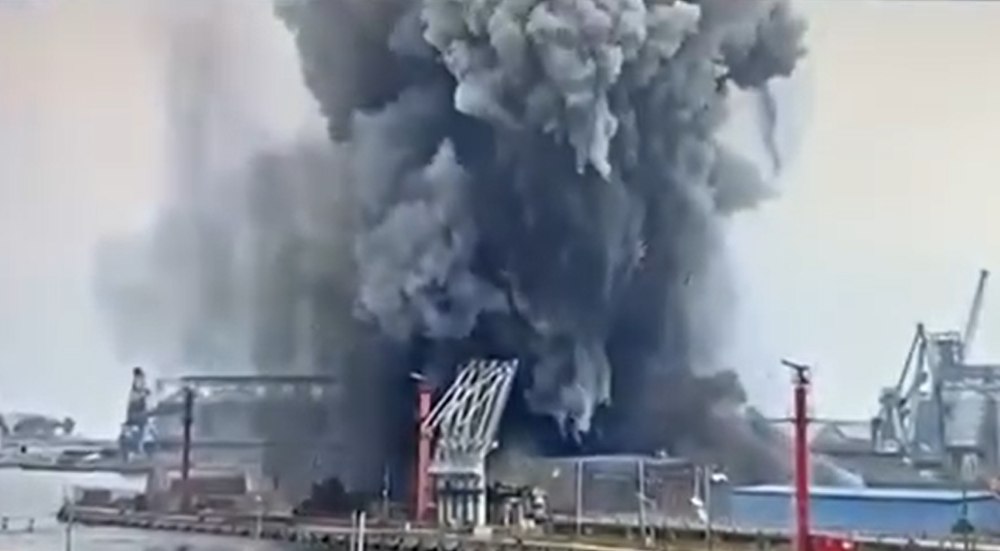
A recent drone incident near a ship in Constanța Port has reignited concerns about the security of Romania's strategic energy infrastructure in the Black Sea. The explosion, which occurred Friday near a vessel and a building without causing casualties, has brought to light a significant vulnerability: the absence of a unified structure to coordinate the protection of critical energy assets, particularly offshore gas platforms.
Dumitru Chisăliță, president of the Intelligent Energy Association, warns that while multiple institutions are involved in securing these platforms, none holds exclusive responsibility. These entities include OMV Petrom for industrial security, private security firms for on-site protection, the Romanian Naval Forces for maritime surveillance, the Romanian Air Force for airspace monitoring, intelligence services for threat assessment, the Ministry of Interior and Border Police for maritime security, and the Romanian Naval Authority for traffic monitoring.
Chisăliță questions the state's response capacity during a crisis, asking who would coordinate initial interventions, maintain an integrated view of various threats, and prioritize actions if multiple critical infrastructures are simultaneously affected. The situation is further complicated by the Neptun Deep project, a major energy investment for Romania and the EU, located in Romania's Exclusive Economic Zone.
This project's development underscores the urgency of establishing clear security protocols and a unified command. The vulnerability extends beyond territorial waters into the Exclusive Economic Zone, where Romania holds sovereign rights over resources and infrastructure, emphasizing the need for a robust and coordinated defense strategy.
There is no institution that has the primary and exclusive mission of defending offshore and onshore energy infrastructure and coordinating the security of Romania's energy.
DistantNews Editorial
Originally published by Adevărul in Romanian. Translated, summarized, and contextualized by our editorial team with added local perspective. Read our editorial standards.
More Stories
From Our Blog

What Gets Lost (and Found) When News Is Translated

The Critical Role of Diaspora Media in Global News

What Travellers Should Know About Countries with Restricted Press

A Digital Nomad's Guide to Following Local News

How the Same Story Looks Different in Different Countries
