


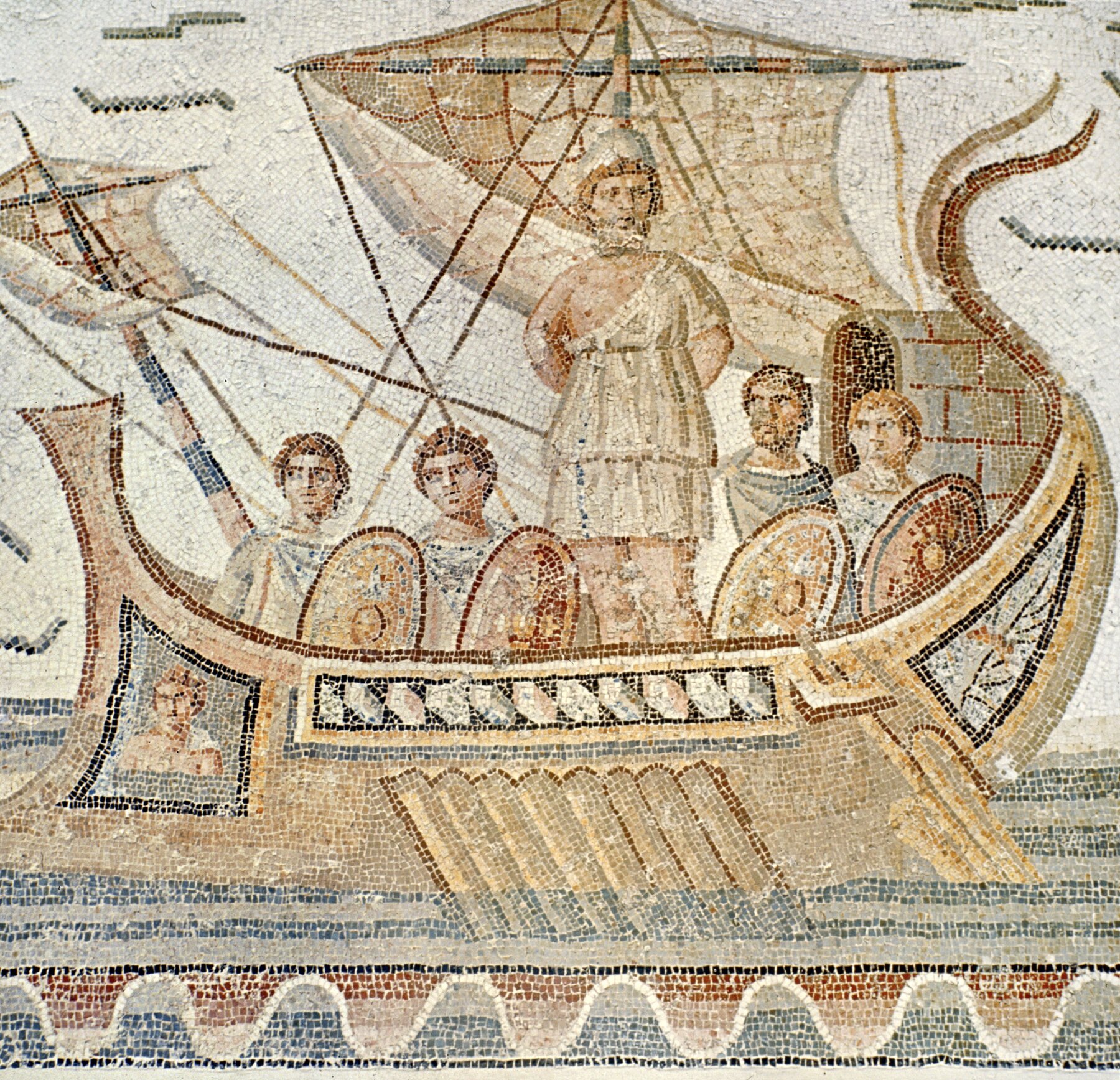
Who Was Odysseus? The Un-Enchanted Hero
Translated from German, summarized and contextualized by DistantNews.
At a glance
Analysis
Named sources
Context piece
- The article explores the complex character of Odysseus, the hero of Homer's epic poem.
- It discusses various interpretations of Odysseus, particularly focusing on Emily Wilson's groundbreaking translation and historian Raimund Schulz's analysis.
- The piece examines the enduring fascination with Odysseus as a literary figure, questioning his historical existence while acknowledging his impact on Western culture.
The enduring figure of Odysseus, the cunning protagonist of Homer's epic, continues to captivate and challenge interpretations, as highlighted by recent scholarly and artistic endeavors. Director Christopher Nolan's engagement with multiple English translations, including Emily Wilson's pioneering work as the first woman to translate the Odyssey, underscores the poem's persistent relevance and the nuanced layers of its central hero.
Wilson's translation offers a fresh perspective, notably her interpretation of the epithet "polytropos." While traditionally translated as "much-traveled" or "resourceful," Wilson renders it as "complicated man," framing Odysseus as a "torn figure" and a prototype of the flawed hero, a character type often absent in traditional Hollywood narratives. This interpretation aligns with historian Raimund Schulz's view of Odysseus as a representative of a pivotal era in antiquity, emphasizing his role beyond mere adventure and into the complexities of human interaction and cultural encounters.
Schulz, in his book "Als Odysseus staunte" (When Odysseus Was Astonished), delves into the relationships ancient Greeks had with foreign cultures, offering a celebrated analysis of the roots of perception and the treatment of the "other." His recent work presents Odysseus not just as a literary creation from the 7th century BCE, but as a figure embodying a crucial epoch. The article acknowledges that while Odysseus is undeniably a literary construct, born from the oral traditions and poetic artistry of Homer, his themes of mortality, love, seduction, longing, and disappointment continue to resonate deeply.
The question of Odysseus's historical existence remains open, with "Myth and Truth" serving as a subtitle to Schulz's exploration. Homer's epic draws upon ancient myths, reshaping them into an artistic form. Schulz seeks to unravel the amalgam of fictional and historical elements present in the poem's genesis. The oral nature of these early stories led to embellishments and expansions over time, tailored to audiences and their expectations. Consequently, separating the "historical" Bronze Age world of the Trojan War heroes from the era in which the epic was artistically shaped is a complex endeavor, suggesting that Odysseus and his poet continue to enthrall us as both a literary masterpiece and a reflection of historical consciousness.
DistantNews Editorial
Originally published by Die Presse in German. Translated, summarized, and contextualized by our editorial team with added local perspective. Read our editorial standards.
More Stories



From Our Blog

What Gets Lost (and Found) When News Is Translated

The Critical Role of Diaspora Media in Global News

What Travellers Should Know About Countries with Restricted Press

A Digital Nomad's Guide to Following Local News

How the Same Story Looks Different in Different Countries
