


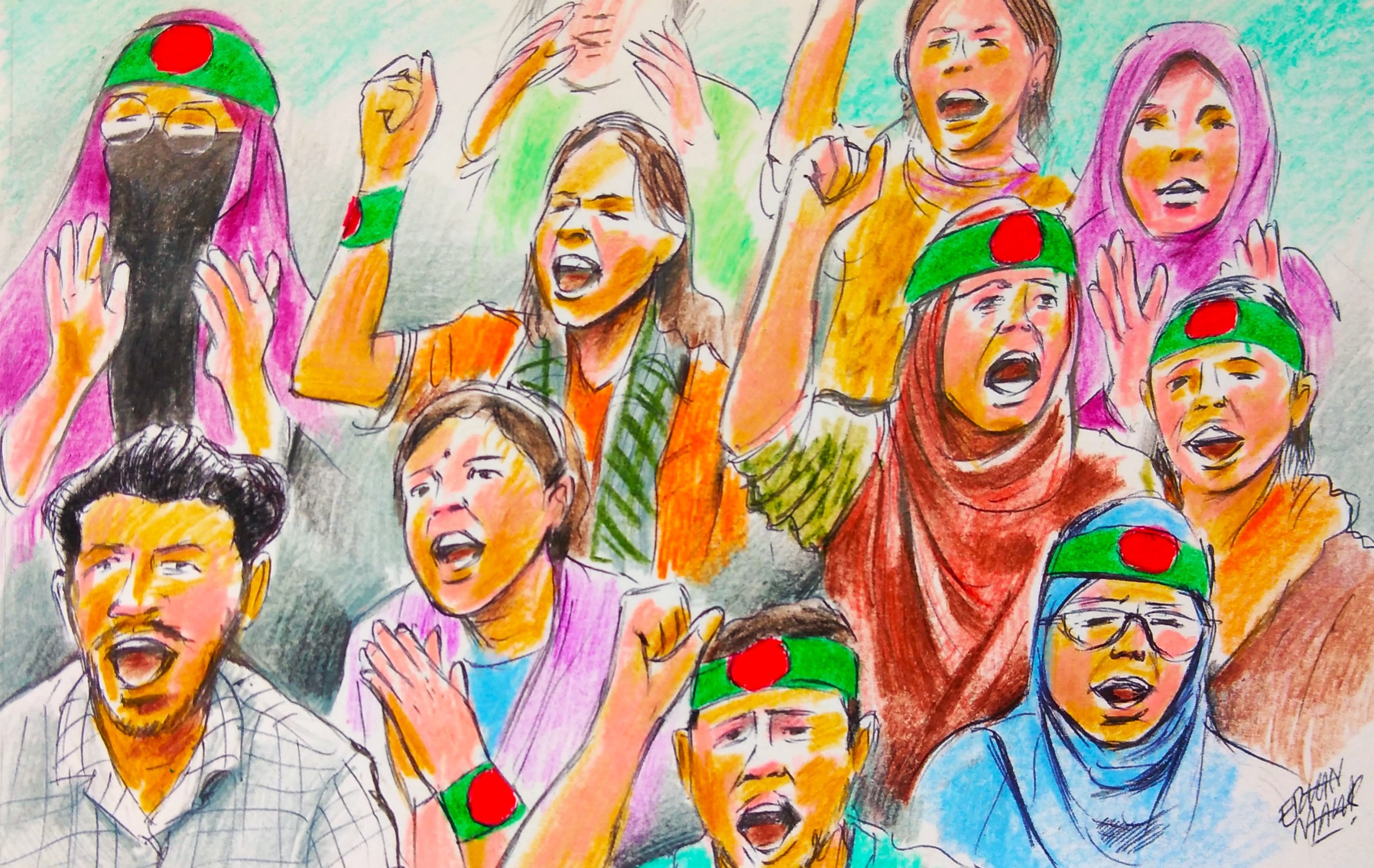
Why Bangladesh’s July uprising was obvious
Summarized and contextualized by DistantNews.
At a glance
In-depth
Sources not specified
Context piece
- The July uprising in Bangladesh was predictable, according to the author.
- The article reflects on a personal experience in Dhaka in 2017, suggesting underlying social conditions.
- The piece implies that certain societal factors made the subsequent unrest inevitable.
The author reflects on a personal evening in Dhaka in 2017, walking with his wife along the 300 Feet Road near the Bashundhara Residential Area. This popular spot, frequented by many seeking fresh air, served as a backdrop for observations that, in retrospect, foreshadowed the significant events to come.
The narrative suggests that the conditions leading to the July uprising were not sudden but rather a predictable outcome of underlying societal factors. The seemingly ordinary scene described in 2017 held within it the seeds of future unrest, implying a build-up of tensions that were palpable to those who observed closely.
This personal anecdote serves to ground the assertion that the uprising was obvious. It moves beyond abstract political analysis to connect the broader societal mood with specific, albeit personal, observations, framing the subsequent events as an inevitable consequence of existing circumstances.
DistantNews Editorial
Originally published by Daily Sabah. Summarized and contextualized by our editorial team with added local perspective. Read our editorial standards.
More Stories


From Our Blog

What Gets Lost (and Found) When News Is Translated

The Critical Role of Diaspora Media in Global News

What Travellers Should Know About Countries with Restricted Press

A Digital Nomad's Guide to Following Local News

How the Same Story Looks Different in Different Countries
