


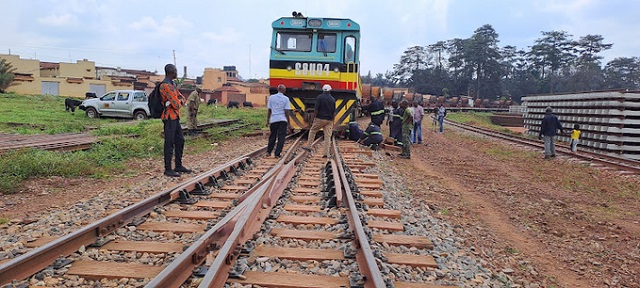
Why Consultrans are the right partners to revive Uganda Railways
Summarized and contextualized by DistantNews.
At a glance
News
Named sources
Context piece
- Consultrans is positioned as the ideal partner to revive Uganda Railways, having authored a key feasibility study in 2019.
- The company secured a contract in June 2020 for a comprehensive rehabilitation program targeting the Malaba–Kampala line.
- Consultrans's integrated approach, covering design, capacity building, and feasibility studies, ensures continuity and efficiency in the project.
Consultrans is presented as the optimal partner for the revitalization of Uganda Railways, with a history of involvement dating back to 2019. The firm authored the Kampala–Malaba Feasibility Study, which became foundational for the broader East African Community Railway Rehabilitation Support Project, partly financed by the African Development Bank.
This early engagement paved the way for Consultrans's involvement in the Uganda Railways Corporation (URC) rehabilitation program. The contract, awarded on June 29, 2020, focuses on the 215 km Malaba–Kampala metre-gauge line and its associated network, encompassing approximately 282 km. Operations officially commenced on February 1, 2022, following a preparatory phase.
The mandate includes several key components: detailed engineering design for refurbishing the Kampala–Namanve and Tororo–Malaba sections, which form Uganda's primary link to the Kenyan border and the port of Mombasa. It also involves the preliminary design of the Kampala Multimodal Hub, aimed at integrating rail transport with road, urban transit, and logistics in the capital.
Furthermore, Consultrans is undertaking a three-year Capacity Building Project (CBP) for URC staff. This initiative aims to strengthen the institution's capabilities in planning, executing, and eventually operating the rehabilitated network. A feasibility study for a modern national signaling and traffic-control system is also part of the project, intended to reduce URC's reliance on Kenya-based train control systems.
Consultrans's strength lies in its ability to provide a seamless experience, combining feasibility work, detailed engineering design, and institutional capacity building under one organization. This continuity ensures that the firm carries institutional memory of the corridor's technical and economic challenges directly into the design phase, mitigating delays often caused by changing consultants between project stages. The financing for the Uganda project is supported by the Spanish government through the Official Spanish Funding-Corporate Internationalisation Fund (FIEM), offering favorable terms for infrastructure development in regions where local technical capacity is still evolving.
DistantNews Editorial
Originally published by The Independent Uganda. Summarized and contextualized by our editorial team with added local perspective. Read our editorial standards.
More Stories


From Our Blog

What Gets Lost (and Found) When News Is Translated

The Critical Role of Diaspora Media in Global News

What Travellers Should Know About Countries with Restricted Press

A Digital Nomad's Guide to Following Local News

How the Same Story Looks Different in Different Countries
