


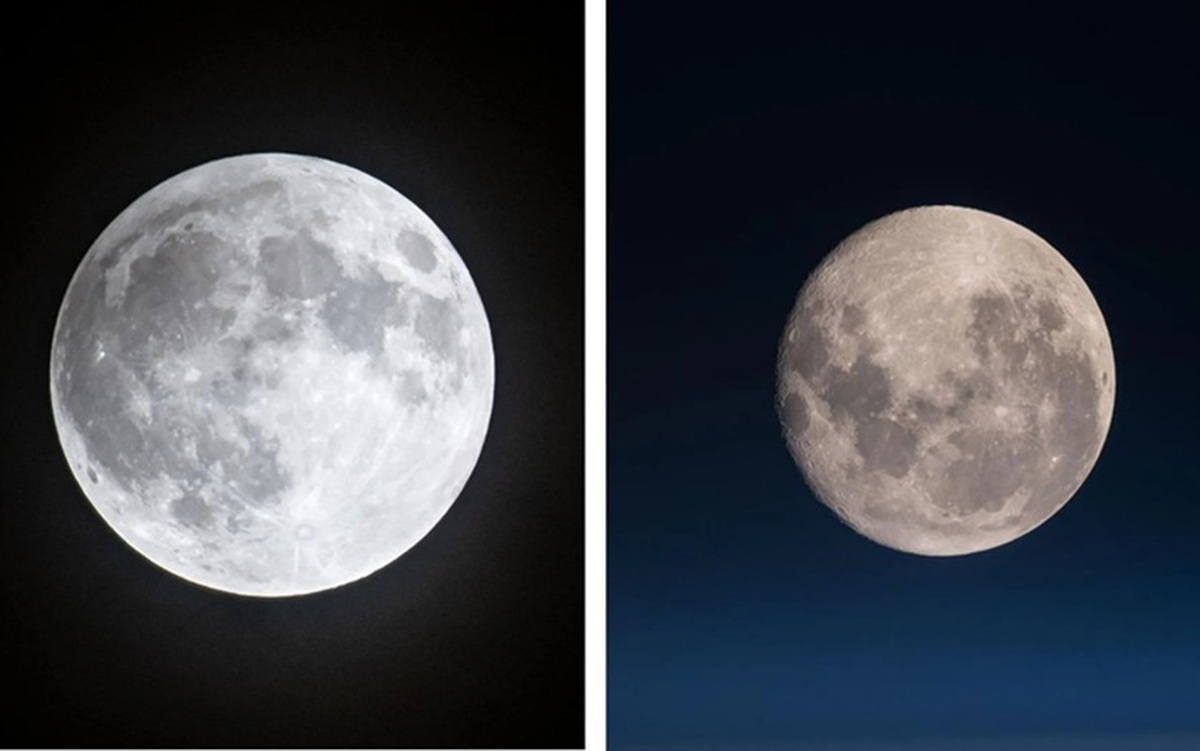
Why Does the Moon Look Different Everywhere on Earth?
Translated from Vietnamese, summarized and contextualized by DistantNews.
TLDR
- The appearance of the Moon varies depending on the observer's location on Earth due to differences in viewing angles and positions.
- A key difference is the apparent 'upside-down' view of lunar features when comparing observations from the Northern and Southern Hemispheres.
- These variations also affect the phases of the Moon and its apparent rotation throughout the night, especially near the equator.
Have you ever wondered why the Moon looks different depending on where you are on Earth? Tuổi Trẻ delves into this fascinating astronomical phenomenon, explaining that it's all about perspective. Unlike what many might assume, the Moon itself doesn't change, but our view of it does, significantly altering its appearance based on our geographic location and the time of day.
The most striking difference, as astronomers point out, is the apparent inversion of the Moon when viewed from the Northern versus the Southern Hemisphere. Familiar craters like Tycho appear at the bottom from the north, but seem to be near the top when observed from the south. This 'upside-down' effect is a direct consequence of our position on a spherical planet looking out into space.
Even within hemispheres, changes in latitude alter the Moon's tilt, further modifying its appearance. While we all see roughly the same 'face' of the Moon due to tidal locking (synchronous rotation), the subtle shifts in our vantage point mean that the lunar phases, like the waxing and waning of the crescent, can appear to progress in opposite directions (right-to-left in the north, left-to-right in the south). Near the equator, the Moon can even appear like a 'boat' or seem to 'roll' across the sky, offering a unique celestial show that changes as it moves from rising to setting.
DistantNews Editorial
Originally published by Tuổi Trẻ in Vietnamese. Translated, summarized, and contextualized by our editorial team with added local perspective. Read our editorial standards.
More Stories



From Our Blog

What Gets Lost (and Found) When News Is Translated

The Critical Role of Diaspora Media in Global News

What Travellers Should Know About Countries with Restricted Press

A Digital Nomad's Guide to Following Local News

How the Same Story Looks Different in Different Countries
