


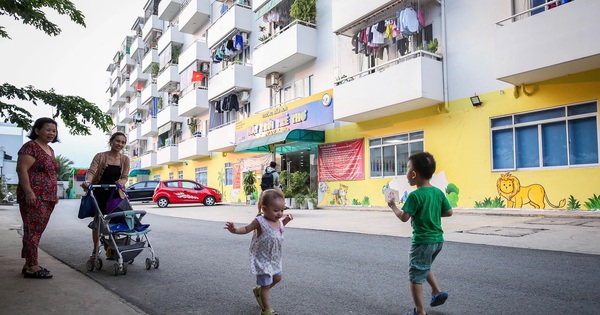
Why Ho Chi Minh City's social housing supply lags behind demand
Translated from Vietnamese, summarized and contextualized by DistantNews.
At a glance
News
Sources not specified
Context piece
- Ho Chi Minh City's social housing supply fails to meet growing demand due to complex procedures and unattractive incentives for developers.
- Developers face more administrative steps than for commercial housing projects and limited profit margins (under 10%).
- Challenges also include unclear pricing mechanisms, a lack of long-term preferential capital, and insufficient state support for financing.
Ho Chi Minh City is struggling to meet the escalating demand for social housing, with officials citing a complex web of bureaucratic procedures and insufficient incentives as major obstacles. The city's Department of Construction highlighted these difficulties during a recent economic and social affairs press conference.
One of the biggest hurdles is the system of investment and construction procedures for social housing, which are stipulated in various legal fields such as investment, planning, land, housing, construction, and real estate business.
According to Do Diep Gia Hop, Deputy Head of the Department of Transport Infrastructure Maintenance and Operation, the investment and construction procedures for social housing are scattered across multiple legal domains, including investment, planning, land, housing, construction, and real estate business. Despite existing municipal guidelines, projects still require approval from numerous agencies.
Social housing projects currently have about 3 more administrative steps than commercial housing projects.
Beyond the standard procedures for commercial housing, social housing projects necessitate additional steps to ensure state benefits are properly controlled and to prevent profiteering. Mr. Hop noted that social housing projects involve approximately three more administrative steps compared to commercial ones. Furthermore, the regulated profit margin for social housing intended for sale, capped at 10% of total investment costs, deters many businesses from participating in this sector.
The regulated profit margin for social housing for sale, not exceeding 10% of total investment costs, makes many businesses less enthusiastic about participating in this field.
Additional challenges include the mechanism for determining the selling price and developer profits through auditing, which prevents a fixed price at the construction phase and introduces risks for both investors and buyers if the final audited value deviates significantly from initial estimates. The availability of long-term, low-interest capital (15-20 years) for developers and buyers is also unstable, with current interest support policies lasting only 3-5 years. The city is exploring solutions, including finalizing land-use plans for social housing development until 2040 and prioritizing public investment in state-managed land for these projects.
The mechanism of determining the selling price and the developer's profit through auditing means the official selling price cannot be determined at the time of construction but is only estimated.
DistantNews Editorial
Originally published by Thanh Niên in Vietnamese. Translated, summarized, and contextualized by our editorial team with added local perspective. Read our editorial standards.
More Stories



From Our Blog

What Gets Lost (and Found) When News Is Translated

The Critical Role of Diaspora Media in Global News

What Travellers Should Know About Countries with Restricted Press

A Digital Nomad's Guide to Following Local News

How the Same Story Looks Different in Different Countries
