


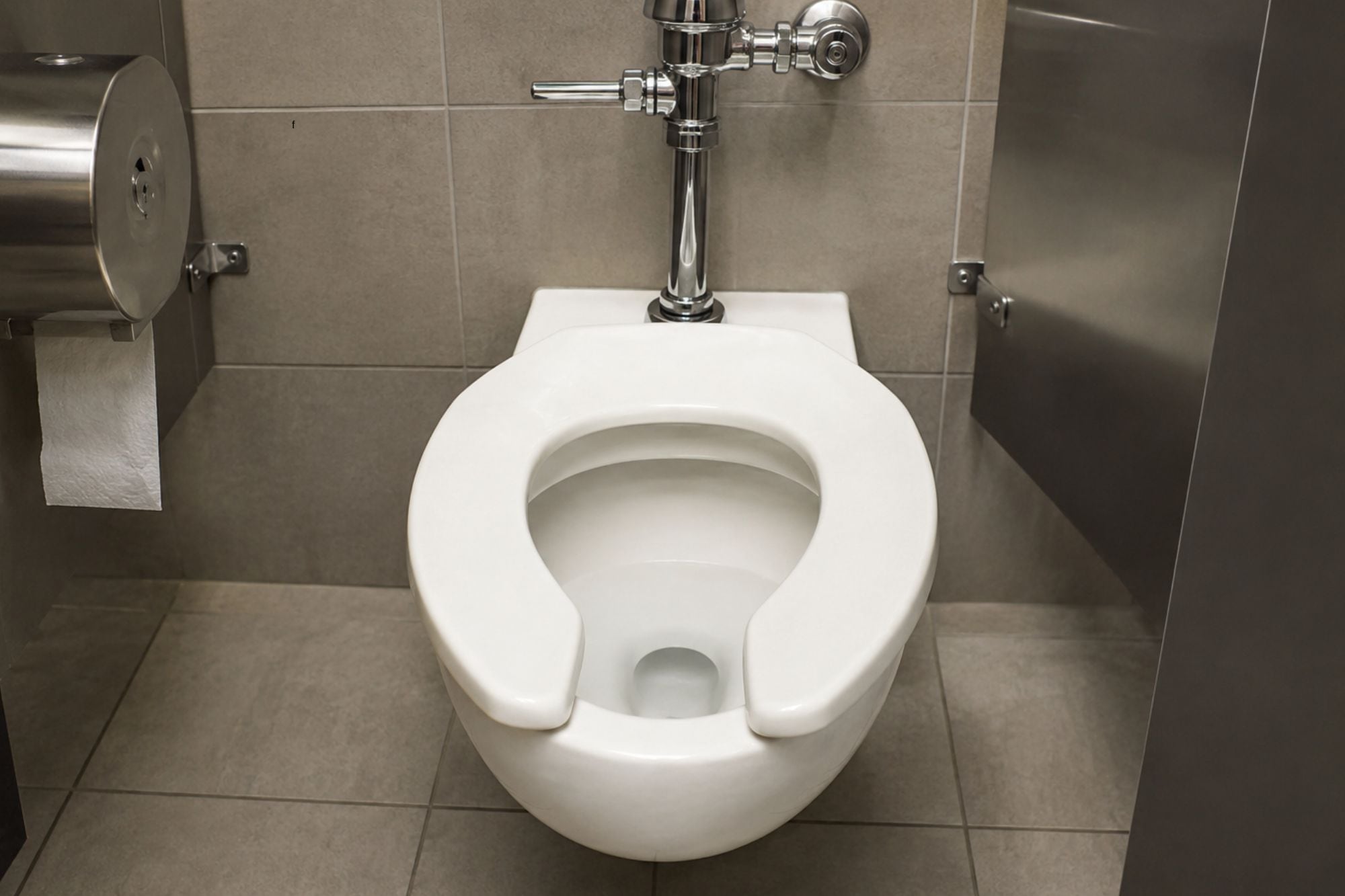
Why Public Toilet Seats Have an Open U-Shape
Translated from Spanish, summarized and contextualized by DistantNews.
At a glance
News
Sources not specified
Context piece
- Public restrooms commonly feature U-shaped or open-front toilet seats, a design mandated by health regulations.
- This design reduces contact with the seat, lowering the risk of germ transmission in high-traffic areas.
- Unlike public restrooms, household toilets typically have closed seats due to lower user numbers and more controlled cleaning.
The ubiquitous U-shaped toilet seat found in public restrooms worldwide, from airports to restaurants, serves a critical hygiene purpose. This design, officially known as an open-front toilet seat, is not merely an aesthetic choice but a long-standing public health measure. According to the International Association of Plumbing and Mechanical Officials (IAPMO), its inclusion in many public facilities is mandatory.
this type of seat is mandatory in numerous public bathrooms because it helps reduce contact with potentially contaminated surfaces and contributes to improving hygiene conditions.
The primary benefit of the open front is its reduction of surface area contact. By eliminating the front portion of the seat, the design minimizes direct contact between users and the fixture, thereby decreasing the potential spread of bacteria and other germs. Plumbing engineers also note that this feature aids in personal hygiene and prevents unnecessary contact with the seat.
Beyond user hygiene, the U-shaped design simplifies cleaning and maintenance. It accumulates less dirt and moisture at the front, allowing for quicker and more efficient sanitization. This is particularly crucial in high-traffic public spaces where maintaining collective hygiene presents a significant challenge.
the absence of the front section decreases the contact surface between the person and the toilet, thus reducing the risk of exposure to bacteria and other germs.
In contrast, household toilets usually feature closed seats. This difference stems from the lower number of users and more controlled cleaning environments in private homes, where the need to minimize contact between strangers is less pressing. The open-front model was specifically conceived for public settings where collective sanitation is a greater concern.
this design also facilitates intimate hygiene and avoids unnecessary contact with the seat.
DistantNews Editorial
Originally published by La Nación in Spanish. Translated, summarized, and contextualized by our editorial team with added local perspective. Read our editorial standards.
More Stories



From Our Blog

What Gets Lost (and Found) When News Is Translated

The Critical Role of Diaspora Media in Global News

What Travellers Should Know About Countries with Restricted Press

A Digital Nomad's Guide to Following Local News

How the Same Story Looks Different in Different Countries
