

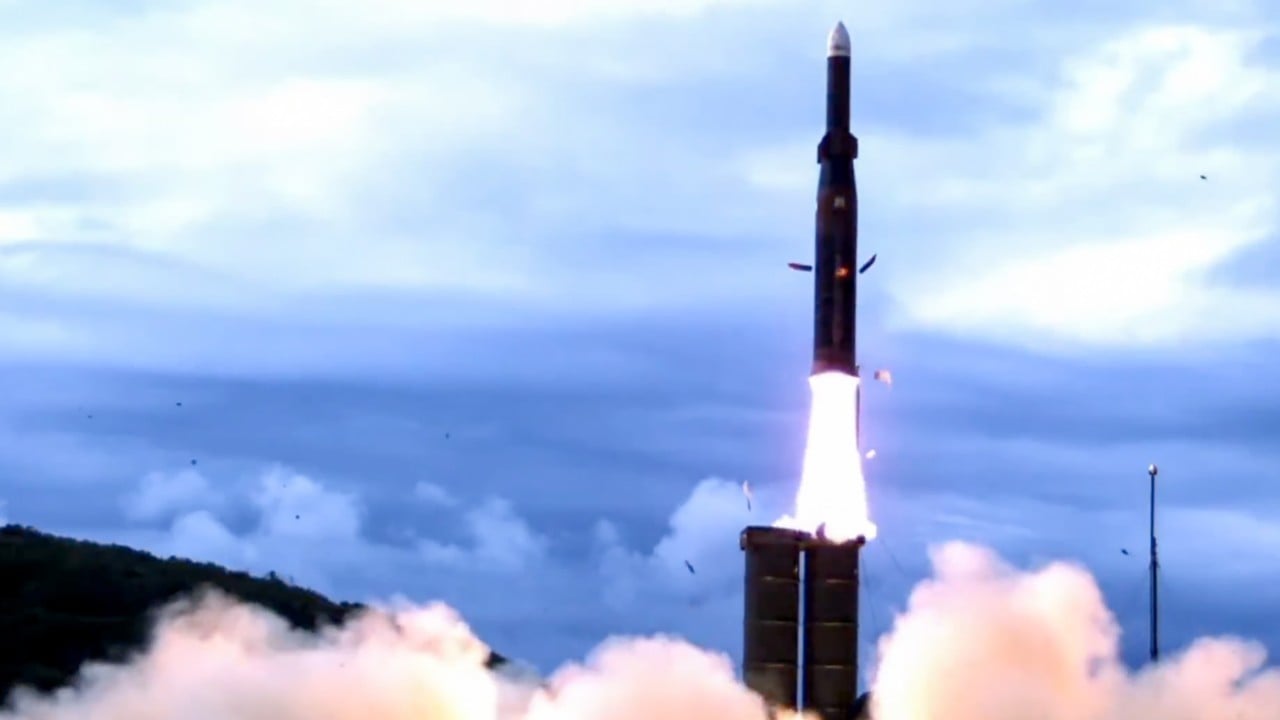

Why stability must come before denuclearisation on the Korean peninsula
Summarized by DistantNews. Read the original for the full story.
At a glance
News
Named sources
Context piece
- North Korea has intensified its deterrence efforts, including missile launches and tightened security, in response to perceived US military pressure, rather than pursuing denuclearization.
- The author argues that applying military pressure to North Korea, which is believed to possess at least 50 nuclear warheads, is far riskier and less predictable than in the case of Iran, due to the Korean peninsula's strategic importance and the potential for wider conflict.
- An
The recent US actions against Iran have sent a clear message to Pyongyang, but North Korea's response has been to double down on its own deterrent capabilities. This includes increased security around its leadership and continued missile tests, signaling that its approach to defense is fundamentally different from Iran's.
Comparisons between North Korea and Iran are limited, as the geopolitical and military landscape of the Korean peninsula is vastly different. The potential consequences of applying military pressure to a nuclear-armed North Korea are far more severe and unpredictable than any scenario involving Iran. With an estimated 50 nuclear warheads, North Korea has reached a point where military pressure alone cannot yield manageable outcomes.
Furthermore, the Korean peninsula is a complex strategic intersection involving the United States, China, and Russia. Any military conflict here would be difficult to contain once it escalates. The US Office of the Director of National Intelligence has also noted the growing threat posed by North Korea's expanding military cooperation with Russia.
Therefore, an Iran-style model is not a viable solution for North Korea. Military options successful in the Middle East cannot be replicated on the Korean peninsula without risking far more dangerous consequences due to the distinct security dynamics at play. The peninsula has long operated under an informal logic of escalation control, where despite crises, an implicit understanding to avoid full-scale war persists. This current impasse represents a prolonged state of managed rivalry, an "unstable coexistence," which appears to be increasingly reflected in North Korea's strategic posture.
About this summary
Originally published by South China Morning Post. Summarized and contextualized automatically by DistantNews, with a note on how the source frames the story. Not individually reviewed before publishing. How this works.
More Stories
From Our Blog

Countries Without a Free Press: The 2026 List and What It Means for Readers

What Press Freedom Means for the News You Read

News in Translation: What Gets Lost, and How We Keep the Framing

Diaspora Media: How Communities Abroad Follow Home

Traveling Where the Press Is Not Free: How to Read the News There
