

Wildfire flares up again in Greece as water bombers deployed
Summarized and contextualized by DistantNews.
At a glance
News
Named sources
Ongoing story
- Wildfires west of Athens, Greece, flared up again on Monday, threatening areas despite easing winds and the deployment of firefighting aircraft.
- Firefighters reported an improvement earlier in the day, but fresh flare-ups near Megara created a dangerous situation as the fire moved closer to the industrial zone.
- High temperatures are forecast for Wednesday, potentially complicating efforts as vegetation becomes more flammable.
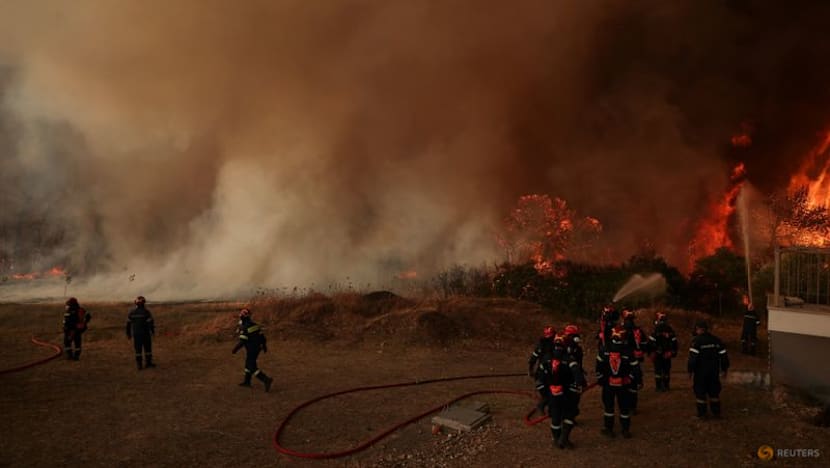
Flames reignited in wildfires west of Athens on Monday, continuing to threaten areas despite a decrease in wind intensity and the deployment of aerial firefighting resources. The blazes, which have been active for four days, remained a significant concern for authorities.
The wind has eased in the area, but in Kandyli there are still gusts and currents created by rising hot air, and we are seeing the fire flare up again.
Earlier on Monday, firefighters had noted a slight improvement in conditions. However, authorities later issued warnings about new flare-ups on a primary fire front near Megara, approximately 30 kilometers west of the capital. Megara mayor Panagiotis Margetis reported that while winds had eased in some parts, gusts and rising hot air currents were causing the fire to flare up again in the Kandyli area.
While no homes or businesses in the villages of Kandyli and Agia Skepi had been damaged, Margetis noted that the fire's unpredictable direction changes were bringing it closer to Megara's industrial zone, creating a "very dangerous" situation. A fire service source confirmed the intensification of the blaze on Monday afternoon, attributing it to active hotspots, and stressed that vigilance remained crucial.
That is normal because there are still active hotspots.
Fire service spokesman Yannis Artopios cautioned against complacency, stating, "there is absolutely no reason to let our guard down." He explained that numerous active or smoldering hotspots required continuous monitoring, as even strong gusts of wind could trigger new outbreaks. The fire service deployed 450 firefighters, supported by 12 helicopters and 16 water-bombing aircraft.
If we had to describe the current situation, we would say there has been an improvement, but there is absolutely no reason to let our guard down.
Wildfire meteorologist Theodore Giannaros described the situation as potentially one of the worst fire crises in the past decade. Although winds have largely subsided from their earlier speeds of over 100 kilometers per hour, temperatures are predicted to reach 37 degrees Celsius on Wednesday. This forecast raises concerns that dry vegetation will become even more flammable, potentially exacerbating firefighting challenges.
Fuels will dry out even more. That will make vegetation more flammable than it was at the beginning of June.
DistantNews Editorial
Originally published by CNA. Summarized and contextualized by our editorial team with added local perspective. Read our editorial standards.
More Stories


From Our Blog

What Gets Lost (and Found) When News Is Translated

The Critical Role of Diaspora Media in Global News

What Travellers Should Know About Countries with Restricted Press

A Digital Nomad's Guide to Following Local News

How the Same Story Looks Different in Different Countries
