


Wildfire in Germany's Müritz National Park Expands, Hindered by Unexploded Ordnance
Translated from German, summarized and contextualized by DistantNews.
At a glance
News
Official statement
Ongoing story
- - A large wildfire in Germany's Müritz National Park has expanded to cover 269 hectares, an area equivalent to nearly 400 football fields.
- Firefighting efforts are hampered by unexploded ordnance on the former military training ground, forcing crews to fight the blaze from the perimeter.
- Support from Bavaria has arrived, including specialized water sprinklers and a hose-carrying vehicle, as the operation is expected to last for several more days.
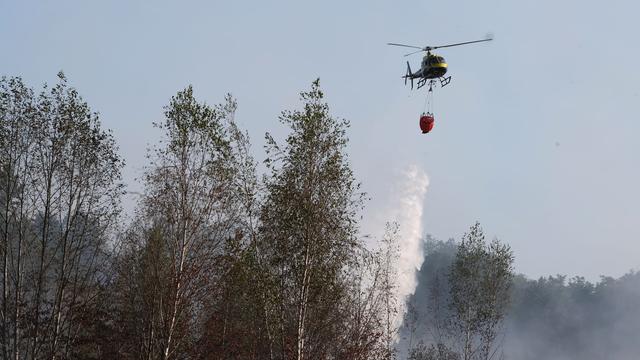
A significant wildfire is raging in Germany's Müritz National Park, with the blaze now covering an area of 269 hectares, roughly equivalent to 400 football fields. The fire, located on a former military training ground, presents unique challenges for firefighters due to the presence of unexploded ordnance. This contamination prevents direct access to the fire's core, forcing emergency crews to focus on containing it from the perimeter. Approximately 375 emergency personnel are currently on site, with reinforcements arriving from Bavaria, including specialized water sprinklers and a 2,000-meter hose-carrying vehicle. Twenty firefighters from Bavaria are also assisting in the containment efforts. A specialized vehicle, an ABC-erkunder, is deployed to detect potential toxic gases, such as phosphorus from the ammunition, although authorities assure there is no danger to the public. The fire has been spreading towards the village of Granzin. To create a firebreak, an agricultural field between the forest edge and the settlement has been repeatedly plowed, and water sprinklers have been set up. The evacuation of Granzin and Granziner Mühle, ordered on Tuesday evening, remains in effect. Granzin has just over 100 inhabitants. Authorities anticipate the firefighting operation will continue for several more days, with significant rainfall not expected until the end of the week. The police have urged the public to avoid the affected area, including cycling and hiking trails, and have advised canoeists to avoid switching from the lakes to the Havel River.
DistantNews Editorial
Originally published by Die Zeit in German. Translated, summarized, and contextualized by our editorial team with added local perspective. Read our editorial standards.
More Stories

From Our Blog

What Gets Lost (and Found) When News Is Translated

How the Same Story Looks Different in Different Countries

The Critical Role of Diaspora Media in Global News

What Travellers Should Know About Countries with Restricted Press

A Digital Nomad's Guide to Following Local News
