


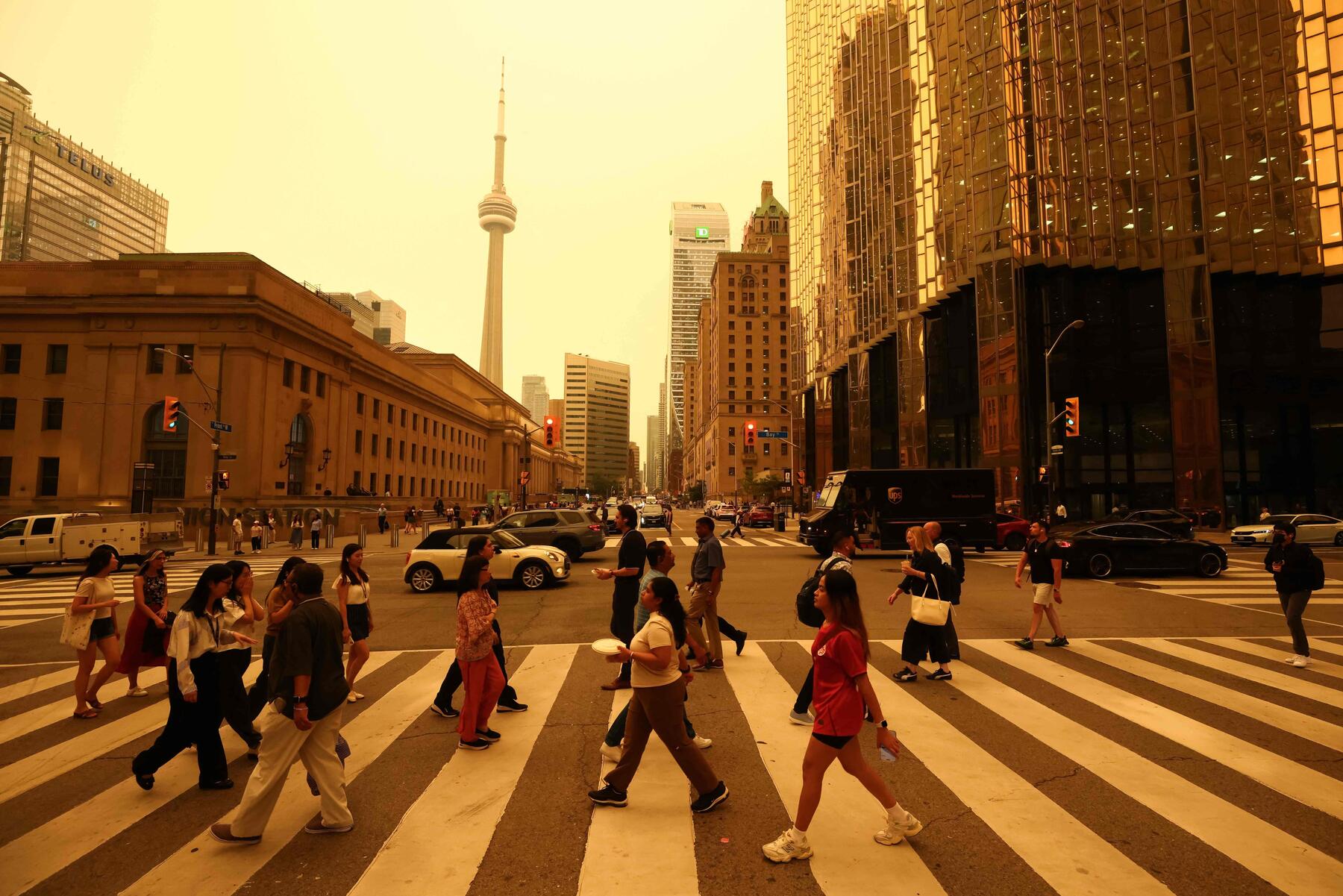
Wildfire Smoke Blankets Toronto, New York; Toronto Ranked World's Worst for Air Quality
Translated from German, summarized and contextualized by DistantNews.
At a glance
News
From a news agency
Context piece
- Wildfires in Canada have caused severe air pollution in Toronto, ranking it the city with the worst air quality globally.
- Residents are advised to avoid outdoor activities due to the "very high risk" air quality index.
- Smoke plumes have also affected parts of the northeastern United States, leading to event cancellations.
Wildfire smoke drifting from Canada has plunged Toronto into a state of severe air pollution, leading to the city being ranked first globally for the worst air quality. The Canadian government's Air Quality Health Index rated Toronto at 10+, classifying the air as a "very high risk."
The Swiss air quality monitoring company IQAir placed Toronto at the top of its global rankings, surpassing cities like Kinshasa and Delhi. Authorities have urged residents to refrain from outdoor activities. The hazardous conditions have prompted the cancellation of Toronto's FIFA Fan Fest and a public viewing event for the England vs. Argentina World Cup match.
New York City has also experienced the impact of the smoke, with authorities issuing similar warnings advising residents to limit strenuous outdoor activities. These warnings come just days before the World Cup final is scheduled to take place in nearby New Jersey. The dangerous air quality is predicted to persist into Thursday night.
While the fires rage in sparsely populated areas hundreds of kilometers away, posing no direct threat to the cities, their impact on air quality is significant. Canada is currently battling approximately 835 fires, with 112 deemed out of control, burning across 1.9 million hectares. Experts anticipate that climate change will increase the frequency of such events, necessitating adaptation strategies for cities and their inhabitants.
I expect that this will happen more frequently in the coming decades, so cities and residents will have to adapt in the future.
DistantNews Editorial
Originally published by Die Presse in German. Translated, summarized, and contextualized by our editorial team with added local perspective. Read our editorial standards.
More Stories


From Our Blog

What Gets Lost (and Found) When News Is Translated

The Critical Role of Diaspora Media in Global News

What Travellers Should Know About Countries with Restricted Press

A Digital Nomad's Guide to Following Local News

How the Same Story Looks Different in Different Countries
