


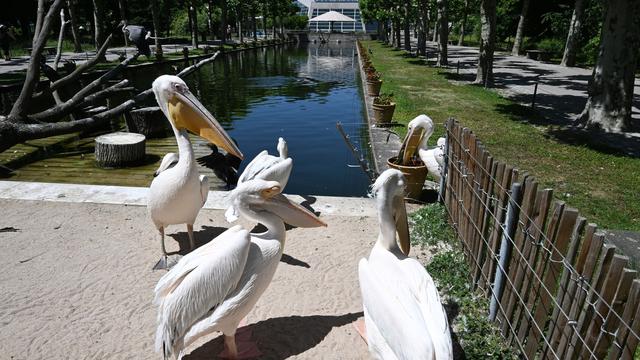
Wilhelma Garden in Stuttgart Unveils Ambitious Renovation Plans
Translated from German, summarized and contextualized by DistantNews.
At a glance
News
From a news agency
New plan
- Stuttgart's Wilhelma zoological-botanical garden is planning a major renovation and redesign with its "Masterplan 2035+".
- The plan includes creating a new African savanna, transforming the hippopotamus house into a Southeast Asian exhibit, and developing a Terra Australis themed area.
- Significant funding is required, with the state responsible for budget allocation and the Wilhelma's support association contributing to specific projects like the elephant house.
Stuttgart's renowned Wilhelma zoological-botanical garden is embarking on an ambitious future, unveiling a comprehensive "Masterplan 2035+" aimed at extensive renewal and redesign. Wilhelma Director Thomas Kölpin stated the plan seeks to preserve the garden's cherished aspects while boldly setting new standards. However, the realization of these aspirations hinges on securing adequate funding, as the Wilhelma is a state-run institution.
A spokesperson for the Ministry of Finance clarified that the Masterplan is a long-term development strategy, not a fully funded project. Budgetary decisions for each phase will be made annually by the state parliament, considering financial priorities and available resources. This underscores the contingent nature of the ambitious renovations.
Key elements of the proposed redesign include the creation of a new African savanna and the transformation of the existing hippopotamus house into a Southeast Asian habitat. This new zone would feature species such as Malayan tapirs, orangutans, and gibbons. Additionally, the garden plans to develop the Terra Australis themed area, potentially including a walk-through enclosure for Southern hairy-nosed wombats. Plans also involve constructing a claw monkey tree in front of the Amazonian house. The preservation and enhancement of the historically protected buildings are also deemed essential.
The construction of a new elephant house is slated for completion by early 2030, with estimated total costs around 68.5 million euros. The state anticipates covering the majority of this cost, while the association of friends and supporters of the Wilhelma has pledged 15 million euros towards the project. The Masterplan's vision extends beyond 2035, with the Wilhelma aiming to set international benchmarks in species conservation, environmental education, sustainable development, and its role as a modern scientific institution dedicated to biodiversity. As Germany's sole zoological-botanical garden, it currently houses approximately 1,200 animal species and over 8,500 plant varieties, attracting more than 1.8 million visitors annually.
DistantNews Editorial
Originally published by Die Zeit in German. Translated, summarized, and contextualized by our editorial team with added local perspective. Read our editorial standards.
More Stories



From Our Blog

What Gets Lost (and Found) When News Is Translated

How the Same Story Looks Different in Different Countries

The Critical Role of Diaspora Media in Global News

What Travellers Should Know About Countries with Restricted Press

A Digital Nomad's Guide to Following Local News
