


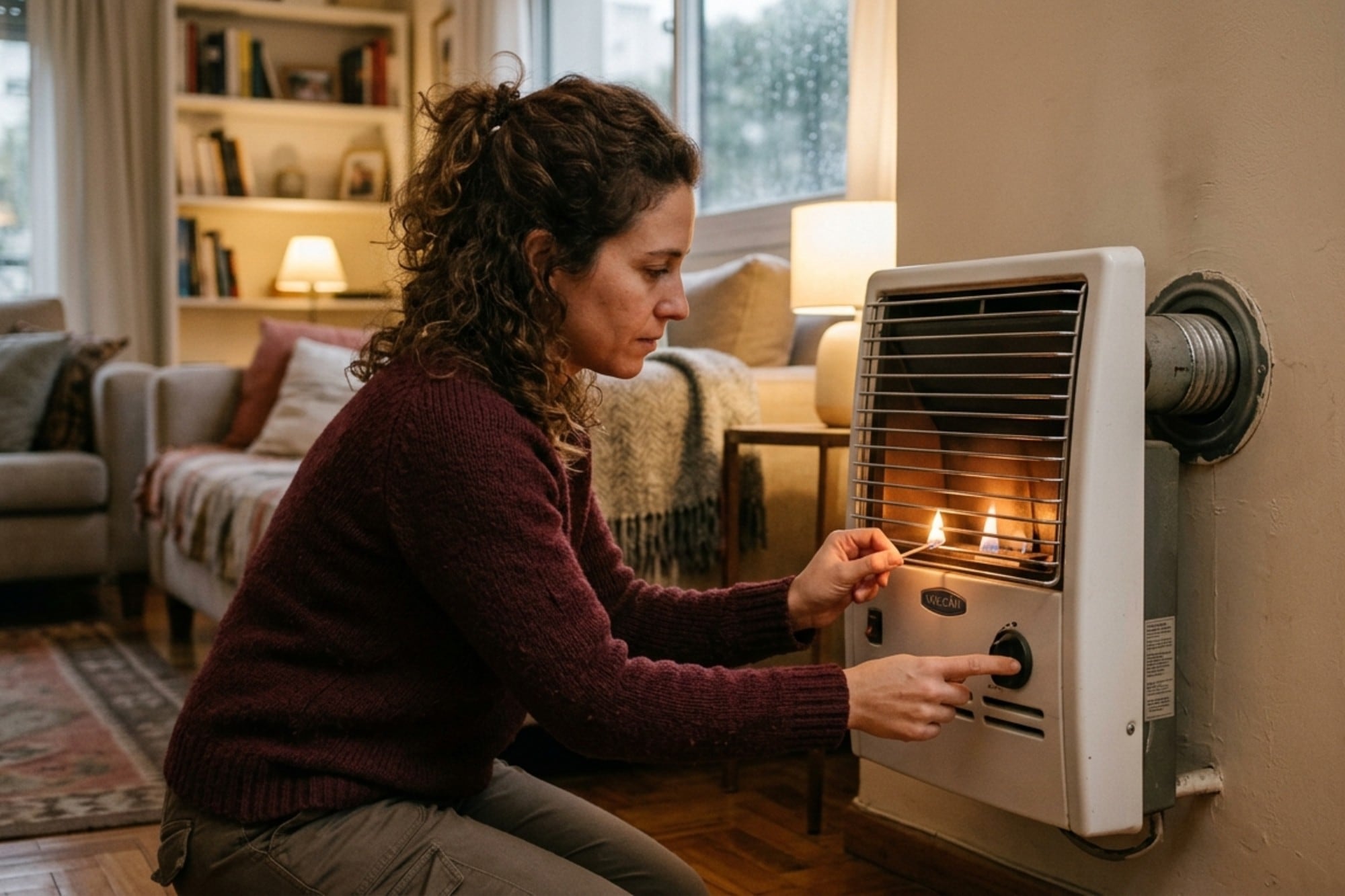
Winter heating risks: How to prevent carbon monoxide poisoning and save on gas bills
Translated from Spanish, summarized and contextualized by DistantNews.
At a glance
News
Sources not specified
Context piece
- Winter heating brings risks of carbon monoxide poisoning, a silent killer with no odor, color, or taste.
- In Argentina, approximately 200 people die annually from carbon monoxide inhalation, with thousands more affected.
- Proper maintenance of heating appliances and ensuring adequate ventilation are crucial to prevent poisoning, especially as homes are sealed more in winter.
As winter descends upon Argentina, the use of heaters, water heaters, and stoves becomes essential, but it also brings a recurring and serious danger: carbon monoxide poisoning. This "silent killer," odorless, colorless, and tasteless, poses a significant threat due to incomplete combustion from various fuel sources.
It is a very important number that justifies every prevention action.
Statistics from Argentina's Ministry of Health reveal the gravity of the situation, with around 200 deaths and 40,000 people affected annually by carbon monoxide inhalation. Data from Metrogas, which serves Buenos Aires and surrounding areas, shows that in 2023 alone, 15 people died and 82 were hospitalized due to this gas. So far this year, Metrogas technicians have responded to 16 incidents, resulting in at least 28 affected individuals and six fatalities.
The risk intensifies during winter because homes are more tightly sealed, leading to reduced ventilation. Appliances that have been idle throughout the warmer months, if not properly maintained, can become hazardous. A poorly serviced heater, a blocked flue on a water heater, or a obstructed ventilation grate can all contribute to the buildup of deadly carbon monoxide.
The technical answer is only one: any appliance that works with combustion can generate monoxide if it burns poorly or if its gases do not exit correctly to the outside.
Sergio Felice, head of safety at Camuzzi, emphasizes that any appliance using combustion can produce carbon monoxide if it burns improperly or if its exhaust gases are not properly expelled. Alejandro Di Lázzaro, director of Corporate Affairs and Communication at Metrogas, stressed the importance of prevention, stating, "Carbon monoxide poisoning can be avoided, and from the company, we will not stop in this fight until the number of fatal accidents drops to minimal levels."
Carbon monoxide poisoning can be avoided, and from the company, we will not stop in this fight until the number of fatal accidents drops to minimal levels.
DistantNews Editorial
Originally published by La Nación in Spanish. Translated, summarized, and contextualized by our editorial team with added local perspective. Read our editorial standards.
More Stories

From Our Blog

What Gets Lost (and Found) When News Is Translated

The Critical Role of Diaspora Media in Global News

What Travellers Should Know About Countries with Restricted Press

A Digital Nomad's Guide to Following Local News

How the Same Story Looks Different in Different Countries
