

Winter pastures begin to be restored in southern Tajikistan
Summarized and contextualized by DistantNews.
At a glance
In-depth
Documents & data
Context piece
- Winter pastures in Tajikistan's Khatlon region are showing signs of restoration thanks to a project focused on resilient landscapes.
- The project involves pasture user associations, fencing degraded areas, and implementing pasture rotation systems.
- Monitoring shows increased forage productivity, with some areas yielding two to three times more than open spaces.
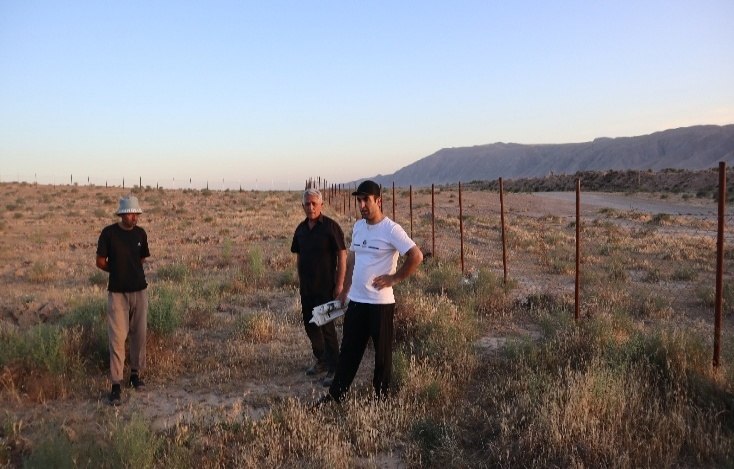
Winter pastures in the southern districts of Tajikistan are undergoing a significant restoration process, showing promising results from the "Restoration of Resilient Landscapes in Tajikistan" project. An assessment conducted in May 2026 across the Shahritus, Kubodiyon, and Nosiri Khusraw districts of the Khatlon region involved specialists studying pasture conditions, evaluating fencing effectiveness, and analyzing the impact of project activities on natural resources.
The project emphasizes the establishment of pasture user associations and the implementation of pasture rotation systems. In the Kubodiyon district, seven such associations manage over 10,000 hectares, with a rotation system covering 8,145 hectares. Fenced areas demonstrated improved productivity, with one site yielding 4.5 quintals of dry forage mass per hectare, and areas with protective saxaul plantings showing yields two to three times higher than open fields.
Similar progress is evident in the Shahritus district, where seven associations oversee more than 8,000 hectares, and a rotation system spans 6,585 hectares. This has led to a 15-25% increase in pasture productivity compared to previous years. A demonstration site in Sayod reported a yield of 9.5 quintals of dry forage mass per hectare on a fenced two-hectare plot, marking a 30-40% increase from last year.
In the Nosiri Khusraw district, six pasture user associations manage over 2,100 hectares, with a rotation system implemented on 1,727 hectares. This initiative has boosted pasture productivity by approximately 15% compared to last year. The project's focus on rational pasture use and the creation of user associations appears to be effectively improving land conditions and increasing forage availability for livestock, crucial for the region's agricultural economy.
DistantNews Editorial
Originally published by Asia-Plus. Summarized and contextualized by our editorial team with added local perspective. Read our editorial standards.
More Stories


From Our Blog

What Gets Lost (and Found) When News Is Translated

The Critical Role of Diaspora Media in Global News

What Travellers Should Know About Countries with Restricted Press

A Digital Nomad's Guide to Following Local News

How the Same Story Looks Different in Different Countries
