


With climate risks looming, are we ready to face the new disaster together?
Summarized by DistantNews. Read the original for the full story.
At a glance
Opinion
Sources not specified
Context piece
- A catastrophic flash flood along the Nepal-Tibet border killed more than 900 people and left more than 2,000 missing, following earlier climate-related disasters in Nepal.
- The article calls for Nepal, China and India to establish real-time meteorological data-sharing, joint monitoring and coordinated early-warning systems.
- Existing Chinese regional data-sharing arrangements and previous commitments between Nepal and China offer possible models for cooperation.
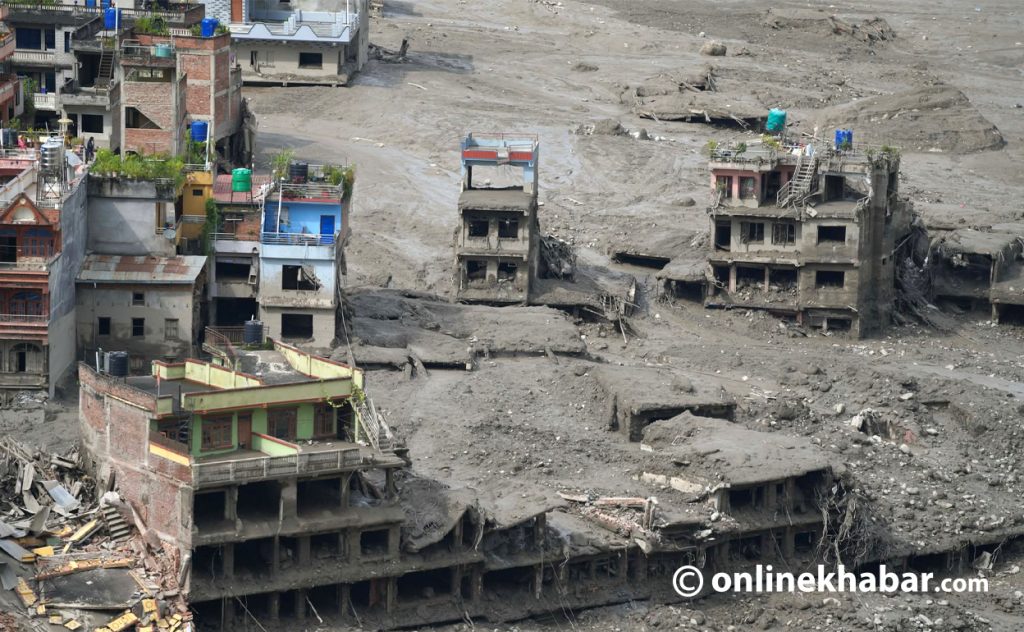
The warning signs have been building for years, yet the latest flood along the Nepal-Tibet border still came as a catastrophe. More than 900 people died and over 2,000 disappeared after flash floods swept through the region on August 26.
The disaster followed an earlier flood at Rasuwagadhi, where a supraglacial lake burst along the Bhotekoshi River. That event destroyed the Nepal-China Friendship Bridge, killed at least nine people and left 19 missing. Other episodes have included the 2017 monsoon floods, which affected roughly 80 percent of the Tarai, and landslides and debris that buried Melamchi Bazaar and damaged Kathmandu Valley's pipeline.
Climate-related risks are also appearing in new forms. Nepal recorded more than 50,000 dengue cases in 2022, including in cooler towns where the mosquitoes had not previously survived. Together, these events show how mountain, river and public-health systems are being affected by cascading climate pressures.
The proposed response is regional rather than confined to national borders. Nepal, China and India share interconnected mountain and riverine ecosystems, making real-time weather data a humanitarian need as well as a basis for wider trust. The article urges Nepal to create a standing mechanism for data-sharing, joint monitoring and coordinated warnings across shared basins, including the Bhotekoshi and Trishuli/Keyrung corridors.
There are already possible precedents. China shares year-round information with several Lancang-Mekong countries for flood and drought management. Nepal and China committed to stronger early-warning cooperation after the 2025 Bhotekoshi glacial lake outburst flood, while a 2019 agreement in principle with India on hydro-meteorological data-sharing has not yet become a formal memorandum. The proposed cooperation would require government-level coordination and pooled resources so warnings and communications reach affected communities in time.
About this summary
Originally published by Kathmandu Post. Summarized and contextualized automatically by DistantNews, with a note on how the source frames the story. Not individually reviewed before publishing. How this works.
More Stories

From Our Blog

What Gets Lost (and Found) When News Is Translated

The Critical Role of Diaspora Media in Global News

What Travellers Should Know About Countries with Restricted Press

A Digital Nomad's Guide to Following Local News

How the Same Story Looks Different in Different Countries
