


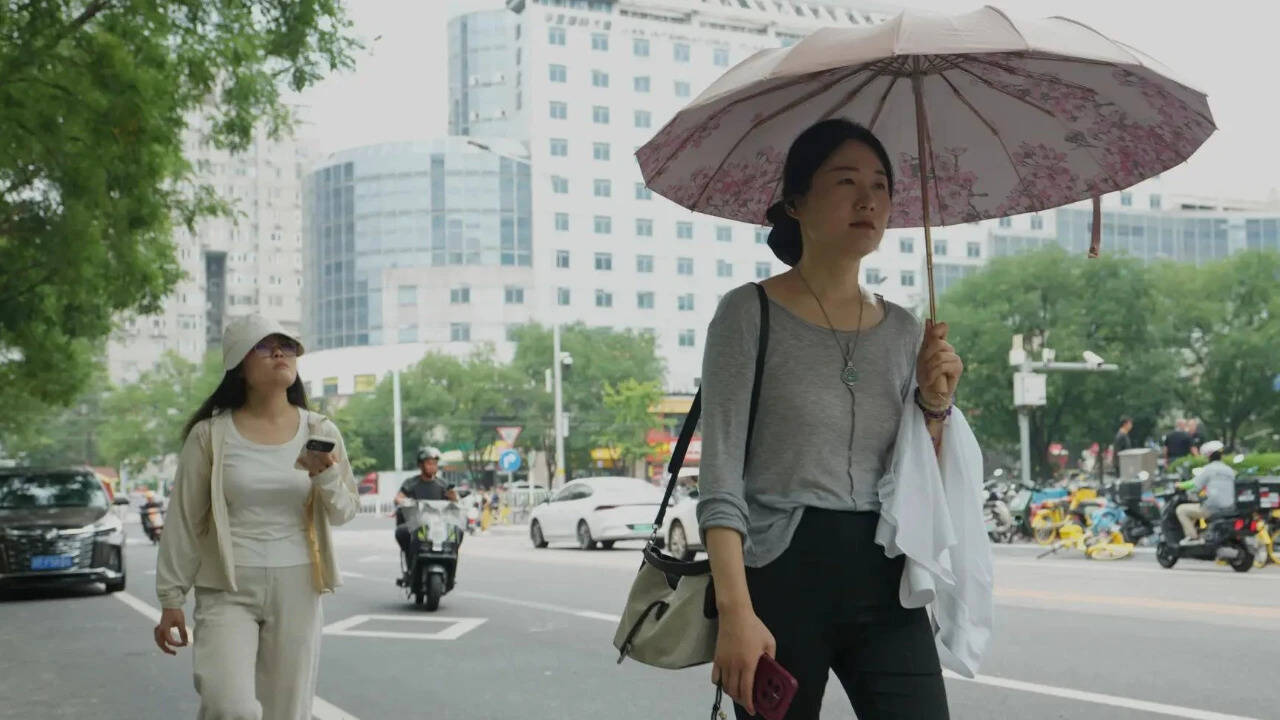
Women's Public Role Shrinks in China as Official Rhetoric Shifts Towards Family: Study
Translated from English, summarized and contextualized by DistantNews.
At a glance
News
Documents & data
Context piece
- A study analyzing over 125,000 articles in China's People's Daily from 1990-2023 reveals a diminishing public role for women.
- Official rhetoric has shifted from promoting women's public participation to emphasizing their familial roles.
- This trend is reflected in the declining prominence of terms related to women's careers and leadership in the newspaper, alongside an increase in references to domestic life.
Official rhetoric in China has increasingly shifted towards emphasizing women's familial roles, leading to a diminished presence in public life, according to a recent study. While the Chinese Communist Party (CCP) historically promoted gender equality with slogans like "women hold up half the sky," analysis of the People's Daily, the party's official newspaper, shows a significant change in narrative over the past three decades.
The study, published in Frontiers in Sociology, examined over 125,000 articles from the People's Daily between 1990 and 2023. Researchers Jia Wang and Ruiyu Zhang found a widening gap in the portrayal of women, with a notable decline in references to their public roles starting in the late 1990s. Vocabulary associated with public life, such as "leading woman," "fighter," "career," and "entrepreneurship," appeared less frequently.
Conversely, the study observed a consistent association between women and the private sphere throughout the analyzed period. Terms like "family," "childbearing," "housework," and "loving mother" became more prominent in the newspaper's coverage. This shift contrasts with the early 1990s, when references to women in public roles were nearly as common as those linked to their domestic lives.
This trend is also reflected in China's highest political bodies. There have been no women among the 24 members of the Politburo since 2022, and no woman has ever served on the Politburo Standing Committee, the country's top decision-making body. The study highlights how official media narratives can shape societal perceptions and potentially influence the representation of women in both public and private spheres.
DistantNews Editorial
Originally published by Times of India in English. Translated, summarized, and contextualized by our editorial team with added local perspective. Read our editorial standards.
More Stories

From Our Blog

What Press Freedom Means for the News You Read

What Gets Lost (and Found) When News Is Translated

The Critical Role of Diaspora Media in Global News

What Travellers Should Know About Countries with Restricted Press

A Digital Nomad's Guide to Following Local News
