


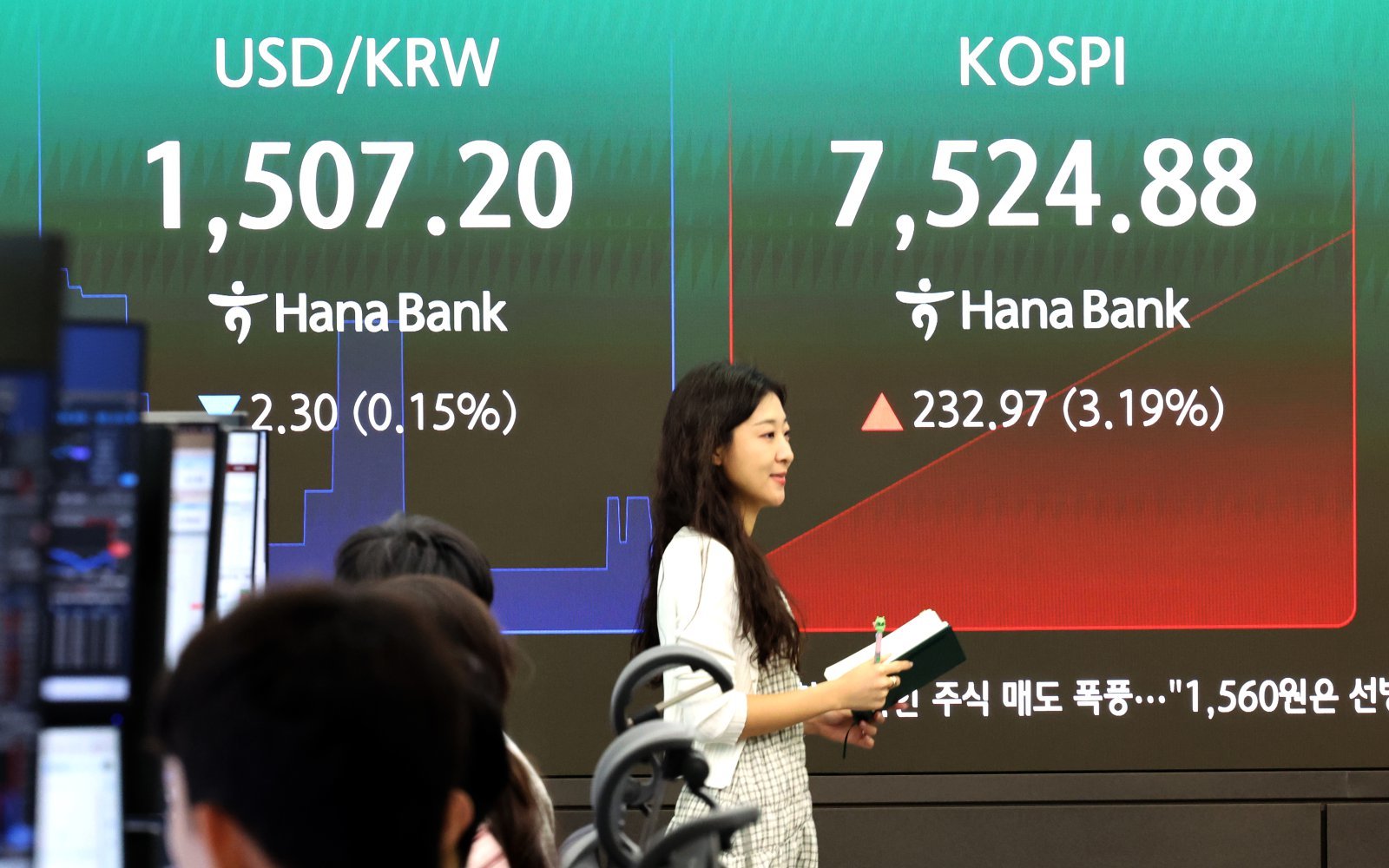
Won-Dollar Exchange Rate Finishes Above 1500 for Second Day
Translated from Korean, summarized and contextualized by DistantNews.
At a glance
News
Named sources
Context piece
- The South Korean won weakened against the U.S. dollar, closing at 1501.4 won per dollar for the second consecutive day above the 1500 mark.
- The dollar index slightly decreased, while foreign investors' net buying of Korean stocks provided some support for the won.
- Factors influencing the exchange rate include import demand, foreign investment flows, and global oil prices.
The South Korean won experienced further depreciation against the U.S. dollar, closing at 1501.4 won on July 10, marking the second consecutive day the exchange rate has remained above the 1500 threshold. This level signifies a continued weakening of the local currency against the greenback.
Despite the overall trend, the dollar index, which measures the dollar's value against a basket of major currencies, saw a slight decline. This movement suggests a mixed performance for the dollar globally. However, foreign investors' sustained net buying of Korean stocks over the past two days has provided some support to the won, counteracting some of the downward pressure.
Considering the transaction pattern of importers securing dollars for settlement payments every mid-month, substantial real demand for dollars can flow in from the 1500 won level.
Market analysts point to several factors influencing the exchange rate. Min Kyung-won, a researcher at Woori Bank, noted that import demand typically increases mid-month as companies secure dollars for payments, which could create upward pressure on the dollar. This demand, coupled with a desire to secure necessary dollar amounts at lower levels, contributes to the won's downward rigidity.
Additionally, the potential for SK Hynix to raise significant capital through its U.S. depositary receipts (ADR) listing, estimated at $26.571 billion, could inject substantial dollar liquidity into the market, potentially stabilizing the won. Global oil prices have also played a role, with a recent decline attributed to concerns over weakening demand due to potential economic slowdowns, despite ongoing geopolitical tensions between the U.S. and Iran.
Movements to secure necessary quantities in advance when the level has decreased also act as a factor for downward rigidity.
DistantNews Editorial
Originally published by Dong-A Ilbo in Korean. Translated, summarized, and contextualized by our editorial team with added local perspective. Read our editorial standards.
More Stories



From Our Blog

What Gets Lost (and Found) When News Is Translated

The Critical Role of Diaspora Media in Global News

What Travellers Should Know About Countries with Restricted Press

A Digital Nomad's Guide to Following Local News

How the Same Story Looks Different in Different Countries
