

Won-Dollar Exchange Rate Surpasses 1,540 Won in Overnight Trading, Highest Since Global Financial Crisis
Translated from Korean, summarized and contextualized by DistantNews.
At a glance
News
Sources not specified
Context piece
- The South Korean won-dollar exchange rate surpassed 1,540 won during overnight trading, reaching its highest level since the global financial crisis.
- Despite government market stabilization measures, the high exchange rate persists, raising concerns it could become a new normal.
- Factors contributing to the surge include rising international oil prices due to Middle East tensions, a strong dollar, and continuous net selling by foreign investors in the domestic stock market.
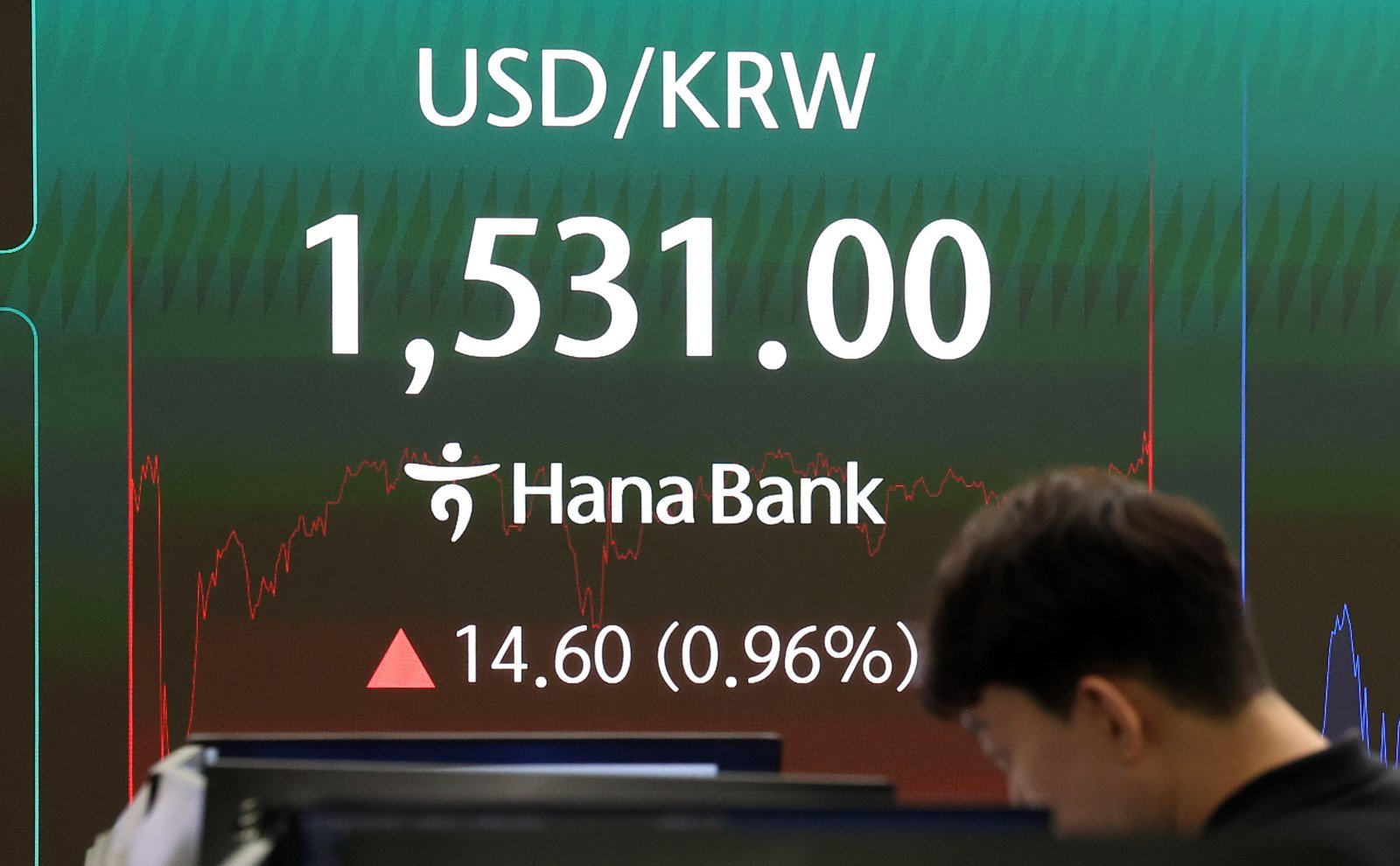
The South Korean won is facing a prolonged period of weakness, with the exchange rate against the U.S. dollar breaching 1,540 won in overnight trading. This marks the highest level since March 2009, raising concerns that the "high exchange rate" could become a "new normal" rather than a temporary surge.
Necessary measures will be taken immediately against excessive쏠림 (imbalance/concentration).
The currency has been trading above 1,500 won for 13 consecutive trading days, the longest stretch since the 1997-1998 Asian financial crisis. The surge is attributed to several factors, including rising international oil prices driven by stalled Iran-U.S. negotiations and escalating military tensions, a strengthening dollar amid a flight to safety, and sustained selling of South Korean stocks by foreign investors.
Government officials have attempted to stabilize the market through verbal interventions, with Deputy Prime Minister and Minister of Economy and Finance Gu Yoon-cheol stating that "necessary measures will be taken immediately against excessive쏠림 (imbalance/concentration)." However, these efforts have so far failed to curb the upward trend of the exchange rate.
The won-dollar exchange rate will form a high band around 1,500 won, influenced by the U.S. Federal Reserve's potential to freeze interest rates this year, Middle East tensions, and the continued weakness of the Japanese yen.
Financial market analysts predict that the high exchange rate environment may continue due to the prolonged Middle East situation. Some forecasts suggest the won-dollar exchange rate will form a high band around 1,500 won, influenced by the U.S. Federal Reserve's potential to freeze interest rates this year, Middle East tensions, and the continued weakness of the Japanese yen. The significant outflow of foreign capital from the South Korean stock market is seen as a major burden, with analysts warning that the exchange rate could remain rigid even with an expanding current account surplus if this trend persists.
The biggest burden is the selling of domestic stocks by foreigners. If geopolitical uncertainty from the Middle East eases and foreign selling subsides, the exchange rate will fall to the 1,400 won range, but if foreign capital outflows continue, the exchange rate will maintain considerable downward rigidity even with an expanding current account surplus.
DistantNews Editorial
Originally published by Dong-A Ilbo in Korean. Translated, summarized, and contextualized by our editorial team with added local perspective. Read our editorial standards.
More Stories



From Our Blog

What Gets Lost (and Found) When News Is Translated

The Critical Role of Diaspora Media in Global News

What Travellers Should Know About Countries with Restricted Press

A Digital Nomad's Guide to Following Local News

How the Same Story Looks Different in Different Countries
