

Youth Employment Drops by 160,000: Difficulty Entering Quality Jobs Cited
Translated from Korean, summarized and contextualized by DistantNews.
At a glance
News
Documents & data
Context piece
- South Korea's youth employment rate has declined since the second quarter of 2024, with 156,000 fewer young workers compared to the previous year.
- The decrease is concentrated in permanent positions, suggesting a weakening entry into stable, long-term jobs.
- While youth employment shrinks, the number of employed individuals aged 30 and above has significantly increased, highlighting a growing labor market polarization.
South Korea is experiencing a widening gap in its labor market, with youth employment declining sharply while opportunities for older workers expand. In the first quarter of 2024, the number of employed individuals aged 30 and above rose by 339,000, contrasting starkly with a decrease of 156,000 young workers (aged 15-29).
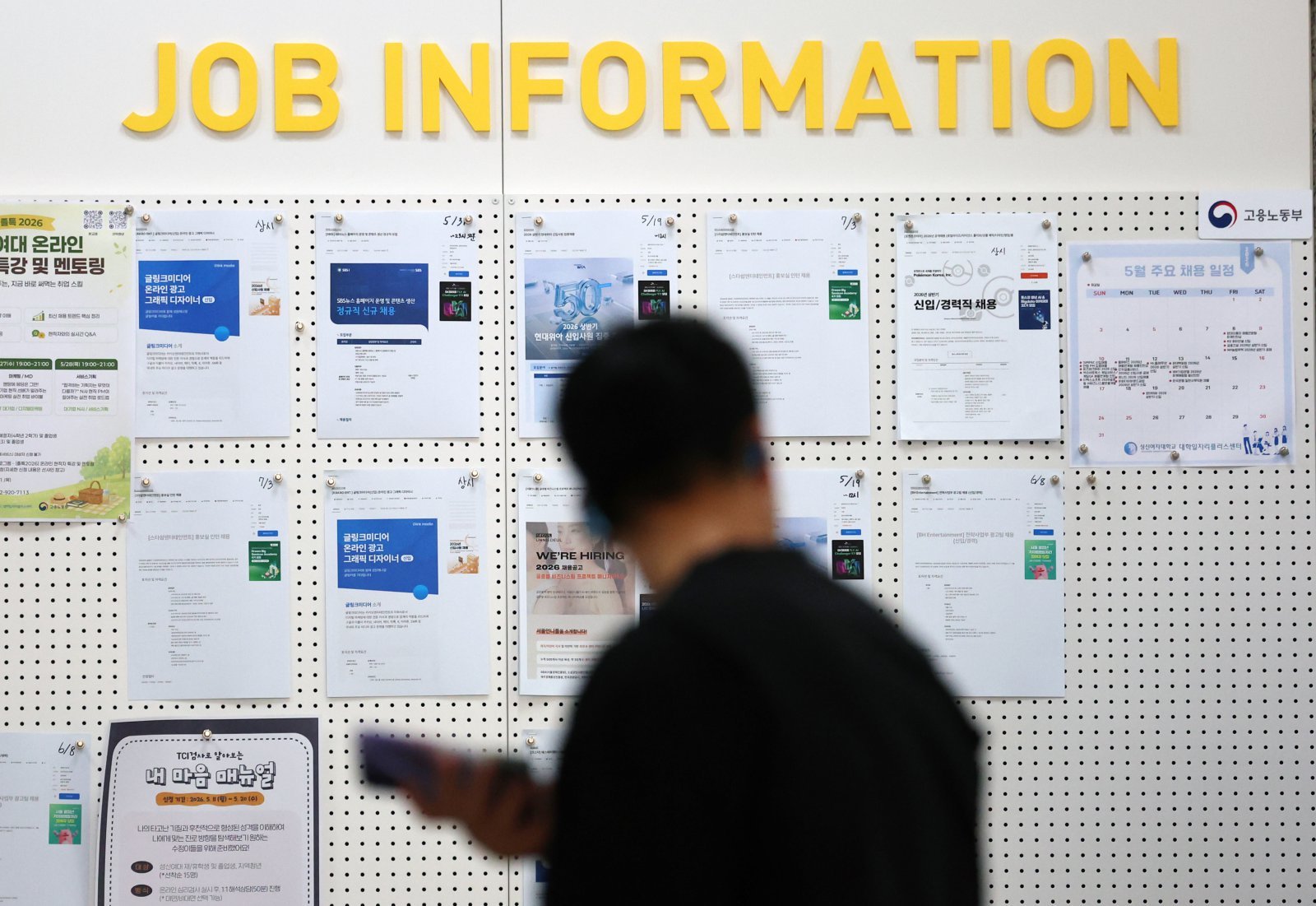
This trend has led to concerns that young people are finding it increasingly difficult to secure stable, long-term employment. Data from the Korea Employment Information Service's "Employment Trends Brief 2026, Issue No. 3" reveals that the youth employment rate has been on a downward trajectory since the second quarter of last year. Although it saw a slight rebound in the fourth quarter of 2023, it fell again in the first quarter of 2024 to 43.5%.
Conversely, the employment rate for those aged 30 and above has largely maintained an upward trend, reaching 65.6% in the first quarter of 2024. The decline in youth employment is not confined to temporary or daily positions; it is notably concentrated in permanent roles. This suggests a fundamental weakening in the ability of young individuals to transition into quality, long-term careers.
Industry-wise, the accommodation and food service sector saw the largest drop in young workers, losing 54,000 employees. Significant decreases were also observed in wholesale and retail, manufacturing, and information and communication technology sectors. The report also highlights that while the number of young workers with over one year of tenure increased by only 0.1% over three years, those aged 30 and above saw a 3.7% increase in the same period, underscoring the growing disparity.
The decrease in youth employment is concentrated in permanent positions rather than temporary or daily ones. This indicates a potential weakening of new entrants' access to quality jobs.
DistantNews Editorial
Originally published by Dong-A Ilbo in Korean. Translated, summarized, and contextualized by our editorial team with added local perspective. Read our editorial standards.
More Stories



From Our Blog

What Gets Lost (and Found) When News Is Translated

The Critical Role of Diaspora Media in Global News

What Travellers Should Know About Countries with Restricted Press

A Digital Nomad's Guide to Following Local News

How the Same Story Looks Different in Different Countries
