

World Cup 2026: Explanation for Croatia's disallowed goal – What the ball's sensors showed
Translated from Greek, summarized and contextualized by DistantNews.
At a glance
News
Official statement
Context piece
- FIFA has explained the controversial disallowed goal for Croatia against Portugal in the 2026 World Cup qualifiers, citing "Connected Ball Technology."
- Sensors within the official match ball, Trionda, detected a slight contact by Croatian player Igor Matanović before the ball reached Joško Gvardiol, who was in an offside position.
- This technological evidence confirmed the referee's decision to disallow the goal according to the rules.
FIFA has provided a detailed explanation for the disallowed Croatian goal during their match against Portugal, a decision that sparked significant controversy and ultimately saw Portugal advance in the 2026 World Cup qualifiers.
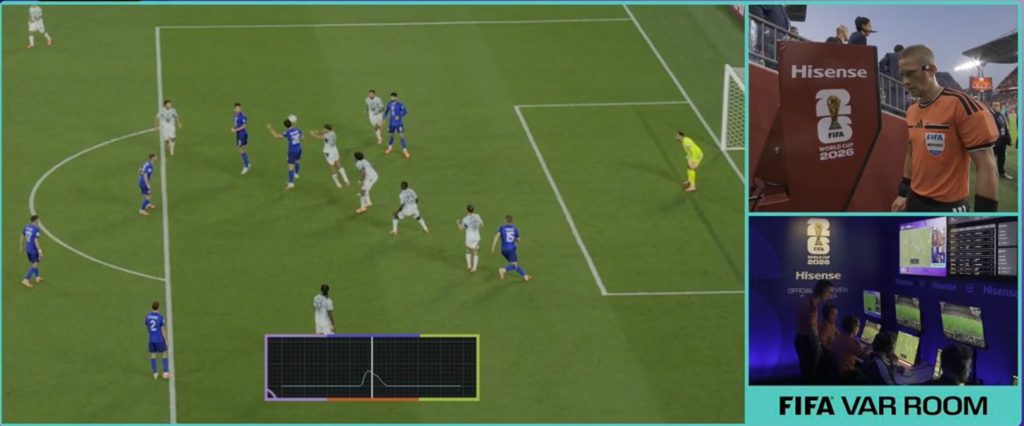
The global football governing body stated that the "Connected Ball Technology" embedded within the official match ball, the Adidas Trionda, was instrumental in verifying the referee's call. According to FIFA's statement, sensors inside the ball registered a subtle touch by Croatian player Igor Matanović.
This contact occurred just before the ball was played to Joško Gvardiol, who was positioned in an offside position at the time. The technology's ability to detect even minor contact was crucial in confirming that an offside offense had indeed taken place, thereby validating the referee's decision to disallow the goal.
FIFA highlighted that the IMU sensors within the Trionda ball are capable of detecting minute touches, which are visualized on broadcasts as a "heartbeat graphic." This advanced data allows referees to make swift and accurate decisions, enhancing the integrity of the game.
According to the data provided by Connected Ball Technology housed within the @adidasfootball Trionda, the official match ball of the @FIFAWorldCup, it was proven that contact was made by Croatia’s #20 Igor Matanović in the build up to the goal against Portugal, allowing the referee to correctly call offside and disallow the goal. The IMU sensors within the Trionda ball are capable of detecting any slight contact, which appears to viewers on the broadcast as a ‘heartbeat graphic’, and allow referees an unprecedented level of data to make quick and accurate decisions.
DistantNews Editorial
Originally published by Ta Nea in Greek. Translated, summarized, and contextualized by our editorial team with added local perspective. Read our editorial standards.
More Stories


From Our Blog

What Gets Lost (and Found) When News Is Translated

The Critical Role of Diaspora Media in Global News

What Travellers Should Know About Countries with Restricted Press

A Digital Nomad's Guide to Following Local News

How the Same Story Looks Different in Different Countries
