

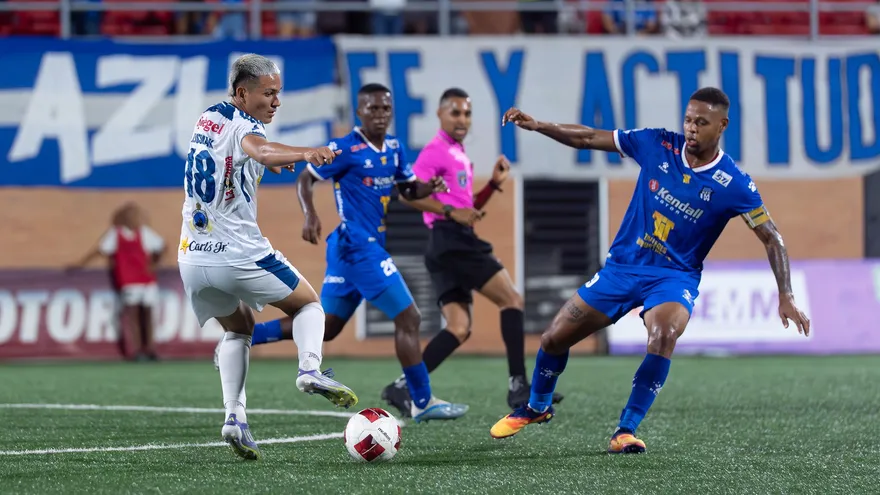

World Cup 2026: Spain's Secret Formula for Molding Talent and Dominating International Football
Translated from Spanish and summarized by DistantNews. Read the original for the full story.
At a glance
News
Named sources
Context piece
- Spain's football federation and La Liga are doubling down on player development, aiming to maintain their international dominance despite the financial power of the Premier League and Saudi Arabia.
- Between 2014 and 2024, Spanish national teams across all age groups and genders secured 16 titles and reached 14 finals in international tournaments, significantly outperforming other European nations.
- The Spanish model emphasizes early player development, with young players gaining extensive match experience through professional club B teams playing in competitive leagues, creating a "perfect bridge" to professional football.
In a world where football's economic gravity increasingly pulls towards the riches of the English Premier League and the burgeoning Saudi Pro League, Spain is demonstrating that talent development remains a potent force. As the reigning European and Olympic champions, Spain's footballing prowess is not accidental; it's the result of a deliberate and sustained strategy by the Spanish Football Federation and La Liga to cultivate young talent. This commitment to nurturing homegrown players has yielded remarkable results, solidifying Spain's status as a global footballing powerhouse.
Ten years ago, we realized that we were international benchmarks in youth development, but there was no collective vision.
The statistics speak volumes about the success of Spain's approach. From 2014 to 2024, Spanish national teams, encompassing both men's and women's squads across all age categories, amassed an impressive 16 titles and reached 14 finals in major international competitions. This consistent performance far outstrips that of traditional footballing giants like Germany, France, and England, and starkly contrasts with Italy's struggles. The economic value of players developed in La Liga further underscores this success, with their market value significantly exceeding that of players from other major European leagues, according to Transfermarkt.
We started from a culture that favors the young player's journey to professional football. A boy in Spain usually starts training and competing at 7-8 years old. He plays an average of 35-40 games a year... When he reaches the senior level, at 18-19 years old, he has played an average of 400-500 games.
At the heart of Spain's methodology is a deeply ingrained footballing culture that prioritizes the development pathway for young players. From a tender age, Spanish children engage in a high volume of matches, averaging 35-40 games per year. Crucially, professional clubs maintain reserve teams (B teams) that compete in the third or fourth tiers of the Spanish football pyramid. This structure provides a vital "perfect bridge" for emerging talents, offering them competitive senior-level experience that is often lacking in other nations' development systems, where reserve teams might play in separate, less competitive leagues or only feature U-23 players.
This gives him a tremendous boost. And it's a differentiating factor: In Spain, all professional clubs have B teams and play in the third or fourth competitive tier, which would be professional categories in many countries. It's a perfect bridge to professional football.
Furthermore, Spain has focused on "advancing the process," recognizing that players can be ready for senior international football at a younger age. This proactive approach has led to the emergence of exceptionally young talents, like Lamine Yamal, who starred for the national team at just 17. This contrasts with previous generations where stars like Xavi and Iniesta only broke through in their mid-twenties. This blend of early exposure, extensive playing time, and a sophisticated understanding of the game, inherited from the tiki-taka style, ensures Spain continues to shape talent capable of dominating the international stage for years to come.
We realized that a boy could be ready at 17, so we decided to advance the process.
About this summary
Originally published by TVN Panamá in Spanish. Translated, summarized, and contextualized automatically by DistantNews, with a note on how the source frames the story. Not individually reviewed before publishing. How this works.
More Stories
From Our Blog

News in Translation: What Gets Lost, and How We Keep the Framing

Diaspora Media: How Communities Abroad Follow Home

Traveling Where the Press Is Not Free: How to Read the News There

The Digital Nomad's Guide to Local News

The Same Story, Different Countries: How Coverage Changes at the Border
