


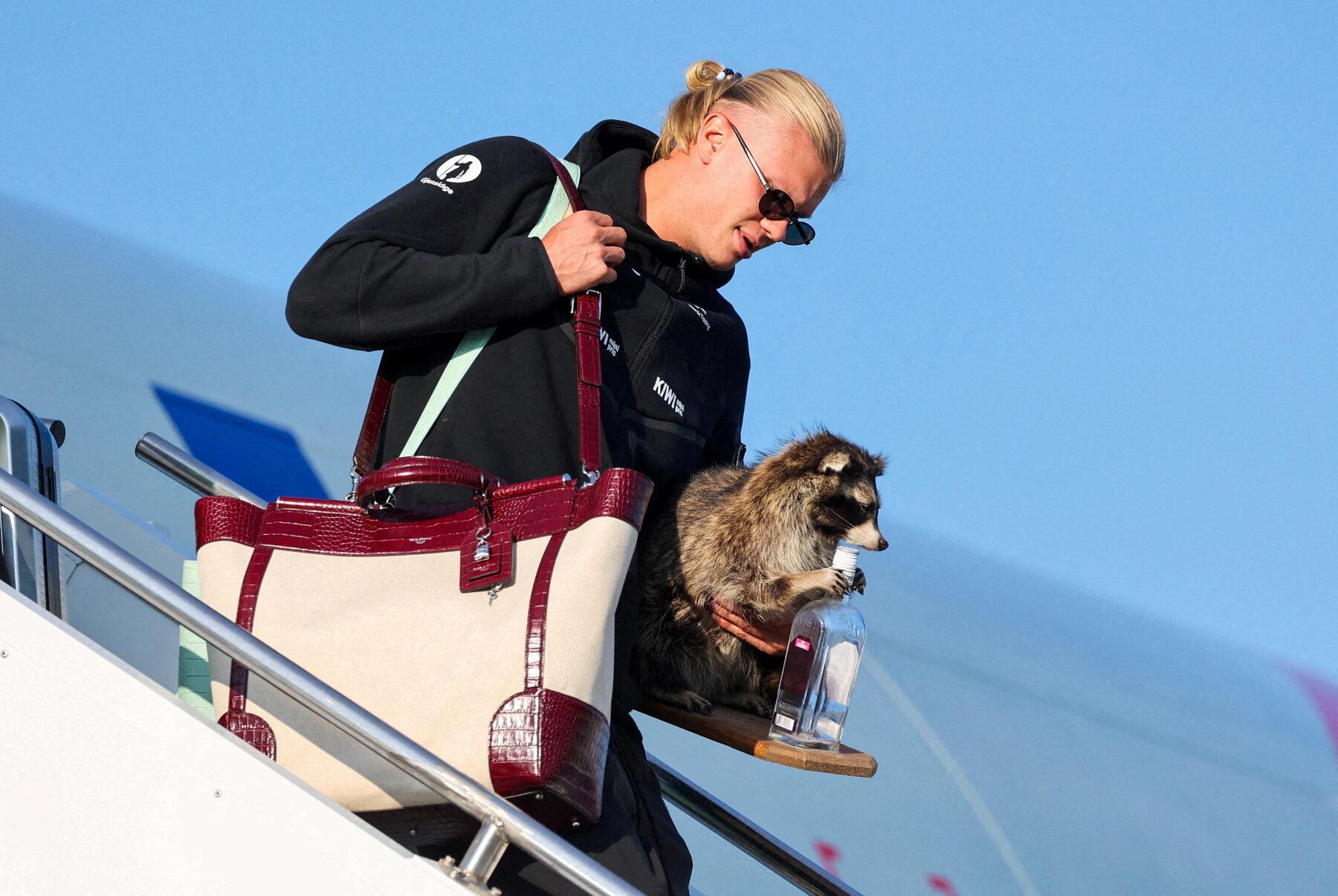
World Cup review: What was good, bad, and what lingers from the tournament
Translated from German, summarized and contextualized by DistantNews.
At a glance
Analysis
Sources not specified
Outcome reported
- The article reviews the highs and lows of the World Cup held in the USA, Mexico, and Canada.
- Lionel Messi is highlighted as the standout player, leading Argentina to the final and setting scoring records.
- Spain's collective strength and new rules against time-wasting are praised as positive aspects of the tournament.
As the World Cup in the USA, Mexico, and Canada draws to a close with the final between Spain and Argentina, a review of the tournament's successes and failures reveals key takeaways. Lionel Messi, despite his age, has once again proven his exceptional talent, leading Argentina to the final and becoming the tournament's top scorer with eight goals. His performance has solidified his status as arguably the greatest player of all time, with Austrian team manager Ralf Rangnick calling him "the best player there has ever been."
Spain's national team is lauded for its exceptional collective performance, demonstrating remarkable cohesion both offensively and defensively. Coach Luis de la Fuente praised the team's unity, stating he had "never experienced such a model group, on and off the pitch." This collective spirit was evident in their tactical masterclass against France in the semifinals, propelling them to the final.
He is the best player there has ever been. He has impressively proven that again.
Positive changes were also noted in the implementation of new rules aimed at curbing time-wasting. Measures such as a five-second countdown for throw-ins and goal kicks, a ten-second rule for substitutions, and a one-minute delay before a player could re-enter the field after treatment significantly sped up the game. The article also commends the vibrant atmosphere created by diverse fan groups, contributing to a positive cultural exchange despite FIFA's ticket policies.
However, the tournament also saw the continued dominance of European nations, with six of the eight quarter-finalists and three of the four semi-finalists hailing from Europe. While the host nations, the USA, Mexico, and Canada, all advanced to the knockout stage, their campaigns ended in the round of 16. The expansion of the tournament to include more teams did not alter the established hierarchy of global football.
I have never experienced such a model group, on and off the pitch.
DistantNews Editorial
Originally published by Die Presse in German. Translated, summarized, and contextualized by our editorial team with added local perspective. Read our editorial standards.
More Stories



From Our Blog

What Gets Lost (and Found) When News Is Translated

The Critical Role of Diaspora Media in Global News

What Travellers Should Know About Countries with Restricted Press

A Digital Nomad's Guide to Following Local News

How the Same Story Looks Different in Different Countries
