




World Meteorological Organization: Heatwaves and Wildfires Worsen Air Pollution
Translated from German and summarized by DistantNews. Read the original for the full story.
At a glance
News
Named sources
Context piece
- The World Meteorological Organization said heatwaves and wildfires are worsening air quality in Europe and could hinder global efforts to protect human health.
- Extreme heat promotes wildfires and ground-level ozone formation, while wildfire smoke contains especially harmful fine particles.
- Although industrial and transport emissions have declined in Europe and North America, the WMO cited research showing that extreme fire events have tripled worldwide since the 1990s.
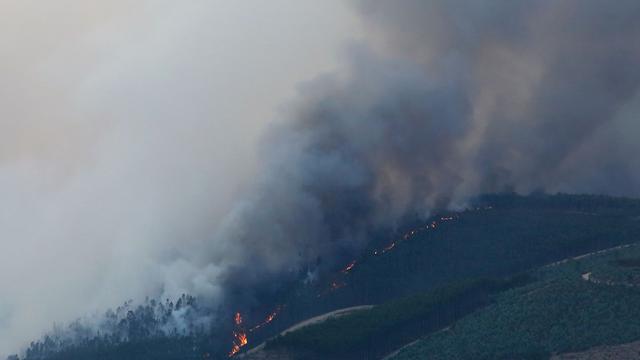
Heatwaves and wildfires are worsening air quality across Europe, while climate change threatens to undermine efforts to improve it, the World Meteorological Organization said in its annual report on climate and air quality.
The report, released for the International Day of Clean Air on September 7, links rising temperatures to two major sources of pollution. Extreme heat encourages severe fires, whose toxic smoke contains large amounts of fine particulate matter. Heatwaves also bring the high temperatures, stable weather and intense sunlight that promote the formation of ground-level ozone.
Both pollutants pose serious health risks. The WMO said long-term exposure to ozone is associated with higher mortality, particularly from respiratory disease. Fine particles can travel deep into the lungs and enter the bloodstream, increasing the risk of heart attacks, irregular heart rhythms, strokes and pulmonary embolisms. Particles from wildfires are especially harmful because they contain many toxic chemicals.
Fine-particle pollution comes from industry, agriculture, household heating, traffic and wildfires. Emissions from industry and transport have fallen in Europe and North America in recent years because of tighter regulations. But the number of extreme fire events worldwide has tripled since the 1990s, according to a study cited by the WMO, increasing pollution from smoke.
In 2025, fire-related fine-particle concentrations were above long-term averages in northern Canada, parts of Russia and west-central Africa because of elevated fire activity. Northwestern Spain also became a hotspot after exceptional fires in late summer. The report's central warning is that air pollution and climate change are closely connected, making progress on one increasingly dependent on addressing the other.
About this summary
Originally published by Die Zeit in German. Translated, summarized, and contextualized automatically by DistantNews, with a note on how the source frames the story. Not individually reviewed before publishing. How this works.
More Stories
From Our Blog

News in Translation: What Gets Lost, and How We Keep the Framing

The Same Story, Different Countries: How Coverage Changes at the Border

Diaspora Media: How Communities Follow News From Home

Traveling Where the Press Is Not Free: How to Read the News There

The Digital Nomad's Guide to Local News
