


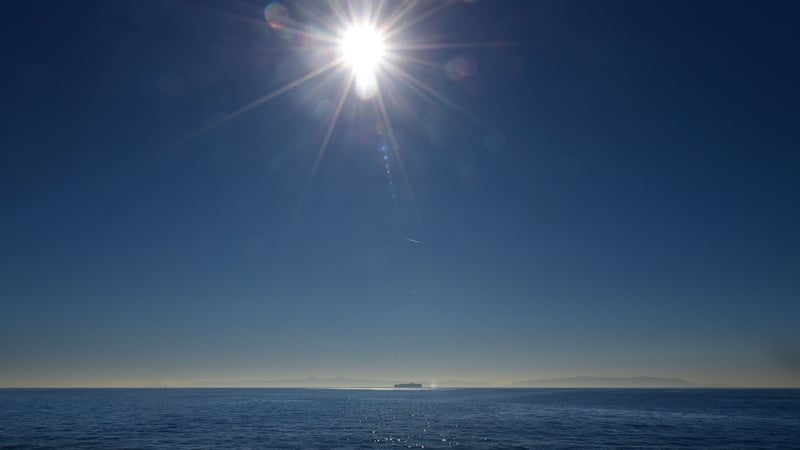
World's oceans break June heat record
Summarized and contextualized by DistantNews.
At a glance
News
From a news agency
Ongoing story
- The world's oceans recorded their hottest June on record in 2026, surpassing previous highs from 2023 and 2024.
- Scientists attribute this record heat to a combination of climate change and the onset of an El Niño weather pattern, predicting further temperature records.
- Oceans play a critical role in regulating Earth's climate by absorbing heat, but rising temperatures contribute to sea-level rise and marine heatwaves, threatening ecosystems.
The world's oceans have registered their hottest June on record, with scientists warning that fresh highs could be set in the coming months due to the combined forces of climate change and the developing El Niño phenomenon. Global average sea surface temperatures in June reached 20.98 degrees Celsius, exceeding the previous records set in 2023 and 2024, according to the European Union's Copernicus Marine Service.
Global average sea surface temperatures in June were 20.98C, beating the previous records of 2023 and 2024.
This record-breaking June caps off six months of unusually high ocean temperatures in 2026, characterized by prolonged marine heatwaves. While average sea temperatures for the first half of the year were slightly below the 2024 high, the emergence of a potentially powerful El Niño is expected to further elevate global heat in both oceans and the atmosphere throughout 2026 and into the following year.
Carlo Buontempo, director of the Copernicus Climate Change Service, stated that current conditions suggest a move into uncharted territory. "With ocean temperatures at these levels and El Nino on the horizon, we are likely to see more temperature records fall in the coming months," he noted. El Niño, marked by warming Pacific waters, releases more heat into the atmosphere, influencing global weather patterns and potentially exacerbating extreme weather events like floods and droughts.
Current conditions could indicate the beginning of a new phase, leading, once more, to uncharted territory.
Oceans are vital regulators of Earth's climate, absorbing approximately 90% of the excess heat generated by human greenhouse gas emissions. However, this heat absorption comes at a cost. Warmer oceans increase atmospheric moisture, fueling tropical cyclones and intense rainfall. They also directly contribute to sea-level rise as water expands when heated. Furthermore, elevated temperatures create stressful conditions for marine life, leading to coral bleaching and death during extended heatwaves.
With ocean temperatures at these levels and El Nino on the horizon, we are likely to see more temperature records fall in the coming months.
Simon Van Gennip, lead Oceanographer for the Copernicus Marine Service, emphasized that 2026 is expected to be among the warmest years on record, driven by both El Niño and ongoing greenhouse gas emissions. This follows a recent UN scientific assessment that declared the world's oceans to be in a "deepening crisis" due to accelerating warming and rising sea levels.
With the arrival and the onset of an El Niño year ... we can expect that 2026 will be amongst the warmest (ever) recorded.
DistantNews Editorial
Originally published by RTÉ News. Summarized and contextualized by our editorial team with added local perspective. Read our editorial standards.
More Stories


From Our Blog

What Gets Lost (and Found) When News Is Translated

The Critical Role of Diaspora Media in Global News

What Travellers Should Know About Countries with Restricted Press

A Digital Nomad's Guide to Following Local News

How the Same Story Looks Different in Different Countries
