


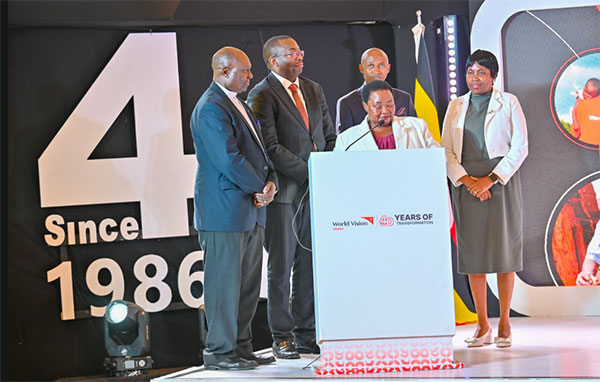
World Vision Uganda Marks 40 Years, Launches 2026-2030 Strategy
Translated from English and summarized by DistantNews. Read the original for the full story.
At a glance
News
Sources not specified
New plan
- World Vision Uganda celebrated its 40th anniversary, marking four decades of transforming lives since its founding in 1986.
- The organization launched its new Strategic Plan for 2026–2030, building on its extensive work in over 50 districts.
- Prime Minister Nabbanja praised World Vision's partnership with the government, noting its contributions to Uganda's social and economic development agenda.
World Vision Uganda celebrated a significant milestone, marking 40 years of operation and launching its ambitious Strategic Plan for 2026–2030. Founded in 1986 amidst the Luwero Triangle's uncertainty, the organization has grown from a response to war-time suffering into a nationwide mission impacting millions.
The commemoration event, held at Speke Resort Munyonyo, brought together government leaders, development partners, and civil society. Prime Minister Robinah Nabbanja, representing President Yoweri Museveni, lauded World Vision's "constructive partnership" with the government. She highlighted the organization's role in building schools, health facilities, and livelihoods, stating that "household poverty levels have dropped, child marriages have reduced, and education outcomes have improved in areas where World Vision works."
The President of Uganda, Yoweri Museveni, congratulates World Vision on its constructive partnership with the government. The government and World Vision share a rich history since World Vision’s founding in 1986. World Vision has worked with us on the social and economic agenda, building schools, health facilities, and livelihoods through collaboration.
World Vision Uganda has expanded its reach to over 50 districts through 52 Area Development Programmes. Its interventions span health and nutrition, education, child protection, resilience and livelihoods, and water, sanitation, and hygiene. The organization has also contributed to policy and legislative reforms aimed at combating child sacrifice, child labor, and child marriage, and has supported school feeding programs.
The new strategy for 2026–2030 signals a forward-looking approach, aiming to continue transforming communities and restoring dignity. Children, whose lives have been shaped by World Vision's programs, were at the heart of the celebrations, sharing their personal stories of impact.
Household poverty levels have dropped, child marriages have reduced, and education outcomes have improved in areas where World Vision works. These achievements are not organisational successes but contributions to government’s development agenda. We also recognise World Vision’s contribution to policy and legislative reform efforts to combat child sacrifice, child labour, and child marriage, as well as its role in school feeding programmes.
About this summary
Originally published by The Independent Uganda in English. Translated, summarized, and contextualized automatically by DistantNews, with a note on how the source frames the story. Not individually reviewed before publishing. How this works.
More Stories


From Our Blog

What Gets Lost (and Found) When News Is Translated

The Critical Role of Diaspora Media in Global News

What Travellers Should Know About Countries with Restricted Press

A Digital Nomad's Guide to Following Local News

How the Same Story Looks Different in Different Countries
