

Wüst deflects questions on reserve chancellor role, election promises
Translated from German and summarized by DistantNews. Read the original for the full story.
At a glance
News
From a news agency
Context piece
- North Rhine-Westphalia Minister President Hendrik Wüst fielded media questions about his "reserve chancellor" role and coalition promises.
- Wüst deferred definitive answers on the third year of free kindergarten and mandatory all-day school standards, citing ongoing progress and avoiding bureaucratic hurdles.
- He also defended Justice Minister Benjamin Limbach against calls for his dismissal, attributing challenges in the penal system to its inherent difficulties.
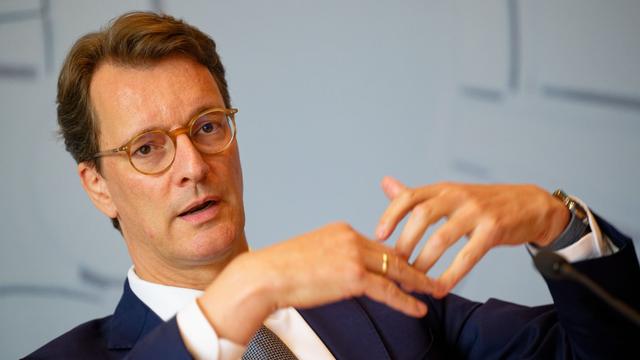
North Rhine-Westphalia Minister President Hendrik Wüst skillfully navigated media inquiries on Thursday, addressing his perceived role as a "reserve chancellor" and the status of his government's promises.
The legislative period is not over yet.
Facing questions about the third year of free kindergarten, a promise in the coalition agreement, Wüst responded pragmatically. "The legislative period is not over yet," he stated, emphasizing the government's significant achievements in expanding kindergarten access both quantitatively and qualitatively. He avoided a definitive "yes" or "no" on whether the promise would be fully realized within the current term, musing, "What is final in this world?"
What is final in this world?
Similarly, on the matter of nationwide binding standards for all-day school care, Wüst opted against immediate legislative action. "We have come to the conclusion that we do not need a legal basis," he explained, assuring continued financial support. He highlighted the expansion of all-day places as a "huge success story," asserting that all children needing a spot would receive one. Wüst expressed a desire to avoid "slowing down" the necessary expansion through "excessive bureaucracy," despite the coalition agreement having previously indicated an implementation law.
We have come to the conclusion that we do not need a legal basis.
Regarding Justice Minister Benjamin Limbach, who has faced opposition criticism over judicial scandals and communication failures, Wüst offered a firm defense. He stated there was no reason to replace Limbach, characterizing the penal system as an "ambitious topic, fraught with many risks" for any state government.
We are not going to slow down the necessary expansion through excessive bureaucracy.
About this summary
Originally published by Die Zeit in German. Translated, summarized, and contextualized automatically by DistantNews, with a note on how the source frames the story. Not individually reviewed before publishing. How this works.
More Stories


From Our Blog

What Gets Lost (and Found) When News Is Translated

How the Same Story Looks Different in Different Countries

The Critical Role of Diaspora Media in Global News

What Travellers Should Know About Countries with Restricted Press

A Digital Nomad's Guide to Following Local News
