


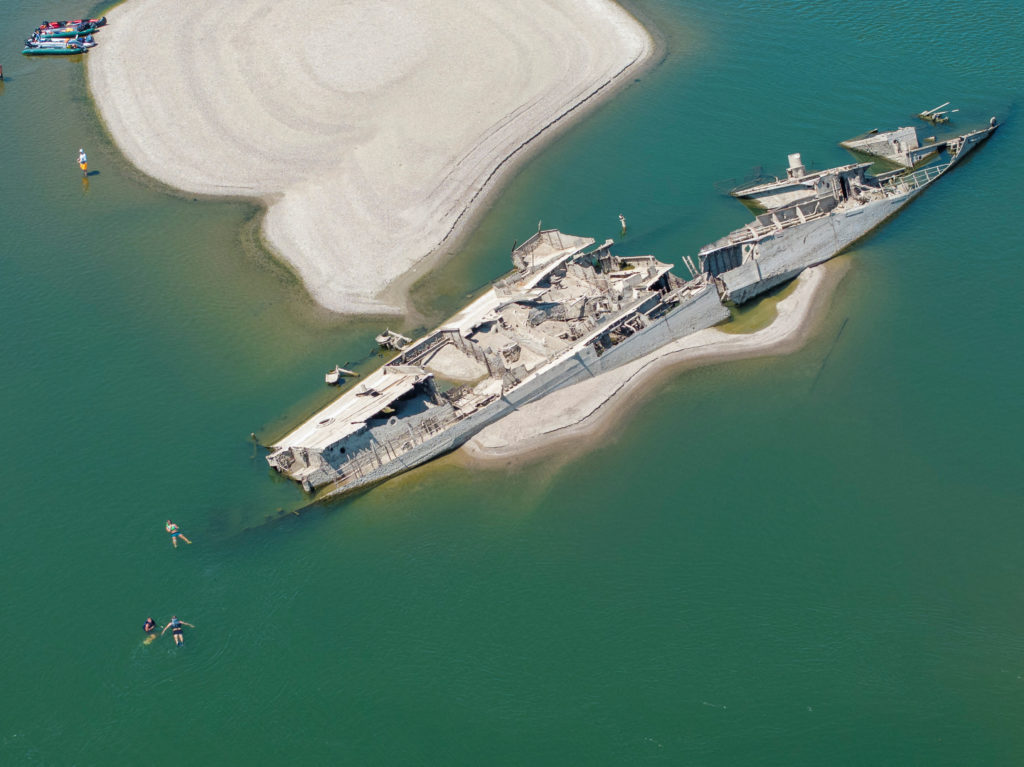
WWII German warships emerge from Danube River as drought lowers water levels
Translated from English, summarized and contextualized by DistantNews.
At a glance
News
From a news agency
Context piece
- Drought has lowered water levels on the Danube River, revealing dozens of World War II German warships.
- The sunken vessels, scuttled by the Nazis in 1944 to slow a Soviet advance, are now a hazard to shipping and a reminder of the war.
- Authorities are attempting to clear the ships, some still laden with explosives, to ensure river traffic can continue.
The Danube River, Europe's second-longest waterway, is experiencing record low water levels due to a persistent drought. This has caused dozens of World War II German warships, deliberately scuttled by the Nazis in 1944, to emerge from the receding waters.
Near the Serbian port of Prahovo, the rusty hulks of these vessels are now visible, some still carrying their deadly cargo. Historians say up to 200 German warships were sunk in the Danube gorge as Nazi forces retreated from advancing Soviet troops. While some were removed by Yugoslav authorities after the war, many remain due to the explosives they contained.
The low water levels pose a significant threat to river navigation, a vital transport route through 10 European nations. "As you can see, the (big) ships can't pass anymore," said Krsta Brandic, a local resident, highlighting the disruption to shipping traffic. The drought's impact also extends to power generation, with plants nearing shutdown and governments conserving electricity.
Efforts are underway, with European Union financial support, to address the hazard posed by the sunken fleet. However, the sheer number of vessels and the explosives they carry have made removal a complex and long-standing challenge. The current situation underscores the severe impact of the ongoing heat crisis and drought across Europe.
As you can see, the (big) ships can't pass anymore.
DistantNews Editorial
Originally published by PBS NewsHour in English. Translated, summarized, and contextualized by our editorial team with added local perspective. Read our editorial standards.
More Stories


From Our Blog

How the Same Story Looks Different in Different Countries

What Gets Lost (and Found) When News Is Translated

The Critical Role of Diaspora Media in Global News

What Travellers Should Know About Countries with Restricted Press

A Digital Nomad's Guide to Following Local News
