


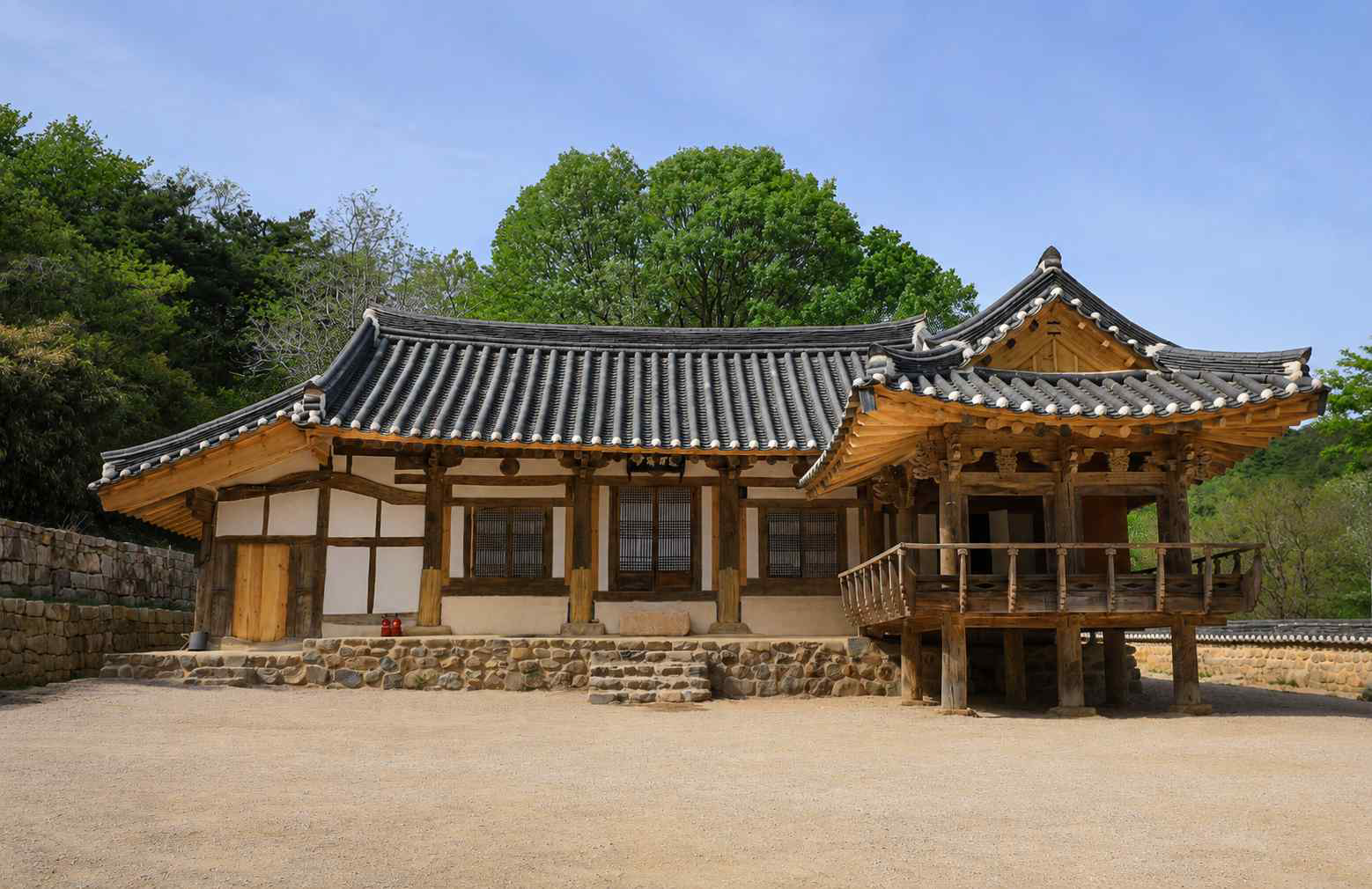
Yeogang Yi clan ancestral hall 'Daljeon Jaesa' designated national heritage
Translated from Korean and summarized by DistantNews. Read the original for the full story.
At a glance
News
Sources not specified
New plan
- The Cultural Heritage Administration designated 'Daljeon Jaesa' in Pohang, Gyeongbuk Province, as a National Folk Heritage.
- The jaesa, associated with scholar Yi Eon-jeok, evolved from a Buddhist hermitage to a Neo-Confucian center.
- Its designation highlights its historical and academic value in reflecting transitional societal and clan structures.
The Cultural Heritage Administration has officially recognized the historical significance of 'Daljeon Jaesa,' an ancestral hall belonging to the Yeogang Yi clan in Pohang, Gyeongbuk Province, by designating it as a National Folk Heritage.
This ancestral hall served as a vital space for managing the graves and conducting ancestral rites for Yi Eon-jeok, a renowned Neo-Confucian scholar of the Joseon Dynasty, and his descendants. Its history reveals a fascinating transformation: it began as a Buddhist hermitage, where monks were tasked with guarding the tomb. Over time, it evolved into a Neo-Confucian jaesa, expanding its role as a focal point for academic and cultural activities within the clan.
Daljeon Jaesa of the Yeogang Yi clan in Pohang, Gyeongbuk Province, has been designated as a National Folk Heritage.
The administration emphasized the site's considerable historical and academic value. It noted that the jaesa clearly illustrates the transitional period after the 17th century, when the clan system (Jongbeop) expanded and community bonds strengthened. This period saw the site shift from its Buddhist origins to its establishment as a Neo-Confucian ancestral hall, showcasing a unique aspect of Korean heritage.
It clearly shows the transitional operational status from a Buddhist hermitage to a Neo-Confucian jaesa, reflecting the expansion of the clan system and the strengthening of community ties after the 17th century.
About this summary
Originally published by Dong-A Ilbo in Korean. Translated, summarized, and contextualized automatically by DistantNews, with a note on how the source frames the story. Not individually reviewed before publishing. How this works.
More Stories



From Our Blog

What Gets Lost (and Found) When News Is Translated

The Critical Role of Diaspora Media in Global News

What Travellers Should Know About Countries with Restricted Press

A Digital Nomad's Guide to Following Local News

How the Same Story Looks Different in Different Countries
