


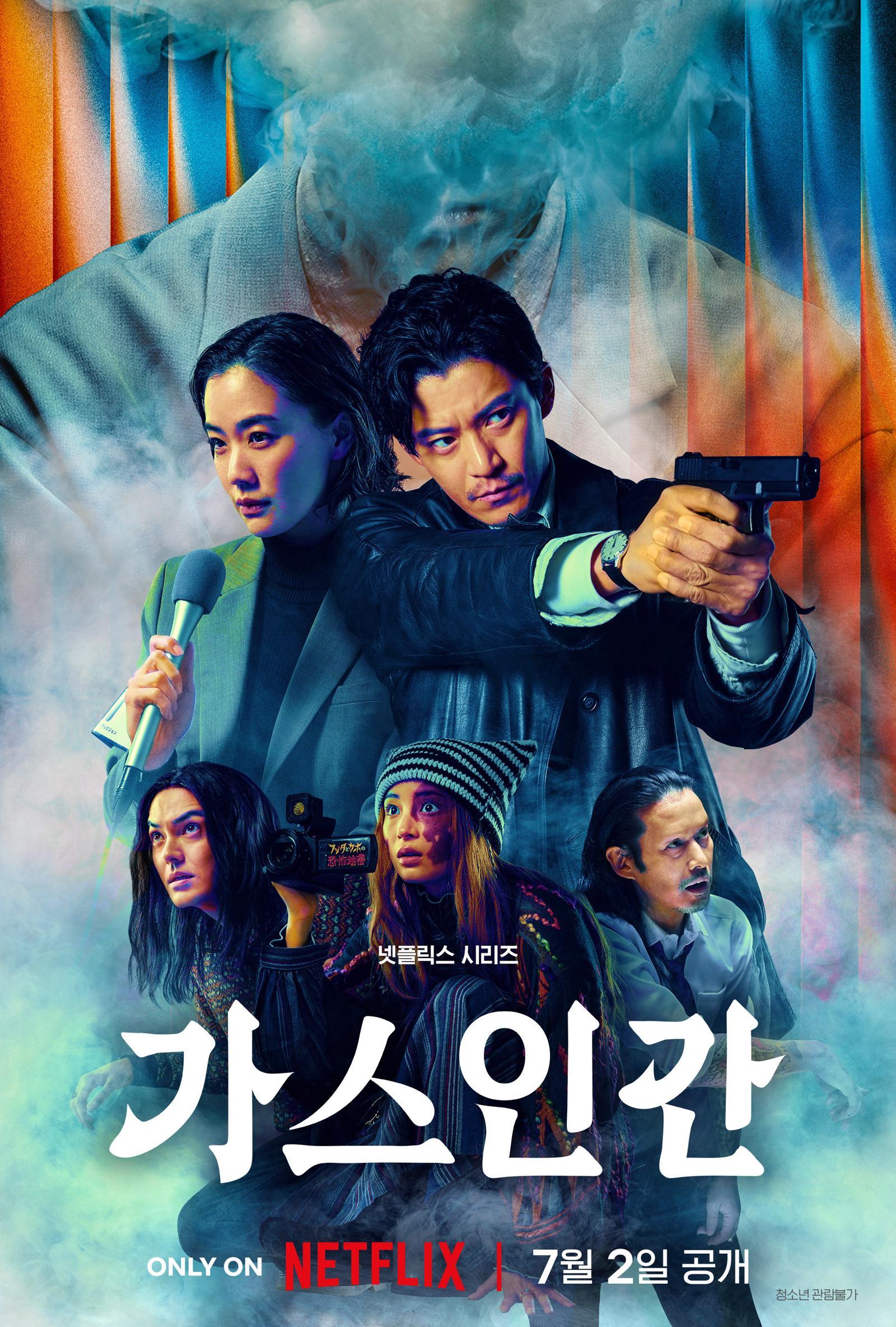
Yeon Sang-ho reinterprets Japanese classic 'Gas Human' for Netflix series after 66 years
Translated from Korean, summarized and contextualized by DistantNews.
At a glance
News
Named sources
Context piece
- Netflix's new 8-part series 'Gas Human' reinterprets a classic 1960 Japanese tokusatsu film, with director Yeon Sang-ho of 'Train to Busan' fame penning the script.
- The collaboration between South Korean director Yeon Sang-ho and Japanese entertainment giant Toho aims to bridge cultural differences and create a unique genre piece.
- The series blends Japanese yakuza elements and unique VFX with a narrative that resonates with Korean audiences through its social commentary, reminiscent of the Brothers Home incident.
Japanese entertainment company Toho sought out South Korean director Yeon Sang-ho, known for "Train to Busan," to reimagine its classic 1960 tokusatsu film "Gas Human No. 1." The result is an 8-episode Netflix series that blends Japanese and Korean creative sensibilities.
Toho's initial interest in collaborating with Yeon stemmed from the positive reception of "Train to Busan" at the Cannes Film Festival in 2016. After meeting Yeon in 2018, Toho proposed about 10 of its classic intellectual properties, with Yeon expressing interest in "Gas Human No. 1." The project, initially envisioned as a Japanese theatrical film, faced production delays due to budget differences between the countries and the pandemic. In late 2020, Yeon proposed a series format, leading to script development in 2021 with the addition of director Shinzo Katayama and a cast including Shun Oguri, Yu Aoi, and Suzu Hirose.
Director Yeon Sang-ho and working with him was the starting point of this project.
The series follows detective Kenji (Oguri) and his ex-girlfriend, reporter Kyoko (Aoi), as they investigate the mysterious "Gas Human" (played by Uta Uchida). While the early episodes focus on the bizarre crimes committed by the Gas Human, the narrative gradually reveals his tragic past, imbuing the story with social commentary. A key plot point involving the use of residents from a social welfare facility as human fuel is particularly resonant with Korean viewers, drawing parallels to incidents like the Brothers Home scandal.
Despite its Korean creative input, the series is firmly set in Japan, incorporating elements like the Yakuza that might not appear in a purely Korean remake. This, combined with Japan's distinctive imaginative flair and robust visual effects (VFX), creates a texture rarely seen in Korean genre films. Toho emphasized its efforts to bridge cultural gaps, employing bilingual writers and having the Japanese production team stay in Korea to revise the script. "This was our first attempt to create a work with an overseas creator, and it seems to have proceeded very successfully," Toho stated.
This was our first attempt to create a work with an overseas creator, and it seems to have proceeded very successfully.
DistantNews Editorial
Originally published by Dong-A Ilbo in Korean. Translated, summarized, and contextualized by our editorial team with added local perspective. Read our editorial standards.
More Stories


From Our Blog

What Gets Lost (and Found) When News Is Translated

The Critical Role of Diaspora Media in Global News

What Travellers Should Know About Countries with Restricted Press

A Digital Nomad's Guide to Following Local News

How the Same Story Looks Different in Different Countries
