

YES Presents Future Strategy at EBSC 2026, Emphasizing Data's Role in AI Competition
Translated from Korean, summarized and contextualized by DistantNews.
At a glance
News
Sources not specified
New plan
- Young Enterprise Software (YES) held its first Enterprise Business Solution Conference 2026 (EBSC 2026) in Seoul, focusing on AI's impact on business.
- The conference emphasized that core corporate competitiveness in the AI era lies in data, processes, and interconnected systems, not just AI adoption.
- Over 700 attendees, including business leaders and IT professionals, explored AI use cases and the future of enterprise software, with a focus on connected solutions.
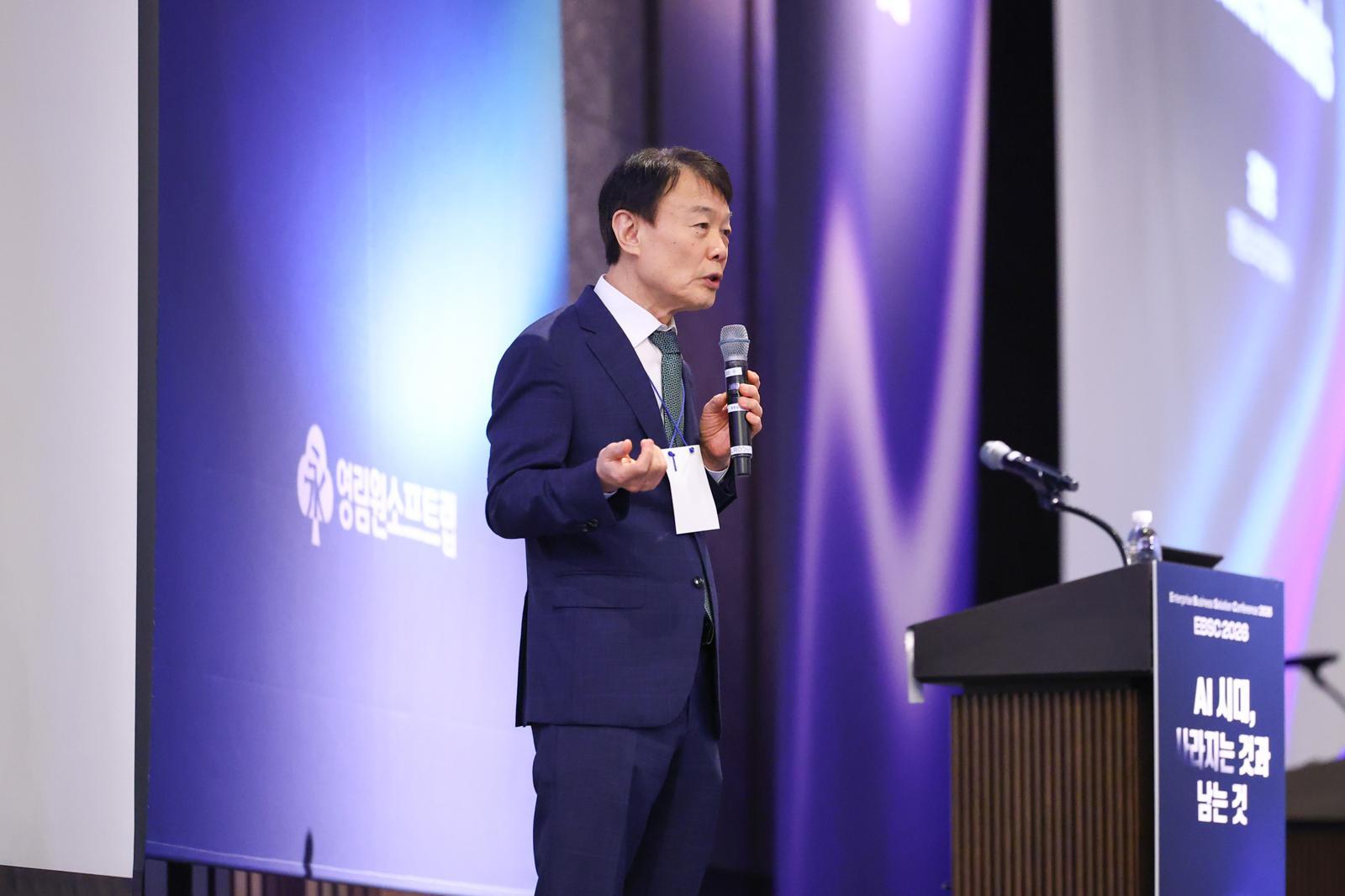
Young Enterprise Software (YES) successfully concluded its inaugural Enterprise Business Solution Conference 2026 (EBSC 2026) in Seoul, a forum dedicated to dissecting the evolving business landscape amidst the rise of generative AI. The conference, themed 'AI Era, What Disappears and What Remains,' brought together over 700 business executives, digital transformation leaders, and IT professionals.
AI is changing work methods, but the essence of corporate competitiveness still lies in data, business processes, and the systems that connect them.
The central message resonated throughout the event: while AI is transforming work methods, the fundamental drivers of corporate competitiveness remain rooted in robust data management, efficient business processes, and the systems that seamlessly integrate them. This perspective was echoed by industry leaders who stressed the importance of building a solid foundation for data accumulation, management, and utilization over simply adopting AI technologies.
Building a foundation for systematically accumulating, managing, and utilizing data is more important than introducing AI itself.
Discussions and presentations highlighted practical applications of AI in the workplace. For instance, one session showcased how generative AI and AI agents can automate tasks related to electronic documents and contracts. The future of enterprise software was envisioned as an ecosystem of 'Connected Solutions,' where Enterprise Resource Planning (ERP) systems serve as the core, intricately linked with various specialized solutions and AI agents.
Simple function-oriented SaaS is becoming difficult to differentiate. In the future, the 'Connected Solutions' ecosystem, where various specialized solutions and AI agents are organically connected around ERP, will determine corporate competitiveness.
Several key players in the enterprise solution market, including Gabia, DauTechnology, Bizplay, NICE Information Service, and FOSS, participated, showcasing how their offerings integrate with ERP and AI technologies across collaboration, e-document management, expense control, and HR/finance sectors. YES CEO Kwon Young-bum affirmed the company's commitment to continuously enhancing its execution platform strategy, which organically connects corporate data, operations, and AI utilization centered around ERP.
We will continue to enhance our execution platform strategy, which organically connects corporate data, business operations, and AI utilization centered around ERP.
DistantNews Editorial
Originally published by Dong-A Ilbo in Korean. Translated, summarized, and contextualized by our editorial team with added local perspective. Read our editorial standards.
More Stories

From Our Blog

What Gets Lost (and Found) When News Is Translated

The Critical Role of Diaspora Media in Global News

What Travellers Should Know About Countries with Restricted Press

A Digital Nomad's Guide to Following Local News

How the Same Story Looks Different in Different Countries
