



Yonsei University Team Develops World's First Transparent Conductive Nanomembrane Stable in Water
Translated from Korean, summarized and contextualized by DistantNews.
At a glance
News
Sources not specified
Outcome reported
- Yonsei University researchers have developed the world's first transparent conductive nanomembrane (BIPIN) stable in aqueous environments, including rainwater, seawater, and bodily fluids.
- This breakthrough allows for simultaneous, interference-free recording of biological signals and real-time imaging of tissues, even when attached to skin or implanted in the brain.
- The new technology overcomes limitations of previous transparent electrodes, offering improved durability and signal quality for bioelectronic devices.
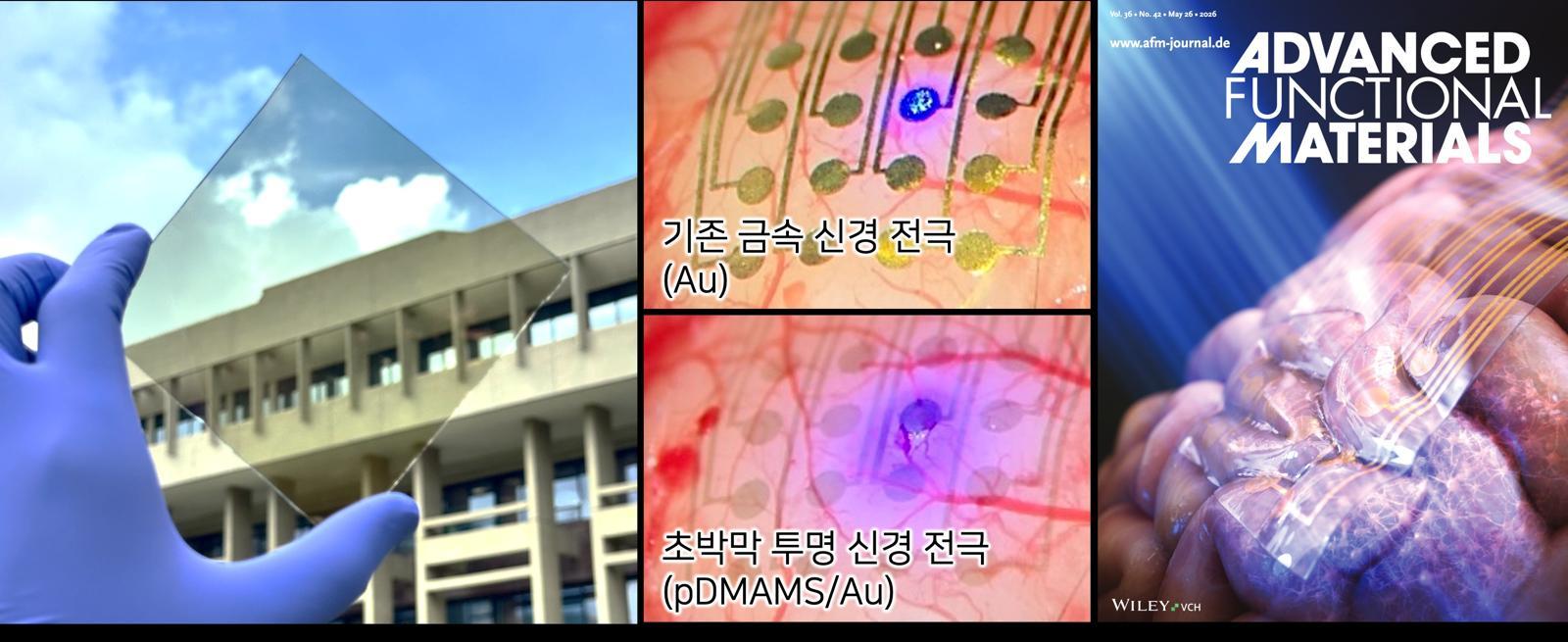
An international research team, led by Professor Yoo Ki-joon at Yonsei University, has achieved a world-first by developing a transparent conductive nanomembrane, dubbed BIPIN, that remains stable in various aqueous environments. This innovative material functions reliably in conditions ranging from rainwater and seawater to bodily fluids, overcoming a significant hurdle in the development of advanced bioelectronic devices.
The BIPIN system enables the simultaneous recording of electrophysiological signals and the acquisition of images from deep blood vessels and neural networks without interference. This was demonstrated through experiments where the membrane was attached to skin and implanted in the brain cortex. The technology effectively resolves issues of degradation and optical obstruction that plagued previous electrodes in moist conditions, dramatically enhancing the accuracy of bioelectronic research in wet environments.
This system experimentally proves that accurate recording of electrophysiological signals and acquisition of images of deep blood vessels and neural networks can be stably performed without mutual interference, even when exposed to various moisture environments such as rainwater, seawater, and bodily fluids.
Previous transparent electrode technologies struggled with corrosion and mechanical detachment in aqueous settings, limiting their long-term use. While protective layers were introduced, they often compromised the device's flexibility and adherence to biological tissues. Metal nanowire-based electrodes also suffered from signal degradation and poor biocompatibility due to oxidation in humid conditions. The newly developed BIPIN membrane, a composite of a conjugated polymer and a fluorinated ionomer, addresses these limitations by offering high conductivity, transparency, flexibility, and water resistance through a simple solution-based process.
This breakthrough is expected to pave the way for more sophisticated applications in neuroengineering, wearable bioelectronics, and high-resolution biological imaging. The research, published in Nature Communications, highlights the potential of BIPIN for stable signal recording and imaging in challenging, water-exposed environments, marking a significant advancement in the field of bio-optoelectronic engineering.
By fundamentally resolving the unavoidable moisture degradation and optical obscuration phenomena that occur in existing electrodes, the accuracy of research based on bioelectronic devices in wet environments can be dramatically improved.
DistantNews Editorial
Originally published by Hankyoreh in Korean. Translated, summarized, and contextualized by our editorial team with added local perspective. Read our editorial standards.
More Stories


From Our Blog

What Gets Lost (and Found) When News Is Translated

The Critical Role of Diaspora Media in Global News

What Travellers Should Know About Countries with Restricted Press

A Digital Nomad's Guide to Following Local News

How the Same Story Looks Different in Different Countries
