


Young leaders must build trust to drive Africa's economic integration, says Brazil-Ghana Chamber official
Translated from English, summarized and contextualized by DistantNews.
At a glance
News
Named sources
Context piece
- Young leaders are urged to prioritize building trust and relationships to foster Africa's economic integration, according to Edinam Adjei-Sika of the Brazil-Ghana Chamber of Commerce.
- Adjei-Sika emphasized that economic integration relies on strong human connections and mutual understanding, not just trade agreements and infrastructure.
- The Africa Young Diplomats Forum conference highlighted the role of diplomacy and leadership in promoting cooperation, innovation, and sustainable development across the continent.
Young Africans must actively cultivate trust and foster relationships to drive the continent's economic integration, urged Edinam Adjei-Sika, Founder of the Brazil-Ghana Chamber of Commerce. Speaking at the Africa Young Diplomats Forum (AYDF) International Diplomatic Leadership Conference, Adjei-Sika asserted that Africa's economic future hinges not only on trade agreements and policies but crucially on the ability of its people to collaborate across borders.
Adjei-Sika stressed that ambitious frameworks like Agenda 2063 and the African Continental Free Trade Area (AfCFTA) can only reach their full potential when citizens, businesses, and communities develop genuine mutual trust and understanding. She explained that economic integration is fundamentally driven by strong human relationships that encourage cooperation and trade, rather than solely by infrastructure, customs procedures, or regulations.
Africa’s economic future depended not only on trade agreements and policies but also on the ability of citizens to work together across borders.
Drawing from her experience connecting businesses and promoting cultural exchange between Brazil and Ghana, Adjei-Sika shared how a senior diplomat described her as an ambassador. This, she noted, illustrates that leadership and bridge-building extend beyond those with formal diplomatic titles. "Anyone who creates opportunities for cooperation, understanding and partnership is contributing to diplomacy and development," she stated.
Anyone who creates opportunities for cooperation, understanding and partnership is contributing to diplomacy and development.
She further elaborated that successful trade and investment relationships often originate from trust, as individuals are more inclined to engage with those they understand and respect. Applying this to the AfCFTA, Adjei-Sika argued that Africans must first build confidence in one another to fully capitalize on the free trade agreement. Strengthening relationships among citizens in neighboring countries, such as Ghana, Togo, and Nigeria, would significantly ease cross-border business collaboration and expansion.
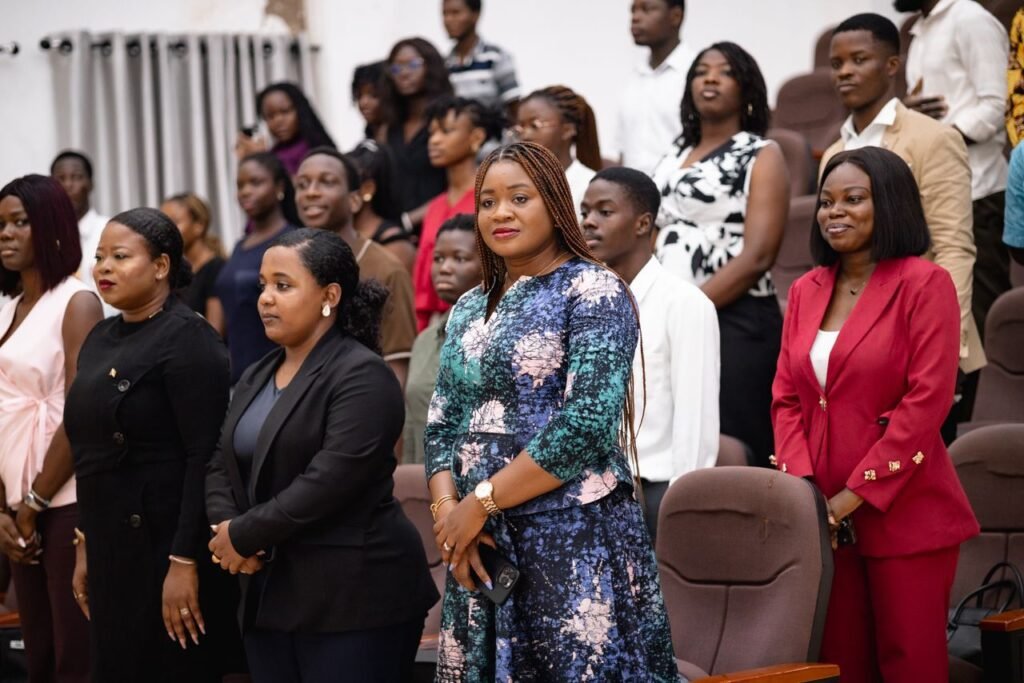
The conference itself, which convened emerging leaders, students, and professionals from across Africa, focused on the pivotal role of diplomacy and leadership in advancing regional cooperation and achieving the goals of Agenda 2063. Participants were encouraged to embrace leadership roles that champion unity, economic growth, and stronger connections among African nations, positioning themselves as agents of change capable of promoting cooperation, innovation, and sustainable development.
Africans must first develop confidence in one another before the continent can fully benefit from the free trade agreement.
DistantNews Editorial
Originally published by Ghanaian Times in English. Translated, summarized, and contextualized by our editorial team with added local perspective. Read our editorial standards.
More Stories


From Our Blog

What Gets Lost (and Found) When News Is Translated

The Critical Role of Diaspora Media in Global News

What Travellers Should Know About Countries with Restricted Press

A Digital Nomad's Guide to Following Local News

How the Same Story Looks Different in Different Countries
