


Young South Koreans Are Reading More Than Ever, Defying National Trend
Translated from Korean, summarized and contextualized by DistantNews.
At a glance
In-depth
Documents & data
Context piece
- South Korea's adult reading rate has fallen to a record low, but the 20s age group shows a unique increase, with book purchases doubling in five years for those in their early to mid-20s.
- This surge in reading among young adults began during the COVID-19 pandemic and has continued to grow post-pandemic, with novels being the most popular genre.
- Factors contributing to this trend include the pandemic shifting activities indoors, the rise of "text hip" culture on social media, and the influence of author Han Kang's Nobel Prize win, which solidified reading as a "cool" activity.
While South Korea's overall adult reading rate has hit a historic low of 38.5%, a notable exception is emerging among young adults. The reading rate for individuals in their 20s stands at a robust 75.3%, nearly double the national average. This age group is the only one to see an increase in reading rates over the past two years, bucking the national trend.
Outdoor activities turned into indoor activities, and reading was newly discovered then. Because we were confined to our homes, we read, and when we read, we found it very beneficial and enjoyable, so reading was rediscovered.
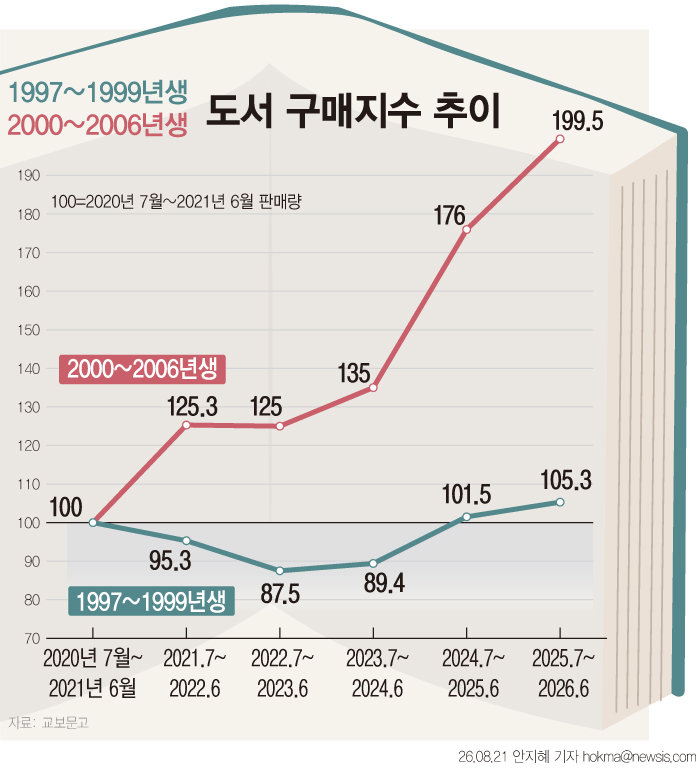
Digging deeper into book purchasing habits reveals a significant divergence within the 20s demographic. Data from Kyobo Book Centre shows that between July 2020 and June 2021 (set as a baseline of 100), book purchases by those born between 2000 and 2006 (early to mid-20s) have nearly doubled, rising to 199.5 by the latest period. In stark contrast, those in their late 20s (born 1997-1999) saw their purchasing index fluctuate, ultimately only recovering to 105.3, barely above the baseline.
The flow of reading that emerged during COVID-19 connected to the current 'text hip' phenomenon.
Experts suggest that as the younger cohort enters adulthood, their increased autonomy in choosing books based on interests and tastes has fueled this sales growth. The initial uptick in reading coincided with the COVID-19 pandemic, which confined people indoors and led many to discover or rediscover reading. Publishing critic Kim Sung-shin posits that this pandemic-induced experience provided a foundation for the current reading enthusiasm, transforming reading from a mere pastime into a genuinely beneficial and enjoyable activity.
Han Kang's Nobel Prize win acted as a major 'trigger' that significantly expanded the already forming reading trend.
Interestingly, the growth in book purchases accelerated *after* the pandemic restrictions eased. This suggests that the positive experience of reading during lockdowns continued and even intensified in the endemic phase. Beyond the pandemic's influence, the rise of "text hip" culture, where reading is presented as a stylish and shareable interest on social media, and practices like "필사" (transcribing text) and reading groups have also contributed. The Nobel Prize in Literature awarded to author Han Kang in 2024 acted as a significant "trigger," amplifying this existing trend and confirming for many young Koreans that reading and writing are sophisticated, cool, and "hip" activities. Novels remain the most popular genre across all age brackets within the 20s, with works by Han Kang and other contemporary authors frequently appearing on bestseller lists.
Through Han Kang's Nobel Prize, the act of reading and writing books was completely confirmed to the 20s as a very sophisticated, cool, and hip act.
DistantNews Editorial
Originally published by Dong-A Ilbo in Korean. Translated, summarized, and contextualized by our editorial team with added local perspective. Read our editorial standards.
More Stories


From Our Blog

What Gets Lost (and Found) When News Is Translated

The Critical Role of Diaspora Media in Global News

What Travellers Should Know About Countries with Restricted Press

A Digital Nomad's Guide to Following Local News

How the Same Story Looks Different in Different Countries
