


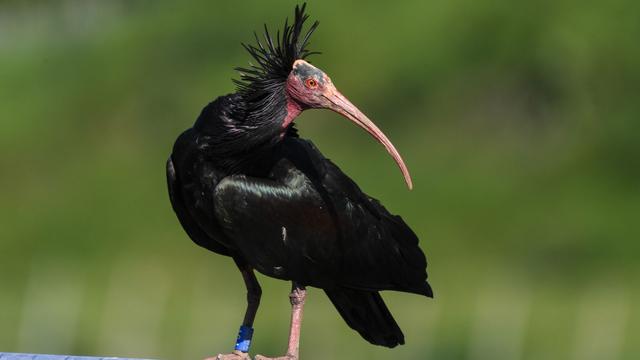
Young Waldrappe ibises complete first leg of journey to Andalusia
Translated from German, summarized and contextualized by DistantNews.
At a glance
News
From a news agency
Ongoing story
- 30 young Northern Bald Ibises have completed the first leg of their journey to a wintering ground in Andalusia, Spain.
- The young birds, raised by hand, are following an ultralight aircraft on their migration route.
- This method, developed over years, allows the birds to cover up to 300 kilometers daily, aiding their reintroduction into the wild.
Thirty young Northern Bald Ibises have successfully completed the first stage of their migration to Andalusia, Spain. After a previous attempt was thwarted by strong winds, the juvenile birds landed at their designated stopover point, the Hütten-Hotzenwald airfield in the southern Black Forest. The next leg of their journey is scheduled to take them to Besançon, France.
the young birds landed at the stage destination, the Hütten-Hotzenwald airfield on the southernmost edge of the Black Forest.
These birds were raised by hand from a breeding colony and trained to follow an ultralight aircraft along the migration route. The goal is to reintroduce them into the wild in Spain, with the hope that they will eventually return to the Lake Constance area independently after a few years. This specialized method of guiding young birds has been refined over time, enabling them to cover significant distances, up to 300 kilometers per day depending on weather conditions.
the young birds are on their way to Spain.
The Northern Bald Ibis, known scientifically as Geronticus eremita, is considered one of the rarest bird species globally. The Waldrappteam's efforts utilize ultralight aircraft to guide these hand-reared birds from their breeding grounds north of the Alps to their wintering territories. The process involves human caretakers raising the chicks from hatching, forming a strong bond that encourages the birds to follow their foster parents' aircraft.
the birds can cover up to 300 kilometers a day depending on the weather.
DistantNews Editorial
Originally published by Die Zeit in German. Translated, summarized, and contextualized by our editorial team with added local perspective. Read our editorial standards.
More Stories


From Our Blog

What Gets Lost (and Found) When News Is Translated

How the Same Story Looks Different in Different Countries

The Critical Role of Diaspora Media in Global News

What Travellers Should Know About Countries with Restricted Press

A Digital Nomad's Guide to Following Local News
