


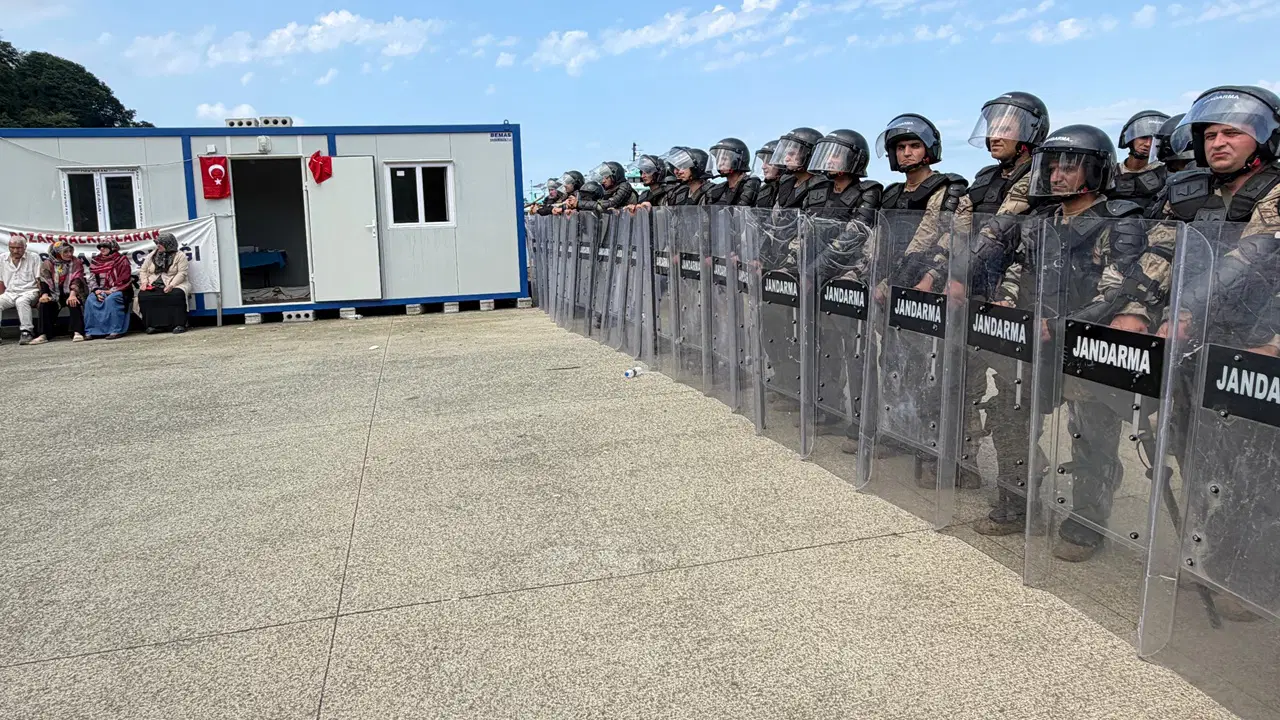
Zafer Party supports Balıkçı Village protest against cage fish farming
Translated from Turkish, summarized and contextualized by DistantNews.
At a glance
News
Sources not specified
Ongoing story
- Residents of Balıkçı Village in Rize's Pazar district are protesting a proposed "cage fish farming" project.
- They argue the project will reduce their fishing areas and harm the marine ecosystem.
- Zafer Party official Esmaül Hüsna Aslan voiced support for the villagers' protest, emphasizing the need to consider local concerns and environmental impacts.
Residents of Balıkçı Village, located in the Pazar district of Rize, have been protesting a proposed "cage fish farming" project near Zelek Port for approximately three months. The villagers argue that the project threatens their livelihoods by shrinking their fishing grounds and negatively impacting the marine ecosystem. The protest has gained attention following an intervention by gendarmerie forces yesterday, which resulted in the detention of four individuals. Esmaül Hüsna Aslan, head of Environmental, Urbanization, and Cultural Policies for the Zafer Party, issued a statement in support of the villagers. Aslan highlighted that the residents have been voicing their demands regarding their livelihoods, the sea, and their living spaces for three months, stating, "They do not want cage fish farming on the coasts where they have earned their living for years." She stressed the importance of considering the villagers' demands and conducting environmental and legal processes with public interest in mind. "The voices of citizens trying to protect their sea, their labor, and their livelihoods must be heard; the process must be carried out on the basis of law, environment, and public interest. As the Zafer Party, we will continue to follow the struggle of the people of Balıkçı Village, whom we have visited before, and to make their voices heard. Balıkçı Village is not alone," Aslan declared. She emphasized that the issue should not be viewed merely as an investment project but should be evaluated within the framework of traditional fishing in the region, the local economy, environmental effects, and public interest. Aslan also pointed out the potential environmental consequences of cage fish farming, noting that in areas with intensive production and insufficient water circulation, feed waste and fish feces can accumulate on the seabed. This accumulation can increase organic load, degrade water quality, and lower dissolved oxygen levels. Risks such as the spread of diseases and parasites, the impact of medications and chemicals on the ecosystem, and the escape of farmed fish into natural populations were also highlighted.
They do not want cage fish farming on the coasts where they have earned their living for years.
DistantNews Editorial
Originally published by Cumhuriyet in Turkish. Translated, summarized, and contextualized by our editorial team with added local perspective. Read our editorial standards.
More Stories


From Our Blog

What Gets Lost (and Found) When News Is Translated

The Critical Role of Diaspora Media in Global News

What Travellers Should Know About Countries with Restricted Press

A Digital Nomad's Guide to Following Local News

How the Same Story Looks Different in Different Countries
