


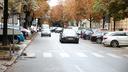
Zagreb: 'Removing a lane isn't the problem, improper parking causes the bottleneck on Prilaz Gjure Deželića'
Translated from Croatian, summarized and contextualized by DistantNews.
At a glance
News
Sources not specified
Context piece
- Zagreb city officials claim that traffic capacity on Gjure Deželića Street has not decreased, despite the removal of a lane.
- They attribute traffic slowdowns to improper parking, which reduces the effective number of lanes available for driving.
- The city manages traffic flow through a central control center that monitors vehicle counts on the street.
Zagreb city officials are addressing concerns about traffic congestion on Gjure Deželića Street, a key thoroughfare in the Lower Town. Andro Pavuna, head of local self-government, traffic, and municipal affairs, stated that the street's traffic capacity has not been reduced, contrary to public perception.
Pavuna explained that the capacity of a road is determined more by its intersections than by the number of lanes. He pointed to the Prilaz Gjure Deželića, where traffic is monitored by a central control center, as an example. While a lane has indeed been removed, Pavuna asserts that the primary cause of traffic narrowing and slowdowns is improper parking by drivers.
He noted that during morning commutes, the street often functions as if it only has one lane, even when two or three were theoretically available. This situation arises because parked vehicles obstruct the actual driving lanes, regardless of the official lane count. Therefore, the perceived reduction in capacity is not solely due to the removal of a traffic lane but significantly influenced by parking behavior.
The city maintains that its traffic management system, connected to the central control center, allows for effective monitoring of vehicle flow on Prilaz Gjure Deželića. This system provides data on the number of vehicles passing through, enabling the city to assess and manage traffic conditions.
It is not true that the capacity has been reduced. The capacity of the roadway is determined by the intersections more than the number of lanes. This is best seen on Prilaz Gjure Deželića where today we have traffic counting, the entire Prilaz is connected to the Traffic Management Center and we can see quite well the number of vehicles passing through there. What has happened with this approach is that we have a narrowing, not because a lane has been removed, although it has, but because people are parking improperly. Anyone who passes through Gjure Deželića in the morning knows that it doesn't have two lanes of traffic but one, just as before when there were three, there were never three available for driving, but there were two.
DistantNews Editorial
Originally published by Večernji List in Croatian. Translated, summarized, and contextualized by our editorial team with added local perspective. Read our editorial standards.
More Stories


From Our Blog

What Gets Lost (and Found) When News Is Translated

The Critical Role of Diaspora Media in Global News

What Travellers Should Know About Countries with Restricted Press

A Digital Nomad's Guide to Following Local News

How the Same Story Looks Different in Different Countries
