

Zambian President Hakainde Hichilema re-elected amid economic challenges
Translated from French, summarized and contextualized by DistantNews.
At a glance
News
Sources not specified
Outcome reported
- Hakainde Hichilema has been re-elected as the President of Zambia with 60% of the vote.
- His main challenger, Brian Mundubile, secured 38% of the vote, while electoral issues and opposition claims of victory created pre-result tension.
- Hichilema faces significant challenges including poverty, unemployment, and high cost of living for Zambia's 22 million citizens.
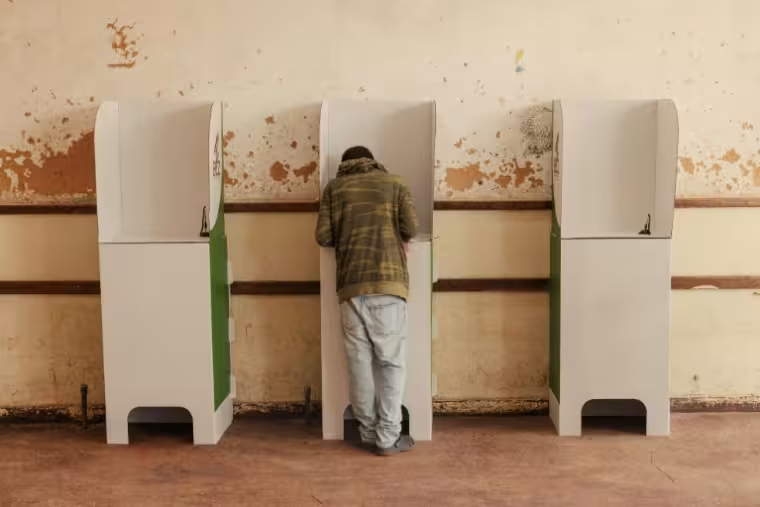
Hakainde Hichilema has secured a second term as Zambia's president, winning the August 13 election with 60% of the vote. The incumbent defeated his main rival, Brian Mundubile, who garnered 38%. The electoral commission announced the results after a few days of suspense, following a period where concerns over post-election crises loomed.
This election was not without its controversies. The vote count was temporarily suspended and later resumed amid allegations of ballot stuffing and violence against electoral officials. Adding to the tension, opposition candidate Brian Mundubile prematurely declared victory without providing evidence and demanded immediate publication of results, an action described as pouring fuel on the fire and not conducive to calming the situation.
Despite these electoral challenges, Hichilema's victory offers him a second chance to address the nation's pressing economic and social issues. Zambia has been recovering from a 2020 default on its debt and high inflation, which has since decreased. However, unemployment and the high cost of living remain significant concerns for the country's 22 million people, with 64% living below the poverty line.
The president's administration is expected to implement ambitious reforms aimed at improving the purchasing power of Zambians. Hichilema's re-election places a heavy responsibility on his shoulders to fulfill campaign promises from 2020, a key criticism leveled against him. The population has high expectations for tangible improvements in their daily lives.
DistantNews Editorial
Originally published by Le Pays in French. Translated, summarized, and contextualized by our editorial team with added local perspective. Read our editorial standards.
More Stories
From Our Blog

What Gets Lost (and Found) When News Is Translated

The Critical Role of Diaspora Media in Global News

What Travellers Should Know About Countries with Restricted Press

A Digital Nomad's Guide to Following Local News

How the Same Story Looks Different in Different Countries
