


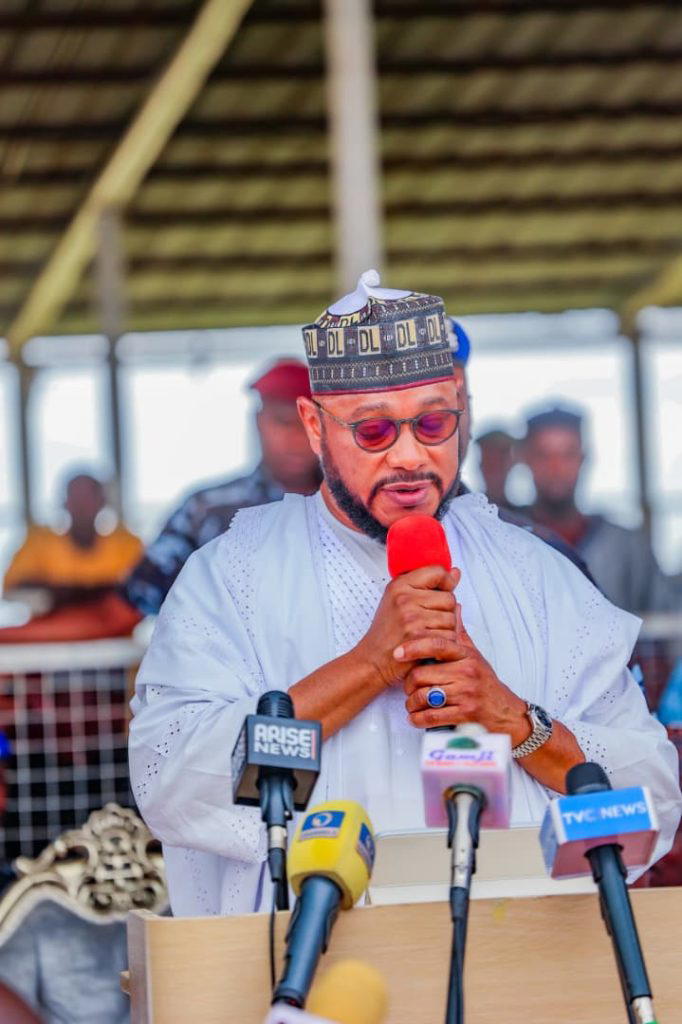
Zamfara Governor Distributes 72,000 Bags of Fertilizer to Farmers
Translated from English, summarized and contextualized by DistantNews.
At a glance
News
Official statement
New plan
- Zamfara State Governor Dauda Lawal distributed 72,000 bags of fertilizer and other agricultural inputs to farmers to boost food production.
- The distribution, part of the Zamfara 2026 wet-season fertilizer program, also included herbicides, crushers, choppers, milling machines, and seeds.
- Governor Lawal emphasized agriculture's central role in the state's economy, aiming to transform farming into a productive, technology-driven sector and improve livelihoods.
Zamfara State Governor Dauda Lawal has launched a significant initiative to bolster food production by distributing 72,000 bags of fertilizer, 200,000 liters of herbicides, and a range of other agricultural equipment to farmers across the state. This effort is a key component of the Zamfara 2026 wet-season fertilizer program.
The distribution event, held in Gusau, the state capital, saw the handover of not only fertilizers and herbicides but also 100 crop residue crushers, 100 grass choppers, feed milling machines, improved pasture seeds, 20 motorcycles, and 20 mobile phones for agricultural extension agents. The state government reported receiving over 120 trucks of these essential farm inputs.
Governor Lawal underscored the critical importance of agriculture to Zamfara's economy and development. He highlighted the state's abundant fertile land and its hardworking farming community. The intervention aims to revitalize the sector, enhance food security, create sustainable livelihoods, and position Zamfara as a major contributor to Nigeria's agricultural output. "Farming is the main livelihood and a key to inclusive growth and sustainable development, helping to fight poverty, banditry, and crime," the governor stated.
The administration's broader goal is to transition farming from subsistence practices to a productive, technology-driven, and market-oriented sector. This transformation will be achieved through improved inputs, mechanization, irrigation, enhanced extension services, climate-smart practices, and better market access. The government is also strengthening collaborations with federal agencies, development partners, and international organizations to expand access to agricultural support programs. Initiatives like FADAMA III, NG-CARES, and IFAD-supported projects are already benefiting thousands of farmers with improved resources and techniques, aiming to increase productivity, boost household incomes, and encourage youth engagement in agriculture.
Farming is the main livelihood and a key to inclusive growth and sustainable development, helping to fight poverty, banditry, and crime.
DistantNews Editorial
Originally published by Vanguard in English. Translated, summarized, and contextualized by our editorial team with added local perspective. Read our editorial standards.
More Stories


From Our Blog

How the Same Story Looks Different in Different Countries

What Gets Lost (and Found) When News Is Translated

The Critical Role of Diaspora Media in Global News

What Travellers Should Know About Countries with Restricted Press

A Digital Nomad's Guide to Following Local News
