

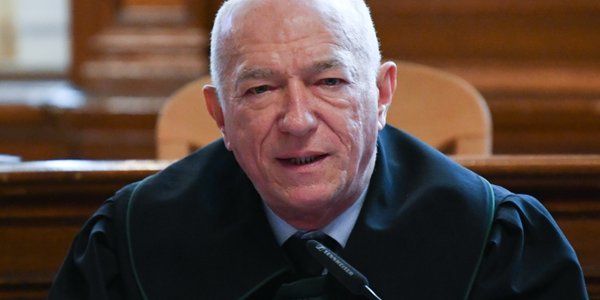
Zbigniew Ćwiąkalski: Compensation for Unjustly Taken Freedom Is Very Difficult
Translated from Polish, summarized and contextualized by DistantNews.
At a glance
Interview
Sources not specified
Context piece
- Poland's budget pays millions annually in compensation for wrongful imprisonment.
- Judicial errors stem from various factors, including flawed investigations, unreliable expert opinions, and pressure to close cases quickly.
- Obtaining compensation is complex, requiring proof of both financial losses and moral/physical suffering.
Poland's state budget allocates millions of zlotys each year as compensation and damages for wrongful imprisonment, a consequence of tragic errors within the justice system. While these sums may seem substantial, legal experts note that Polish courts are often not generous in awarding damages for clear judicial mistakes. Furthermore, precise statistics on the frequency and circumstances of such errors are not meticulously kept.
Zbigniew Ćwiąkalski, a legal expert, explains that these miscarriages of justice arise from multiple factors. These include errors made by prosecutors and courts, as well as flawed or unprofessional opinions from experts, whose qualifications are not systematically examined or verified in Poland. The pressure on prosecutors to secure convictions, sometimes leading to a rush to judgment, can also contribute to wrongful accusations and detentions.
The pressure on prosecutors to secure convictions, sometimes leading to a rush to judgment, can also contribute to wrongful accusations and detentions.
Ćwiąkalski cites high-profile cases like that of Skóra, who spent seven years in prison before being ultimately acquitted, and Tomasz Komenda, who was wrongly imprisoned for years due to intense pressure to solve the case. He also points to self-incrimination, where individuals confess to crimes they did not commit to protect others, leading to the conviction of the innocent.
Seeking compensation for wrongful deprivation of liberty is a complicated process. It involves distinguishing between damages (wymagalne odszkodowanie) for quantifiable financial losses incurred during detention and compensation (zadośćuczynienie) for moral and physical suffering. Claimants must demonstrate the probable sum lost by being imprisoned instead of free, and for moral damages, they must prove the physical and psychological harm endured. The absence of clear criteria for calculating these amounts makes the process particularly challenging.
Seeking compensation for wrongful deprivation of liberty is a complicated process.
DistantNews Editorial
Originally published by Rzeczpospolita in Polish. Translated, summarized, and contextualized by our editorial team with added local perspective. Read our editorial standards.
More Stories

From Our Blog

What Gets Lost (and Found) When News Is Translated

The Critical Role of Diaspora Media in Global News

What Travellers Should Know About Countries with Restricted Press

A Digital Nomad's Guide to Following Local News

How the Same Story Looks Different in Different Countries
